
REVIEW · SPAIN
Sant Feliu de Guíxols: Guided tour of the Cala del Molí Via Ferrata
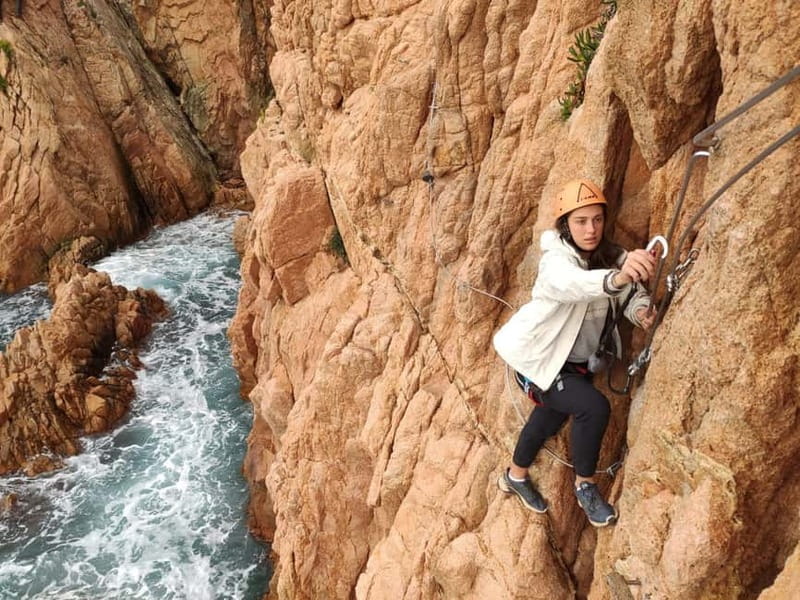
The Cala del Molí Via Ferrata takes climbing onto the Mediterranean coast, with metal rungs, suspended paths, and bridges fixed to the cliffs above the sea. It is billed as the only via ferrata in Europe that crosses the Mediterranean, and the setting is the main attraction: you work your way along rock while the Costa Brava opens out below.
I like the small group size, limited to six people, because a guide can give real attention when a move feels awkward. I also like that helmet, harness, energy dissipators, insurance, and photos are included. The catch is simple: this is a K3 intermediate route, not a gentle coastal walk. You need decent fitness, and your arms may feel it afterward.
- Sea-level climbing with a rare setting: The route crosses above and beside the Mediterranean rather than staying inland.
- Suspension bridges and aerial walkways: These provide the biggest rush and the best sense of exposure.
- Small groups of six or fewer: The guide can adjust instructions for beginners and stronger climbers.
- Three languages available: Spanish, English, and French are offered.
- A practical half-day outing: Allow about 3.5 hours from meeting point to finish.
- Helpful extras included: Safety equipment, accident and liability insurance, and photographs come with the booking.
Why Cala del Molí Is Different
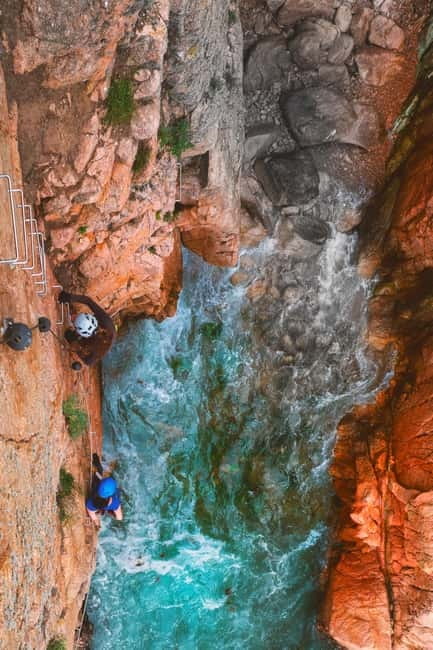
A via ferrata is a protected climbing route. You move along a cliff using fixed metal steps, ladders, handholds, cables, and walkways while attached to a safety system. You do not need traditional rock-climbing experience, but you do need to be comfortable using your body on vertical sections and above open space.
Cala del Molí adds something unusual: the route reaches across the sea. You are not simply looking at the Mediterranean from a viewpoint. You are moving along the rock beside it, with sections that give you open views of the water and the coves around Sant Feliu de Guíxols.
That setting changes the mood. A standard climbing wall teaches technique in a controlled place. Here, the sound of the sea, the rock under your hands, and the open view make each section feel more memorable. The reward comes from the combination of effort and place.
The route is rated K3, or intermediate. That rating matters more than the promotional language. A fit beginner can take part, but this is not suitable for someone who rarely exercises or dislikes heights. You will use your legs to climb and your arms to steady yourself, and some sections may make your pulse rise.
Meeting Near the Start of the Route
You meet near the beginning of the via ferrata, at a designated parking area in Cala del Molí. The guide gives a short explanation before you start, including how to use the harness and approved energy dissipators.
That briefing is important, even if you have climbed before. The safety system is central to the activity, and you will need to understand how to stay attached while moving along the fixed route. Take this time to ask questions, especially if you are new to via ferratas or are joining with a child aged 10 or older.
The small group limit works in your favor here. With no more than six participants, the guide can check your equipment and explain the movement at a pace that suits the group. Beginners are not simply sent ahead to work things out alone.
Guides are available in Spanish, English, and French. Miki and Miguel are names associated with the guiding team, and the feedback about their instruction is especially strong. Miki is described as attentive and good at adapting his help to different ability levels. One important practical note is that language ability can vary by guide, so if fluent English matters to you, confirm it when booking.
More Via Ferrata Routes in Spain
- Sant Feliu de Guixols: Climb Via Ferrata Cala del Molí
★ 5.0 · 253 reviews - Gran Canaria: Guided Via Ferrata Excursion
★ 4.9 · 198 reviews - Via Ferrata in Gran Canaria. Vertical adventure park. Small groups
★ 5.0 · 183 reviews
Climbing Above the Costa Brava
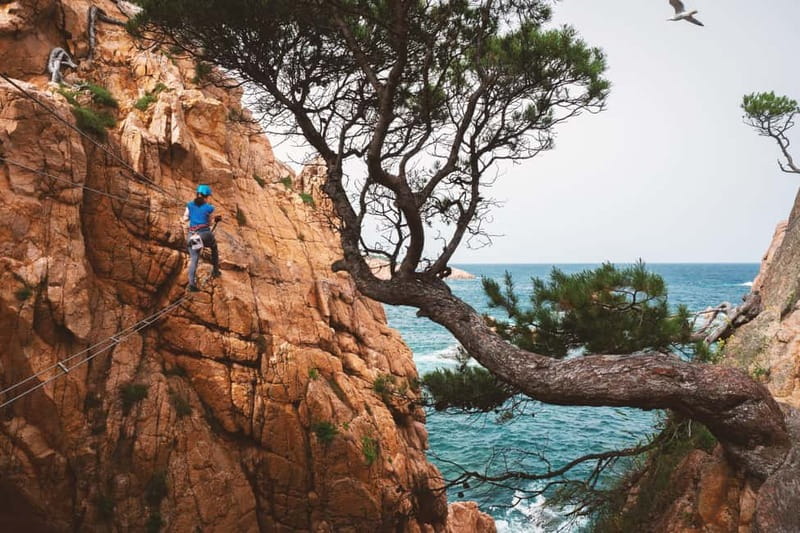
Once you leave the parking area and begin the route, the experience shifts quickly from ordinary sightseeing to active movement. You will climb and traverse along fixed sections of rock, using the metal holds and cable system to make progress.
The route does not depend on a single dramatic climb. Its appeal comes from the changing rhythm: vertical sections, traverses, and exposed crossings over the water. Some parts require more arm strength, while others call for careful foot placement and confidence with height.
The guide remains with you throughout. That support is useful in two ways. First, you get technical advice about where to place your hands and feet. Second, you have someone nearby when a section feels harder than expected.
You may find that the most difficult part is not a particularly high wall, but a move that asks you to reach, turn, or shift your weight while looking down. This is where reasonable fitness helps. You do not need to be a climber, but you should be ready to pull, step, balance, and keep moving for several hours.
The Bridges and Aerial Walkways
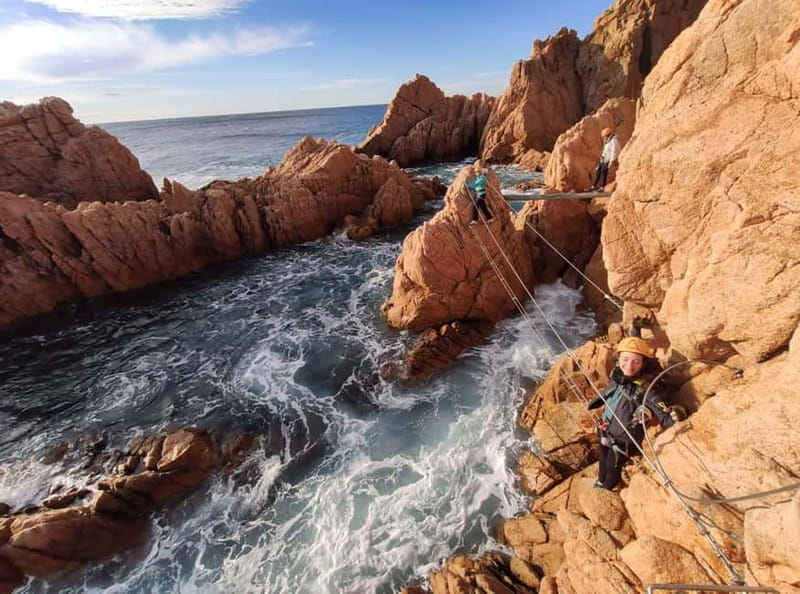
The Tibetan-style suspension bridges are among the route’s signature features. They add movement under your feet, so you are dealing with more than height alone. Expect a sense of sway and exposure, with the sea and rock visible around you.
Metal walkways create a different challenge. They can feel more open than a normal path, and they ask you to trust the equipment while crossing from one rocky section to another. These are the moments that give the tour its adrenaline, but the fixed safety system and guide support help keep the experience controlled.
If you are nervous, do not treat that as failure. Go slowly, keep your attention on the next handhold or foothold, and follow the guide’s instructions. The aim is not to race. A calm, steady pace makes the route more enjoyable and gives you more time to take in the setting.
You should also expect your upper body to work. One family found that arms were sore afterward, even with some prior climbing experience. That is useful advice: the activity can feel more demanding than its scenic setting suggests.
Views Across the Mediterranean
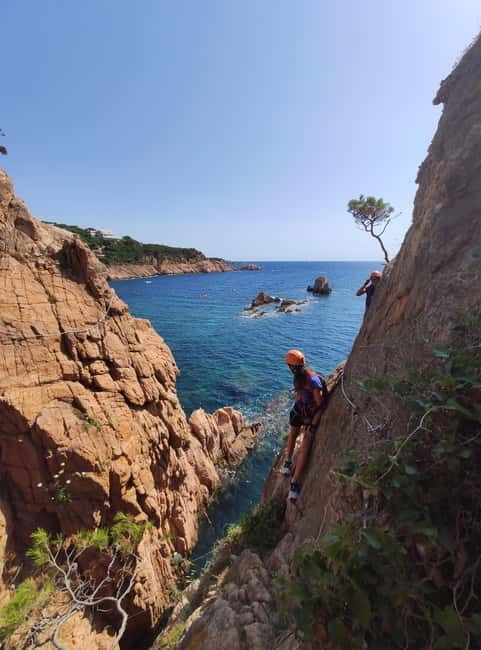
The panoramic views are not a brief reward at the end. They accompany much of the route. As you move around the cove and across the exposed sections, you can look out over clear Mediterranean water and the smaller coves of the Costa Brava.
The angle is what makes the views special. From a beach, you see the cliffs as a backdrop. From the via ferrata, you see the coast from the side and above, with the rock route itself forming part of the view.
Bring your attention back to the scenery when the route allows it. The climbing hardware gives you a practical focus, but the sea is the reason this particular via ferrata is worth choosing over an inland course.
The setting also makes this a strong alternative to a day spent only on the beach. You still get the coast, fresh air, and water views, but with a physical challenge built into the outing.
Same rush, a different way to get it:
- Barcelona Costa Brava Kayak, Snorkel & Cliff Jump Day Tour
★ 5.0 · 3,872 reviews - Barcelona: Costa Brava Kayak, Snorkel & Cliff Jump & Lunch
★ 4.9 · 2,391 reviews - Mallorca: Quad Bike Tour, Snorkeling, and Cliff Jumping
★ 4.8 · 2,294 reviews - From Marbella: Guadalmina River Guided Canyoning Adventure
★ 4.9 · 1,486 reviews
Safety Without Removing the Thrill
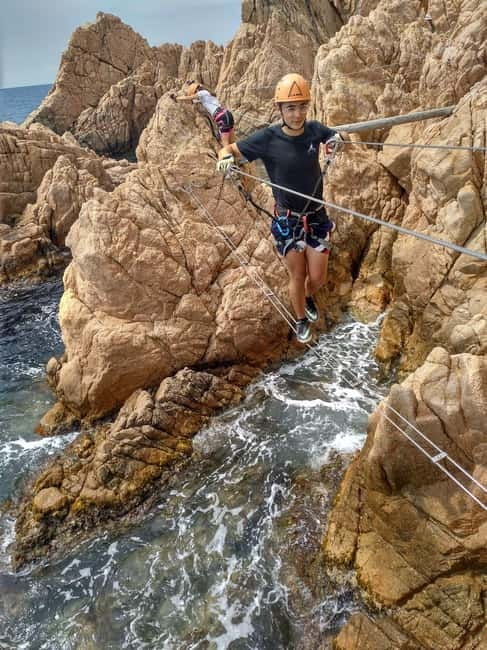
The activity includes a helmet, harness, and approved energy dissipators. Accident and civil liability insurance are also included. These are not minor extras. They are the basic structure that lets you focus on the route instead of worrying about every exposed step.
A guide accompanies you throughout, offering technical advice and help when needed. The equipment reduces the risk of a fall, but it does not remove the need for care. You still need to follow instructions, stay attached as directed, and know your own limits.
This is a good option for a first via ferrata if you are fit and open to learning. The route is guided rather than self-directed, and the group is small enough for questions and corrections. It is not the right choice if you want complete independence or a flat nature outing.
The minimum age is 10, with parental authorization required for minors. For families, the key question is not only age. Consider height comfort, strength, attention span, and willingness to follow safety instructions for several hours.
What to Wear and Bring
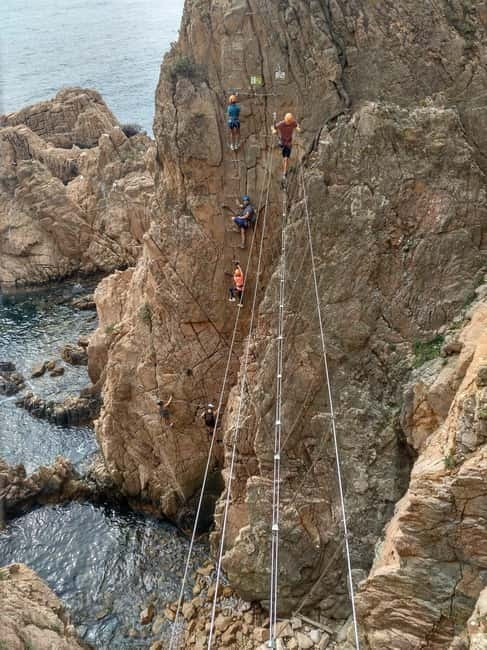
Wear sports clothing that lets you move freely. Avoid anything loose or restrictive around the harness. Sports shoes are required, and hiking or trekking shoes with real grip are the better choice.
Running shoes may work, but they are not ideal on a rocky, exposed route. Trail shoes with a firm sole provide better confidence on the metal and rock sections. Sandals and flip flops are not allowed.
Protective gloves are recommended, especially fingerless gloves. They can make the fixed cable and metal holds more comfortable, and they may help prevent sore hands during repeated gripping.
Bring water. The activity lasts about 3.5 hours, and even a coastal route can feel demanding when you are climbing. Keep your packing simple, since bulky items will not help you on bridges or narrow sections.
The provider includes photographs of the experience. That means you can give more attention to the route instead of trying to manage a phone while attached to the safety system. Still, do not expect a sightseeing stop at every viewpoint. The activity is built around movement.
How the 3.5 Hours Feel
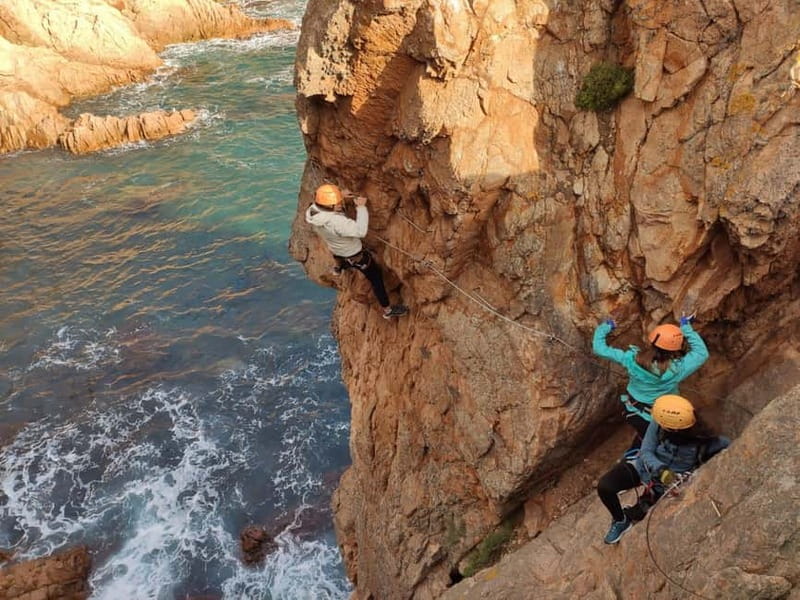
The published duration is about 3.5 hours, with the actual climbing portion described as roughly three hours. The remaining time covers meeting, equipment, instruction, and the transition into and out of the route.
That makes this a substantial half-day plan. You can fit it into a larger Costa Brava schedule, but you should not treat it like a quick one-hour attraction. Give yourself room before and afterward so you do not feel rushed.
The pace depends on the group. A pair with climbing experience may move differently from a family with first-timers. The small group format helps the guide adapt, but it also means the activity follows the needs of everyone present.
This is worth remembering when you book with friends. If one person is fast and another is cautious, the day will work best when the stronger climber accepts a shared pace. The route is a group experience, not a private time trial.
Is the $94 Price Fair?
At $94 per person, this costs more than a simple coastal walk, but the comparison is not quite fair. You are paying for a guided technical activity, full safety equipment, insurance, a small group, and photographs.
The group limit is a meaningful part of the value. A larger outing could make the route feel crowded and reduce the amount of direct help available. With six or fewer participants, the guide can focus on equipment checks, technique, and reassurance.
The price makes the most sense if you would otherwise rent equipment, find the route yourself, and take on the safety decisions without professional help. For a first experience, the instruction and support are likely to be more valuable than saving a little money on a self-guided plan.
It is less compelling if you are already an experienced via ferrata climber looking for a long, demanding day. The route is about three hours of activity, and its main selling point is the coastal setting rather than extreme technical difficulty.
Free cancellation up to 24 hours before the activity and reserve-now, pay-later booking add flexibility. Those policies are useful when your Costa Brava schedule may change, though the physical demands should be your main booking concern.
Who Should Book It
I would choose this for an active couple, a family with older children, or friends who want something more memorable than another beach afternoon. It also suits a beginner who wants professional help rather than trying a via ferrata alone.
You should be reasonably fit and comfortable with vertical movement. Prior climbing experience is helpful but not required. If you can manage sustained activity, follow instructions, and accept a few nervous moments above the sea, you are within the intended audience.
I would hesitate to recommend it if you have a low fitness level, dislike heights, or are looking for a relaxed coastal stroll. The route includes exposed traverses, suspension bridges, and metal walkways, so the scenery does not make it physically easy.
The activity can suit families, but children under 10 cannot join. Minors aged 10 and above need parental authorization. Parents should think carefully about confidence and stamina, not just the minimum age.
Final Call: Book It for the Sea, Not Just the Climb
Book the Cala del Molí Via Ferrata if you want a focused, active way to experience the Costa Brava and like the idea of climbing across the Mediterranean. The sea views, small group, safety equipment, and attentive guiding make the $94 price reasonable for a first or occasional via ferrata.
Bring grippy shoes, water, sports clothing, and ideally fingerless gloves. Expect sore arms, exposed crossings, and a few moments that demand focus. If that sounds exciting rather than alarming, this is one of the most distinctive half-day activities around Sant Feliu de Guíxols.
FAQ
Where is the Cala del Molí Via Ferrata?
It is located at Cala del Molí in Sant Feliu de Guíxols on Spain’s Costa Brava.
How long does the activity last?
The experience lasts approximately 3.5 hours. The climbing activity itself is described as lasting about three hours.
What difficulty level is the route?
The route is rated K3, or intermediate. Beginners can join if they have a good level of physical fitness.
Do I need previous climbing experience?
No. Previous climbing experience is not required, but you need to manage vertical sections, traverses, and exposed crossings with reasonable confidence.
What equipment is included?
The activity includes a helmet, harness, and approved energy dissipators. Accident and civil liability insurance, a professional guide, and photographs are also included.
What languages are available?
Guides are available in Spanish, English, and French.
What should I bring and what is not allowed?
Bring sportswear, water, and sports shoes. Hiking or trekking shoes with good grip are recommended, and protective gloves are useful. Sandals and flip flops are not allowed.
Just added around Spain
- Sitges Flyboard Experience: Adrenaline on the Water★ 5.0 · 2 reviews
- Santa Cruz de Tenerife: Vilaflor Canyoning Tour★ 5.0 · 49 reviews
- Ronda: Tajo de Ronda Via Ferrata Guided Climbing Tour★ 5.0 · 74 reviews
- Río Verde from Granada: Canyoning experience.★ 5.0 · 4 reviews
- Río Verde, Otivar, Granada: canyoning, crystal clear waters, jumps, and rappelling.★ 4.9 · 12 reviews
- Redován: Family-friendly K2 via ferrata in a natural setting with rappelling★ 5.0 · 3 reviews
- Ordesa, Broto : Via Ferrata K3. Climbing Experience★ 5.0 · 4 reviews
- Murillo de Gállego Huesca: Bungee jumping over the river★ 5.0 · 3 reviews
Via Ferrata Climbing, compared.
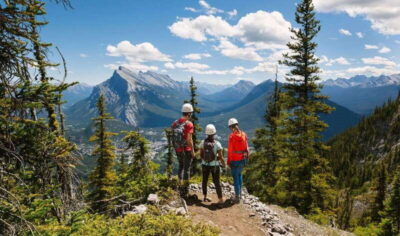
Mount Norquay 2.5 or 4-Hour Guided Via Ferrata Climb
Read our review →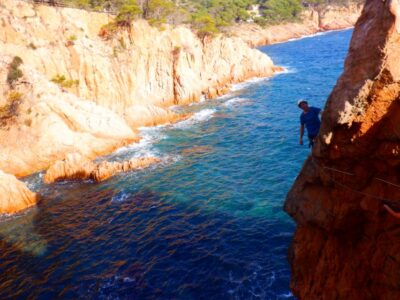
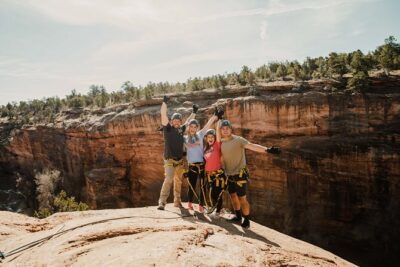
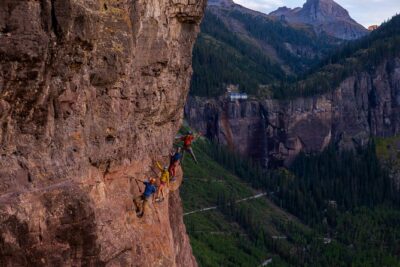
Small-Group Guided Via Ferrata Climbing with Banff’s Best Views
Read our review →
Via Ferrata in Gran Canaria. Vertical adventure park. Small groups
Read our review →Browse the lists this tour appears in