
REVIEW · CROATIA
Split: Cliff Jumping & Deep Water Solo Tour
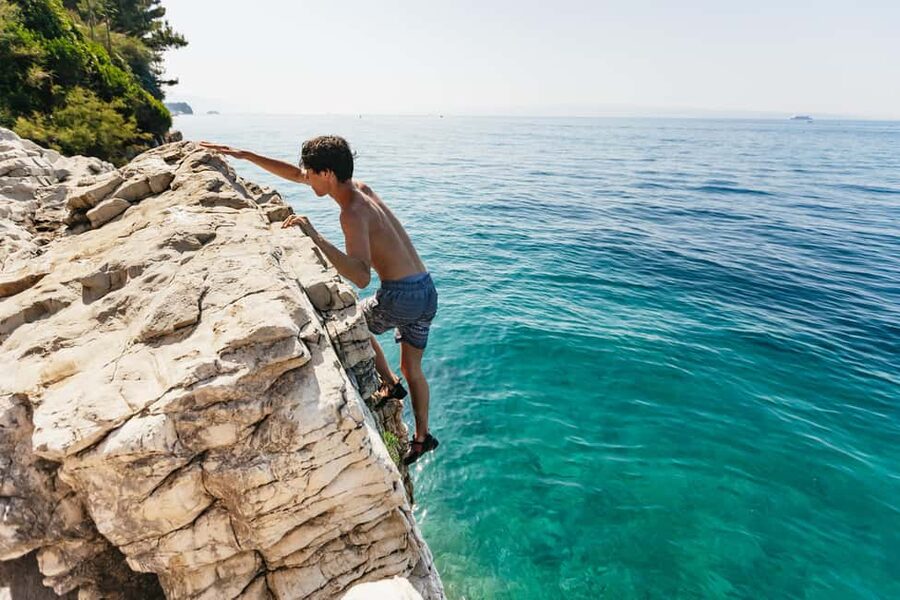
The best part of this Split outing is the simple idea: climb a rock wall above the Adriatic, then drop into the sea when your arms give out. It combines rock climbing, cliff jumping, and swimming in one brisk outdoor session, with no long drive from town.
I like the freedom to choose easier or harder routes, and I like that the guides do more than point at the rock. Irena, Tonka, Donka, and Filip are praised for calm instruction, route tips, safety care, and photos. The crystal-clear sea also turns every finish into part of the fun.
The catch is important: this is not a first-ever climbing lesson for someone with no experience. You must be a competent swimmer, have some climbing ability and endurance, and be comfortable with heights and jumping into open water.
Key points to know before booking
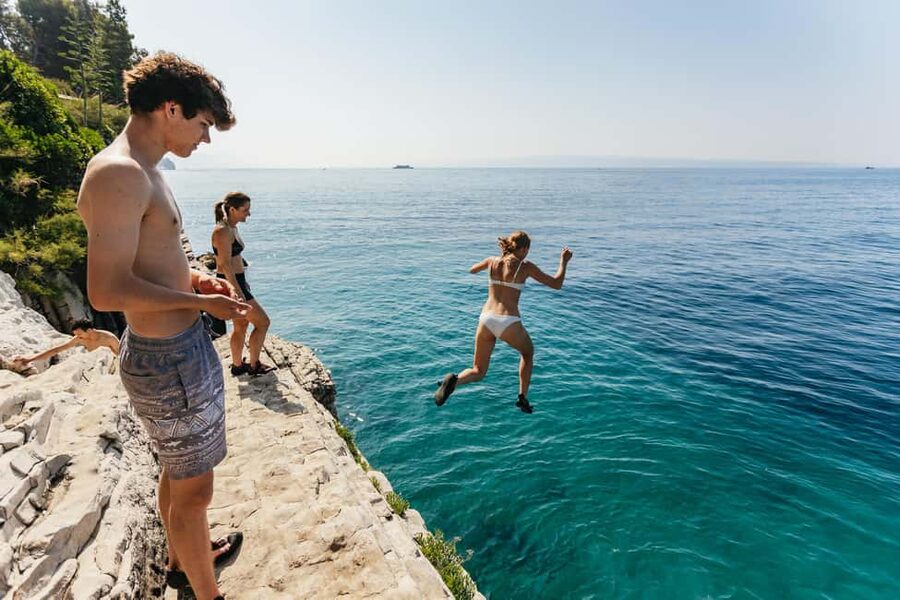
- Climb directly above the Adriatic: Every route begins and ends from the sea, with the water serving as your landing zone.
- Routes suit different abilities: Guides can offer easier climbs to beginners and harder options to stronger climbers.
- Guides are a major strength: Irena, Tonka, Donka, and Filip are noted for patient instruction, safety awareness, and friendly support.
- The tour lasts about three hours: That gives you time to warm up, try several routes, and pause between climbs.
- Photos are included: Your guide takes pictures during the session, so you can focus on climbing rather than carrying a phone.
- Bring very little: Wear swimwear, bring water and snacks, and leave large bags, alcohol, and valuables behind.
Climbing above the sea near Kasjuni Beach
Your meeting point is in the parking lot before the road down to Kasjuni Beach, beside the monument. Arrive 15 minutes before the start so the guide can organize the group and equipment without cutting into your time on the rocks.
The exact meeting point is outside the main climbing area, so check the supplied map link before setting out. You return to this same spot at the end. The tour does not include food or drinks, and you should bring your own water and snacks.
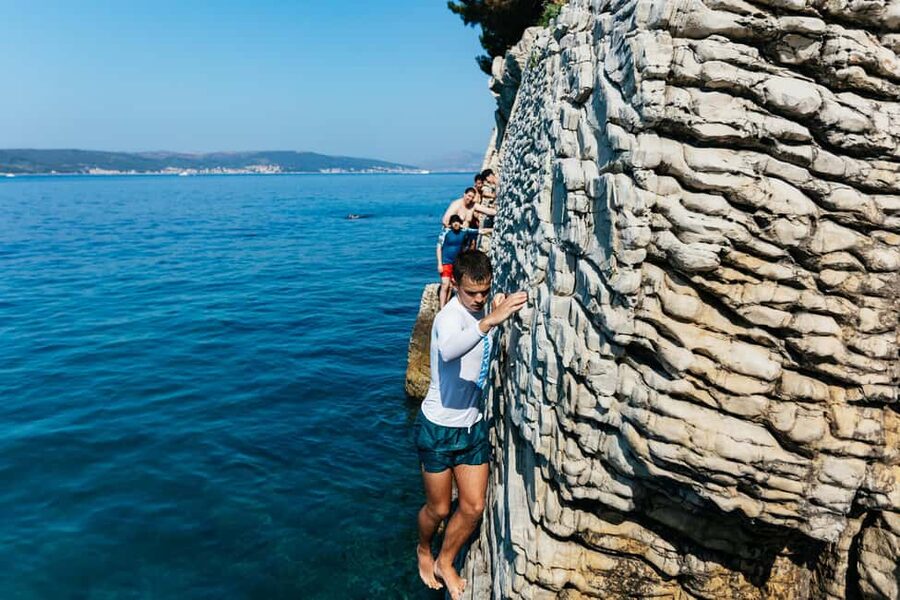
From there, the outing moves toward Split’s old deep water solo area. This style of climbing uses rock routes above the sea instead of ropes and harnesses. You climb until you reach the top, decide you have had enough, or run out of strength, then return to the water.
That setup gives the activity a relaxed rhythm. You climb, swim, rest on the rocks, listen to advice, and try again. It also means you need to stay aware of your own limits. The sea makes the landing softer, but the climbing still demands balance, grip, and control.
More Cliff Jumping in Split:
- Split: Cetina River Rafting with Cliff Jumping and Cave Tour
★ 4.9 · 1,219 reviews - Half-Day Rafting Experience on Cetina River with Cliff Jumping and more
★ 5.0 · 940 reviews - From Split or Omiš: Rafting, Cliff Jumping, & Cave Exploring
★ 4.9 · 841 reviews
How deep water solo works here
Deep water solo, often shortened to DWS, is a form of rock climbing on vertical or overhanging routes above water. You do not follow a marked hiking path or climb a wall at a formal gym. Your route is on natural rock, and the sea is below you from the start.
The guide shows you the available lines and helps you pick a suitable challenge. You can begin with a warm-up route, then move to a harder climb if your arms and confidence feel ready. This progression matters because your first outdoor climb can feel different from indoor bouldering or rope climbing.
Several people found the range of routes useful. Stronger climbers can test themselves on more demanding sections, while newer climbers can stay with simpler lines. The guides are used to working with mixed ability levels. Filip, for example, adjusted the outing for two people with different climbing backgrounds, while Tonka helped first-time outdoor climbers feel safe and prepared.
Still, do not confuse flexible route choice with a beginner course. The activity requires a minimum level of climbing experience. You should already know the basic movements of climbing and have enough endurance to stay on the rock for more than a few seconds at a time.
A typical three-hour session
The activity appears to run for about three hours. The session begins with an introduction to the area, safety guidance, and an explanation of how to enter the water and return to the rocks. You also receive climbing shoes, which are included in the price.
The warm-up climbs are not just a formality. They help you learn how the rock feels, judge your grip, and settle your nerves above the water. Vanessa’s experience shows why this start is useful: the group began with easier routes and worked toward trickier ones as the session went on.
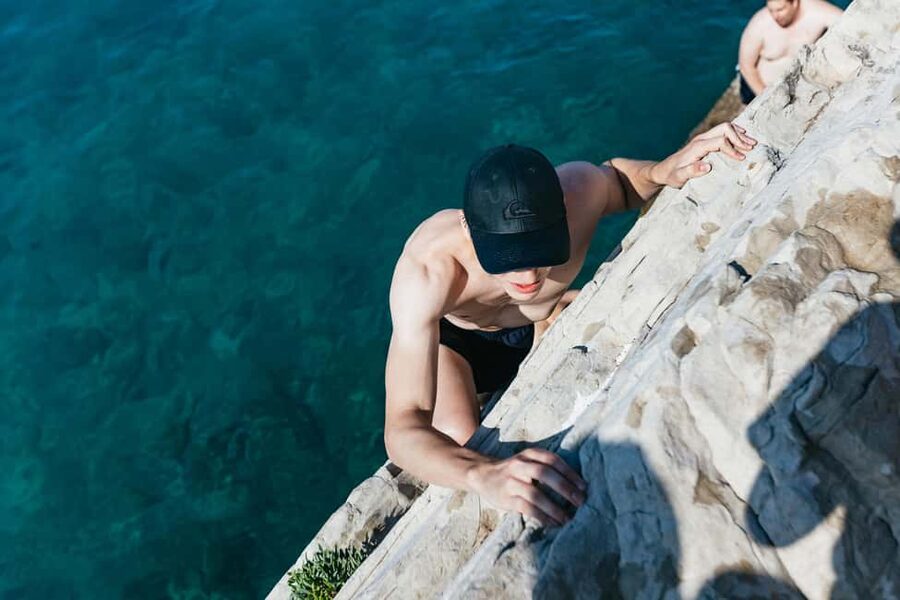
After warming up, you choose from routes that match your ability. Some climbs may have broad holds that feel friendly to a newer climber. Others use smaller grips and demand more finger strength. If your hands are not used to climbing, your forearms may tire quickly, even on a route that looks short.
The guide stays involved throughout. You receive advice on foot placement, handholds, pacing, and when to stop. The strongest praise for this outing goes to the guides’ approach: patient, safety-conscious, relaxed, and able to explain the routes without taking away your sense of independence.
Between climbs, you can rest on the rocks and swim in the sea. This is where the activity feels less like a formal lesson and more like a summer outing with a physical challenge built in. You are not rushing from one obstacle to another. The breaks give your arms time to recover and let you enjoy the setting.
The jump back to the Adriatic
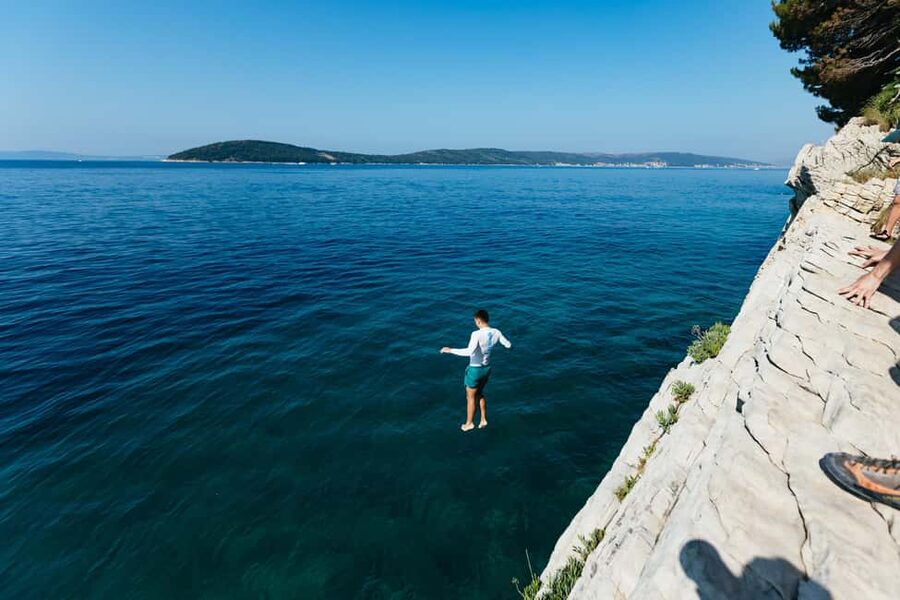
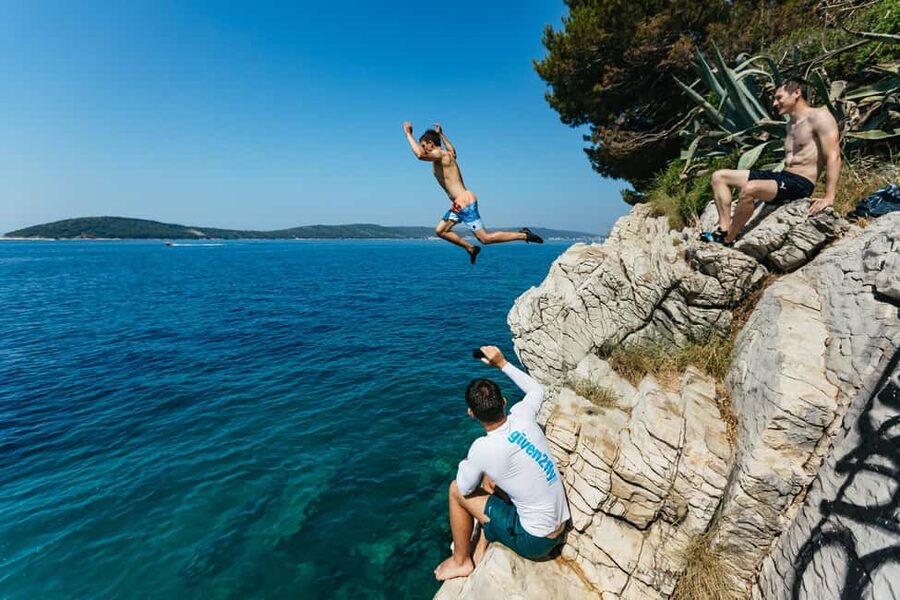
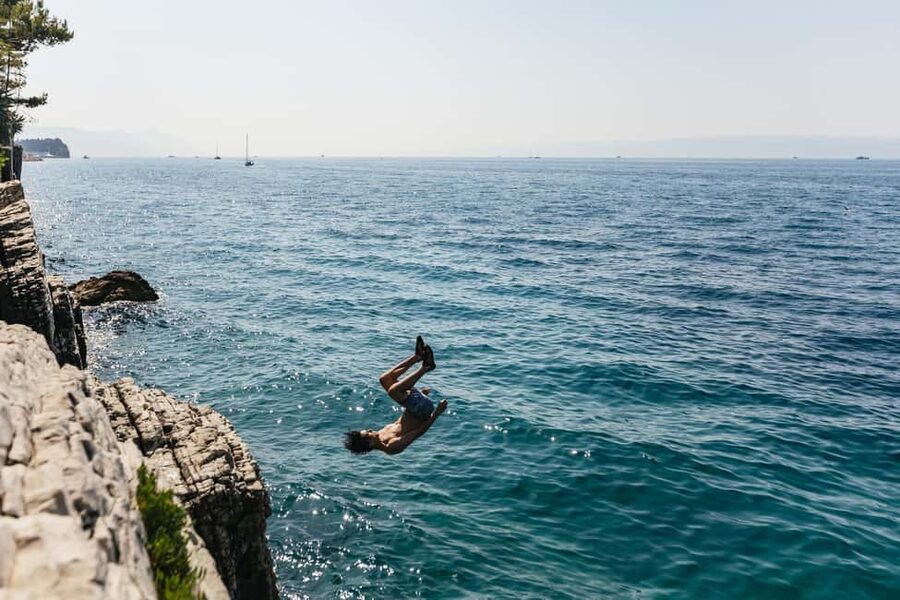
At some point on each route, you return to the water. You can climb down if that feels right, or jump from a height that suits your comfort level. The available jumping heights vary, so you are not forced to make the biggest leap.
That choice is one of the tour’s best features. A cautious climber can pick a lower return point, while someone seeking more excitement can choose a higher jump. Magnus specifically noted the range of heights, which lets you add adrenaline without turning the activity into a test of nerve.
You must be a competent swimmer. This requirement is not a minor box to tick, since the experience takes place over open water and the climbs begin and end at sea level. If you are not comfortable swimming away from the rock and returning to it, this is the wrong excursion for you.
The water also gives the day its strongest visual appeal. You are looking down through clear Adriatic water as you climb, then looking up at the rock face from below after you jump. The setting is a large part of the experience, not just a backdrop for the climbing.
More Adrenaline Activities in Split:
- Canyoning on Cetina River Adventure from Split or Zadvarje
★ 5.0 · 597 reviews - Cetina River Extreme Canyoning Adventure from Split or Zadvarje
★ 5.0 · 452 reviews - From Split: Canyoning on the Cetina River
★ 4.9 · 373 reviews - Extreme Canyoning on Cetina River from Split or Zadvarje
★ 5.0 · 310 reviews
What the guides add to the experience
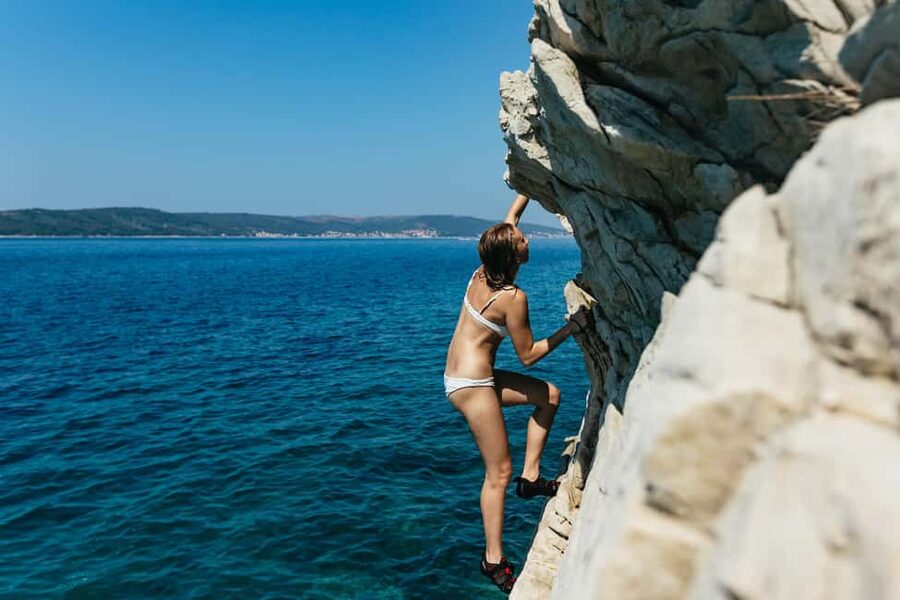
The guide can make or break a climbing session, and this is where the tour performs especially well. Irena is described as friendly and helpful. Tonka and Donka are praised for professional instruction, good route advice, and a calm manner. Filip is noted for adapting the climbs to different skill levels.
That flexibility matters more than flashy encouragement. A good guide will help you find a route that is challenging but possible, then step in with useful advice when you get stuck. You want enough support to feel safe, but not so much that every move is made for you.
The guides also add local context. Tonka shared information about climbing culture in Croatia and suggested other places to climb in the country. Another guide talked about the sea life in the area. These details are small, but they give the session more character than a basic climb-and-jump program.
Photos are included and taken by the guide. That is a real advantage here. You cannot safely carry a phone while climbing, and asking a friend to photograph you from the water would distract from the activity. The included pictures give you a record of the climbs, jumps, and setting without adding a photo fee.
How hard is the climbing?
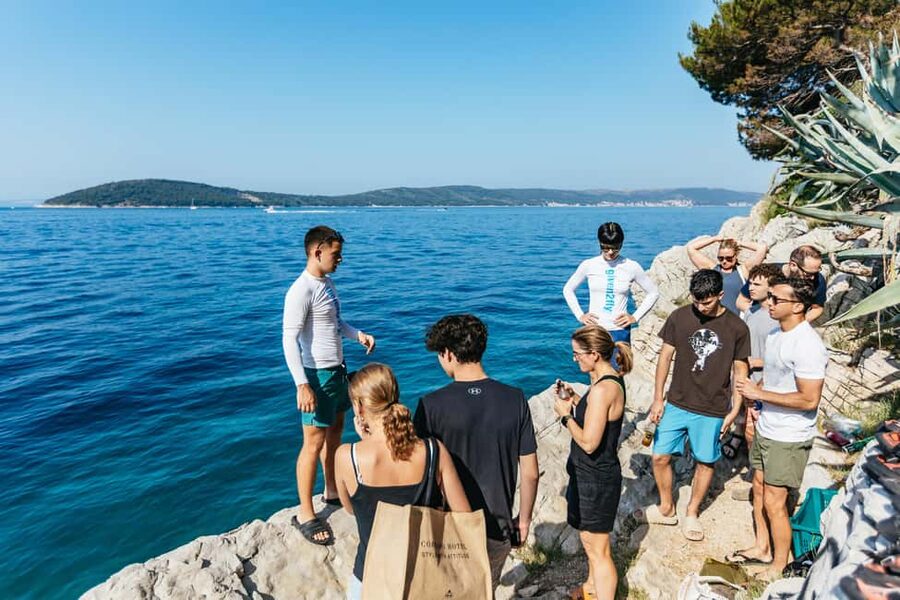
The tour works best for a range of climbers who already have some experience. A beginner climber may be comfortable on the easier routes, especially with a patient guide, while a regular boulderer or experienced climber can try the harder lines.
Do not judge the difficulty only by height. Finger strength and endurance can matter more than the length of the climb. Vanessa found small handholds tiring, while her daughter, with stronger climbing ability, completed the routes after a few attempts. That is a useful warning if your gym experience has mostly involved large holds and short problems.
You should expect your grip to tire during the session. Take breaks, listen to the guide, and avoid spending all your strength on the first route. The aim is to enjoy several climbs rather than prove something on the hardest line immediately.
The activity is not suitable for people with back problems. The combination of climbing, jumping, swimming, and landing in water places physical demands on your body. If you have concerns about your fitness or back, ask a medical professional before booking.
What to bring and what to leave behind
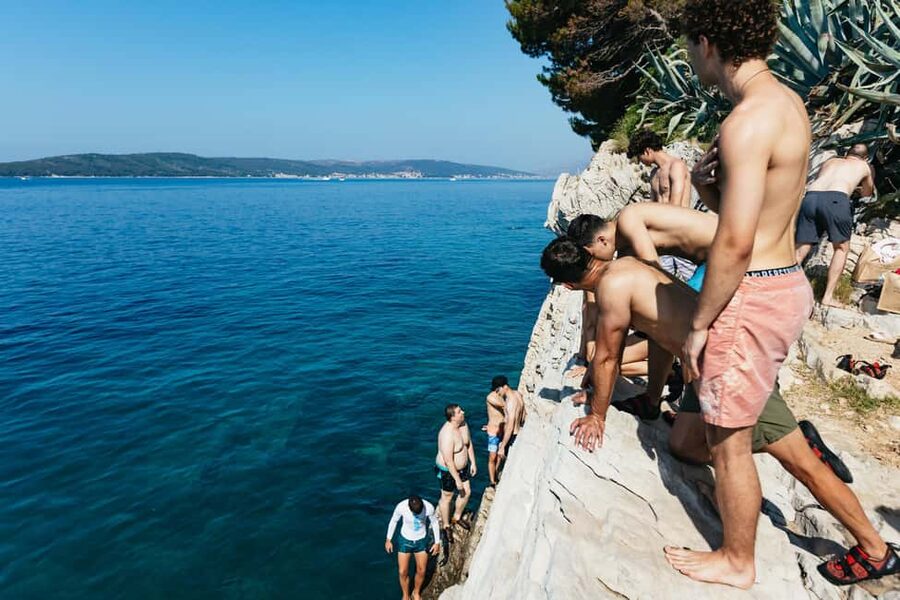
Wear swimwear under comfortable clothing and bring shoes for the approach. Climbing shoes are supplied, but you need to provide your shoe size for every participant when you book.
Pack water and snacks. Food and drinks are not included, and you may want something between climbs after spending several hours in the sun and sea. Keep your belongings light, since large bags and luggage are not allowed on the activity.
Smoking, alcohol, drugs, and intoxication are not allowed. That rule is especially sensible here, since climbing and open water demand clear judgment. Leave valuables and anything you do not need at the meeting point or in a secure place.
A towel is not listed among the required items, but you will be swimming, so bringing one would be a practical choice if you have space. The official essentials are comfortable shoes, swimwear, snacks, and water.
Who will get the most from this Split adventure?
I would recommend this tour to an active teenager or adult who can swim well, has some climbing experience, and wants a more unusual way to spend a summer morning or afternoon. It suits couples, siblings, and small groups with mixed ability, provided everyone meets the minimum skill and age rules.
The minimum age is 12. Anyone under 18 must be accompanied by an adult. Families should be honest about the swimming and climbing requirements rather than booking only because the cliff jumps sound exciting.
Experienced climbers should not assume the activity will be too easy. The rock offers harder routes, and the setting creates a different challenge from an indoor gym. At the same time, very advanced climbers may find the three-hour format more recreational than a full climbing day.
This is less suitable if you want a passive boat trip, a sightseeing tour, or a fully supervised beginner lesson. It is also a poor choice if heights make you uncomfortable, if you dislike jumping into water, or if you tire quickly during climbing.
Is $65 a fair price?
At $65 per person, the price is reasonable for a guided activity that includes several useful extras. You receive a professional climbing guide, insurance, climbing shoes, photos, and all taxes and handling charges. You do not need to arrange equipment rental separately.
The strongest part of the value is the guide. Outdoor climbing above the sea is not a place to learn by trial and error without help. Route selection, safety advice, and coaching make the experience more approachable and reduce the chance that you spend the whole session stuck on a climb beyond your ability.
The included photos also matter. Many adventure activities charge separately for pictures, while here the guide takes them as part of the session. You still need to pay for your own snacks and drinks, but that is a small cost compared with the main activity.
The price makes the most sense if you will use the full session and try several climbs. If you have no climbing background, are unsure about swimming, or expect a short photo stop with one easy jump, you may not get good value. For an active person who wants a memorable sea-based challenge, it is a solid use of $65.
Booking details that matter
You can reserve now and pay later, which helps if your Split plans are still changing. Cancellation is allowed up to 24 hours before the activity for a full refund.
The tour is offered in English. Send the shoe sizes for all participants in advance so the climbing shoes can be prepared. Arrive 15 minutes early at the parking lot near the Kasjuni Beach monument, and use the supplied map rather than relying on a last-minute search.
The activity ends back at the same meeting point. Since food and drinks are not included, plan your supplies before arrival rather than assuming you can buy them during the session.
Should you book it?
Book this if you already have basic climbing experience, swim confidently, and like the idea of replacing a climbing gym floor with clear Adriatic water. The guide quality, route variety, included shoes, and photos give the $65 price real value.
Skip it if you want a gentle swim, have back problems, dislike heights, or have never climbed at all. For the right person, this is one of Split’s more distinctive active outings: part climbing lesson, part sea swim, and part cliff-jump session, with enough choice to keep both newer and stronger climbers interested.
FAQ
Where does the tour meet?
The meeting point is in the parking lot before you head down to Kasjuni Beach, next to the monument. Arrive 15 minutes before the start.
Where does the activity end?
The activity ends back at the same meeting point.
How much does the tour cost?
The price is $65 per person.
How long does the activity last?
The session takes about three hours.
Is climbing experience required?
Yes. A minimum level of climbing experience is required.
Do I need to be a strong swimmer?
You must be a competent swimmer because the climbing routes begin and end from the sea.
What is included in the price?
The price includes a professional rock climbing guide, insurance, climbing shoes, photos taken by the guide, and all taxes, fees, and handling charges.
What should I bring?
Bring comfortable shoes, swimwear, snacks, and water. Send the shoe size for every participant before the tour.
Can children join the activity?
The minimum age is 12. Participants under 18 must be accompanied by an adult.
Just added around Split
- From Split or Zadvarje: Extreme Canyoning on Cetina River★ 5.0 · 33 reviews
- From Split/Šestanovac: Extreme Canyoning on Cetina River★ 4.8 · 159 reviews
- From Split/Šestanovac: Canyoning on Cetina River★ 4.7 · 174 reviews
- From Split or Zadvarje: Cetina River Canyoning★ 4.7 · 191 reviews
- Split/Omiš: Rafting, Cliff Jumping, and Cave Tour★ 5.0 · 241 reviews
- From Split or Zadvarje: Extreme Canyoning on Cetina River★ 4.9 · 231 reviews
- Basic Canyoning on Cetina River from Split or Zadvarje★ 5.0 · 250 reviews
- Extreme Canyoning on Cetina River from Split or Zadvarje★ 5.0 · 310 reviews
Cliff Jumping, compared.

Barcelona Costa Brava Kayak, Snorkel & Cliff Jump Day Tour
Read our review →
Costa Brava Kayak, Snorkel & Cliff Jump & Lunch
Read our review →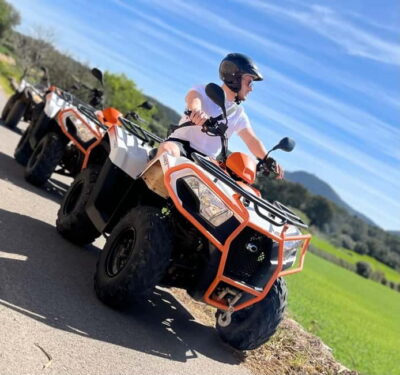
Quad Bike Tour, Snorkeling, and Cliff Jumping
Read our review →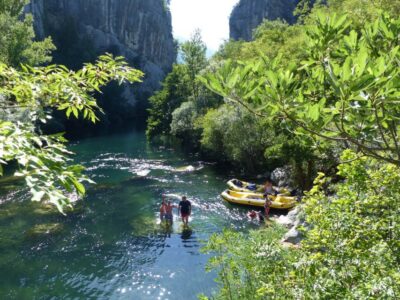
Kayaking, Sea Cave, Cliff Jumping & Snorkel Tour
Read our review →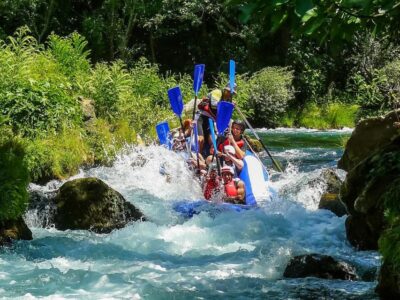
Cetina River Rafting with Cliff Jump & Swimming
Read our review →
Cetina River Rafting with Cliff Jumping and Cave Tour
Read our review →Browse the lists this tour appears in