
REVIEW · CANADA
Squamish: Via Ferrata Climbing Adventure
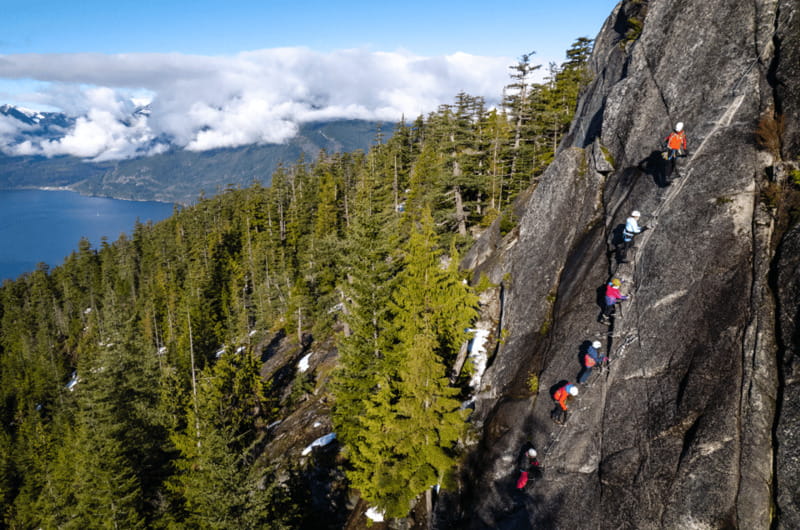
High above Squamish, you follow a steel cable across granite, bridges, and a narrow catwalk while Howe Sound spreads out below. This is rock climbing with a built-in safety system, so you get the thrill of exposure without needing traditional climbing skills.
I like the excellent views of Howe Sound and Sky Pilot Mountain, and I like the careful two-lanyard system that keeps you clipped to the cable as you move. The equipment is well maintained, and guides including Victor, Fraser, Emile, and Victoria have a knack for calming nervous beginners without slowing confident climbers down.
The main consideration is that this is still a physical, exposed activity. One participant found it too easy, while another found it intense, so your experience will depend on your confidence, fitness, and comfort with heights. The 90-minute time limit also means the climb is exciting but fairly compact.
Key points before you book
- The climb begins after a forest walk: You follow the Sea to Summit Trail through old-growth forest before reaching the flight deck and its wide view of Howe Sound.
- Two lanyards keep you attached: Your guide clips you into the fixed cable, and you keep two safety leashes connected as you move.
- The route mixes several obstacles: Expect steel rungs, bridges, a catwalk, and glacier-worn granite rather than one simple rock face.
- Sky Pilot Mountain is part of the view: Snowcapped peaks and Howe Sound give the climb its real sense of place.
- The ticket choice affects value: You can book with or without the Sea to Sky Gondola ride, which matters if you need transport up to the meeting point.
- It suits first-timers aged eight and older: The activity is family-friendly, but it is not suitable for anyone with mobility limitations or a strong fear of exposed climbing.
What the 90-minute Via Ferrata actually feels like
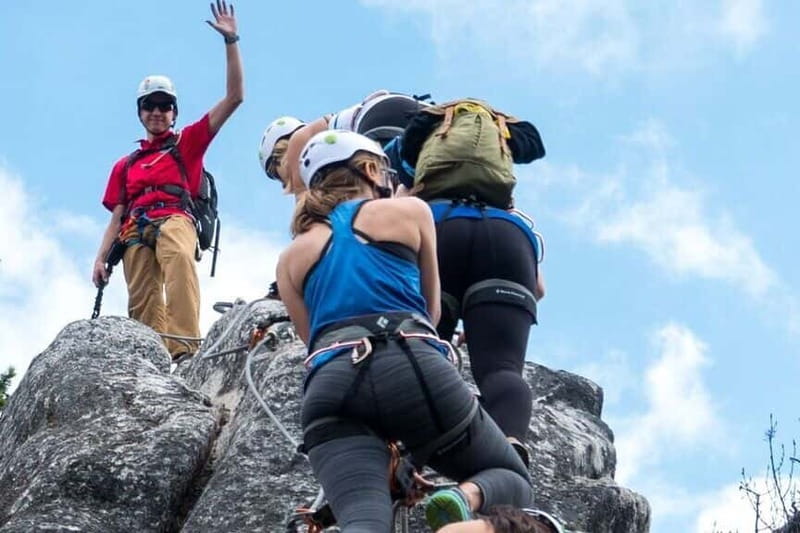
A Via Ferrata sits between hiking and rock climbing. You do not need to bring climbing experience or figure out your own rope system. Instead, you use a helmet, harness, and two lanyards that attach to a permanent steel cable fixed along the route.
That makes the activity approachable, but not tame. You still need to pull yourself up steel rungs, place your feet on rock, cross bridges, and manage your body close to the granite. The cable handles the main safety connection, while your guide explains how to move from one section to the next.
I think this is the tour’s best balance. You get a real feeling of climbing and exposure, but you are not responsible for building anchors, tying knots, or choosing a route. If you are nervous at the start, the safety system gives you a clear job: stay clipped in, listen to the guide, and focus on the next handhold.
The route is short enough to fit into a morning or afternoon plan, though the 90 minutes includes more than the most dramatic climbing. You also have the approach through the forest, the safety briefing and equipment setup, and the return from the summit lodge to consider.
More Via Ferrata Routes in Canada
- Banff: Mount Norquay 2.5 or 4-Hour Guided Via Ferrata Climb
★ 4.9 · 305 reviews - Small-Group Guided Via Ferrata Climbing with Banff’s Best Views
★ 5.0 · 195 reviews - Whistler Via Ferrata Tour
★ 5.0 · 133 reviews
Starting through old-growth forest
Meet at the Summit Shelter at the top of the Sea to Sky Gondola, near the playground. If you choose the option with a gondola ticket, the ride takes you up to the starting area. If you book without that ticket, you need to arrange your own access to the meeting point.
From the shelter, your guide leads you along the Sea to Summit Trail. This first section passes through old-growth forest and gives you time to get comfortable with the group, the guide, and the pace. It also means the activity does not begin with an immediate scramble up a cliff.
That approach is useful for beginners. You can ask questions before you are clipped into the cable, and the guide can explain how the harness and lanyards work. Guides such as Emile have also shared information about the area during this walk, adding some context before the climbing begins.
Bring hiking shoes with a good grip. Sandals, flip flops, high heels, bare feet, and casual shoes that do not feel secure are not allowed. You should also carry warm clothing and rain gear, since the tour runs in wet weather unless lightning makes the conditions unsafe.
The flight deck and the first view
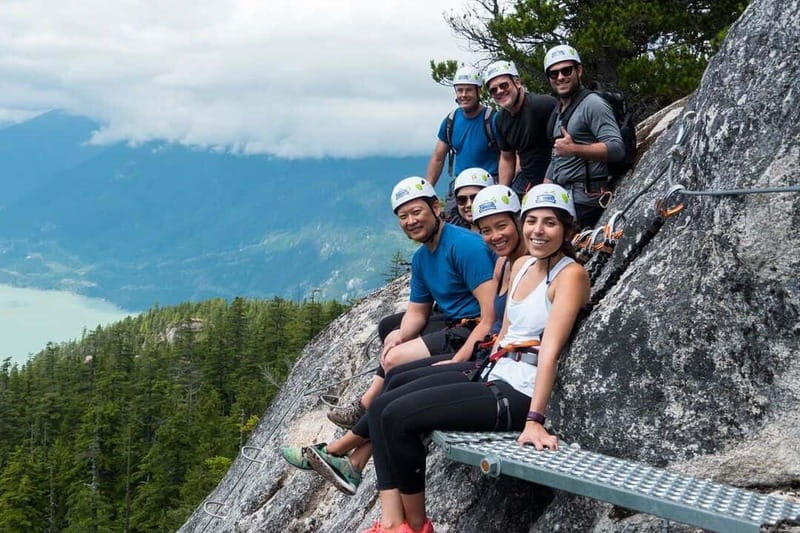
The route reaches the flight deck, where the guide clips you into the fixed safety cable. This is the point where the outing changes from a forest walk into a climbing route.
The view opens toward Howe Sound, with the snowcapped Sky Pilot Mountain adding a strong mountain backdrop. It is worth taking a moment here before you begin moving. Once you are on the route, you will be concentrating on handholds, foot placement, and the next cable section.
Your guide handles the safety setup and shows you how to use the two leashes. The key habit is simple: keep both clipped as you move and transfer them one at a time around cable anchors. That system allows you to progress while maintaining a connection to the route.
This is also the moment to decide how much you want to challenge yourself. You can enjoy the view, but you cannot treat the route like a sightseeing platform. You need to follow instructions and stay aware of the rock and the people ahead of you.
Rungs, bridges, and glacier-worn granite
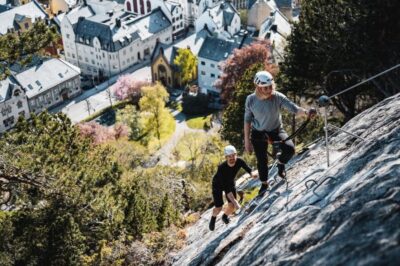
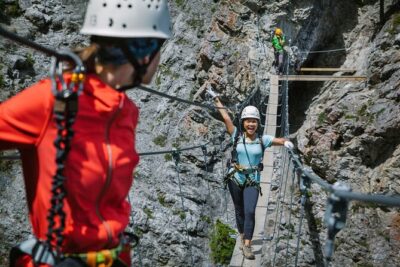
The climbing itself combines several kinds of movement. Steel rungs give you a clear line up sections of rock, while bridges and a catwalk add short stretches where balance and confidence matter more than strength.
You will also move across glacier-worn granite. The rock gives the route a more natural feel than a simple ladder course, even though the steel cable and fixtures provide a clear safety structure. For many people, this mix is the point of the activity: you are not just climbing a metal frame, but moving through real mountain rock.
The fixed cable makes the route manageable for a first Via Ferrata. You do not need to bring a harness or helmet because those are included. Still, the cable does not remove every challenge. If you dislike heights, you may feel the exposure once you look down or reach a bridge.
The pace can vary by group. A nervous climber may need extra time at a transition, while a confident climber may find parts of the route straightforward. One participant considered it too easy, while others found it thrilling or intense. That range is useful to know: this is not an advanced alpine climb, but it is not a gentle walk with occasional handrails either.
Same rush, a different way to get it:
- Niagara Falls, ON: Jet Boat Tour on Niagara River
★ 4.8 · 1,128 reviews - Niagara Falls Canada Open-Top (Wet) Jet Boat Tour
★ 5.0 · 1,000 reviews - Montreal: Jet Boating on the Lachine Rapids
★ 4.9 · 360 reviews - Canmore Caving Adventure Tour
★ 5.0 · 356 reviews
The view is part of the reward
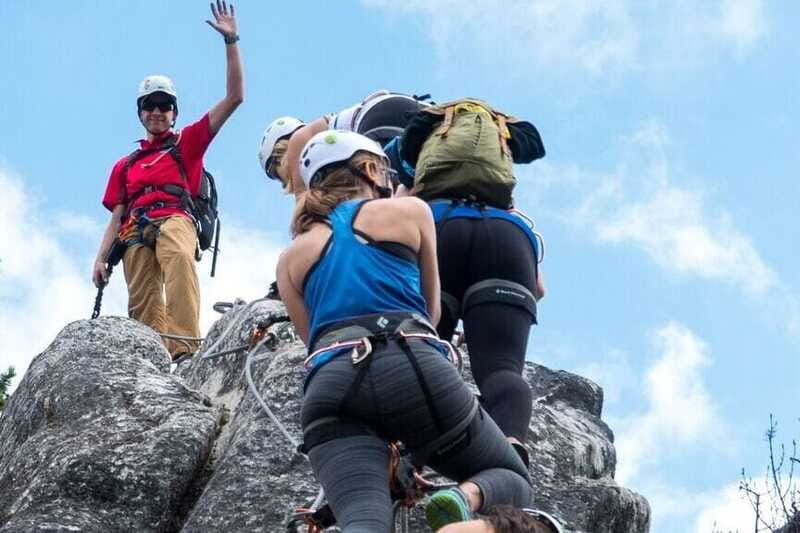
The strongest reason to choose this route over an indoor climbing wall is the setting. You are high above Squamish, looking across Howe Sound and toward the snowcapped peaks of Sky Pilot Mountain.
I would plan to take in the view before and after the most active sections. During the climb, your attention belongs to the cable and rock. At pauses, the setting gives you a chance to understand where you are and why the route is worth the effort.
A camera is allowed, and the activity information suggests bringing one. You should still keep it secure and avoid letting photography distract you from the safety system. One guide, Victor, took and shared photos for the group, which helped people enjoy the route without stopping to photograph every section themselves. You should not assume every guide will provide the same service, but it is worth asking before the climb begins.
Sunglasses and sunscreen are also smart choices. The tour takes place outdoors, and the open views near the climbing route can feel quite different from the shaded forest approach.
Arriving at Sea to Sky Summit Lodge
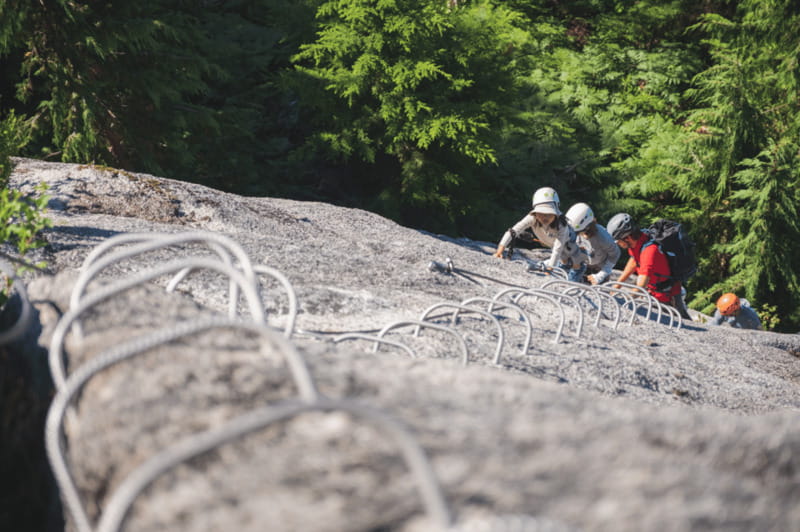
The Via Ferrata finishes at the Sea to Sky Summit Lodge. This gives you a clear endpoint rather than leaving you to retrace the climbing route immediately.
You can relax on the sun deck before returning to the starting point. That pause matters because the activity is short but active, and it gives you time to settle down after the exposed sections. You may also want food or a drink, so bringing your own is sensible.
The lodge stop also makes the outing easier to fit into a larger day at the gondola. The activity is not an all-day mountaineering trip, and the 90-minute duration leaves room for other time at the summit. You should still allow extra time around the tour for the gondola ride, meeting the guide, and getting ready.
How the guide affects your experience
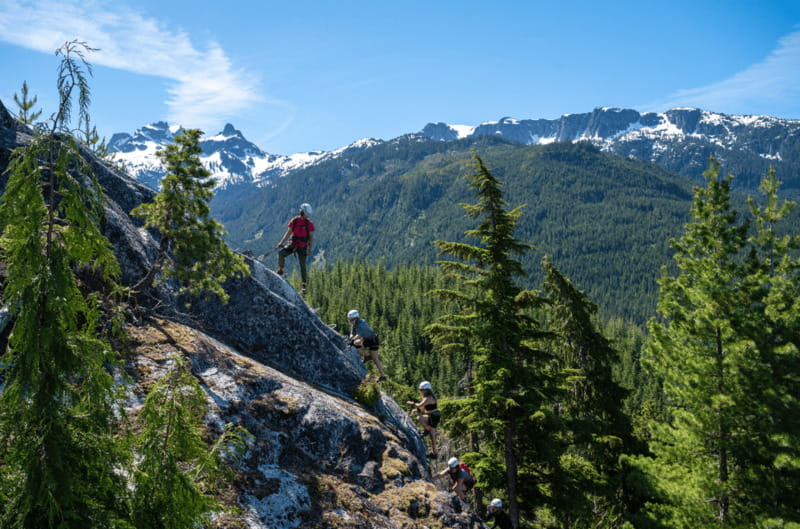
The equipment creates the safety structure, but the guide shapes the day. A good guide needs to explain the lanyards clearly, watch the group, give calm instructions, and know when to encourage someone and when to let them work through a move independently.
The guides named by participants include Victor, Fraser, Emile, and Victoria. Victor was especially supportive of nervous climbers while allowing experienced people to manage their own pace. Fraser was friendly and offered information about the area. Emile helped make a first Via Ferrata feel calm and enjoyable, and Victoria was careful about safety.
That pattern matters if you have never climbed before. You are not simply handed equipment and sent up the rock. You meet a guide, get fitted with a helmet and harness, learn how to stay connected, and receive direction along the route.
Private and small-group options are available. A private outing can make sense if your group has different confidence levels or you want more direct attention. A small group may be the better value if you enjoy meeting others and do not mind adjusting to a shared pace.
Is $94 a good value?
At $94 per person, this is not a casual gondola add-on, but it includes the climbing tour, guide, helmet, and harness. The gondola ticket is included only if you select that option, so compare the two prices carefully.
I see the value in the guide and equipment. Buying or renting climbing gear, learning the cable system, and finding a safe route on your own would not be a practical alternative for most visitors. You are paying for instruction, safety management, and access to a prepared route with mountain views.
The price makes the most sense if you want an active highlight rather than only a scenic ride. If you mainly want views and a relaxed outing, the gondola and summit area may be enough. If you want to use your hands, cross bridges, and feel the rock under your shoes, the added cost is easier to justify.
Private and group pricing can differ, so check the exact option before booking. The reserve-now-and-pay-later choice also gives you some flexibility, and cancellation is free up to 24 hours before the activity.
Who should book this climb?
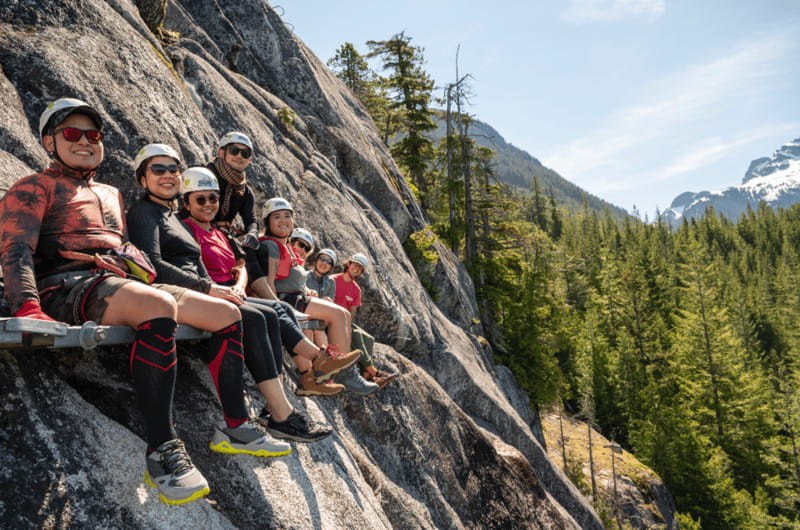
This is a strong choice for first-time climbers aged eight and older who are comfortable with a physical activity and can follow safety instructions. You do not need traditional rock-climbing experience, and the fixed cable removes much of the technical difficulty.
It also suits families with older children, couples looking for something more active than a viewpoint, and confident hikers who want a short climbing challenge. If you have never tried a Via Ferrata, the route and guide support make this a sensible introduction.
Think carefully if you are uneasy with heights. The equipment keeps you connected, but it does not make the exposure disappear. You should also be able to walk the forest approach and move across rock, bridges, and rungs without mobility assistance.
The activity is not suitable for children under eight, wheelchair users, people with mobility impairments, visually impaired people, anyone over 350 pounds or 159 kilograms, cruise ship guests, or anyone under the influence of alcohol or drugs. The booking information also lists people who cannot drive a manual transmission, vegans, and vegetarians as unsuitable, although it does not explain why those restrictions apply. If any of these details affect you, confirm them before paying.
What to bring and what to leave behind
Wear hiking shoes, warm clothing, and sunscreen. Add sunglasses, a camera, food, drinks, and rain gear. Conditions can change quickly in the mountains, and the tour runs in rain.
Large bags, luggage, baby strollers, mobility scooters, electric wheelchairs, surfboards, skateboards, skates, and baby carriages are not allowed. Red wine, alcohol, drugs, fireworks, explosive substances, and bare feet are also prohibited.
The list is unusually broad, but the practical message is simple: arrive ready to climb with a small amount of useful gear. Keep your clothing secure and avoid bringing anything you will need to carry awkwardly across the route.
Weather, safety, and the final decision
The tour operates rain or shine, which makes rain gear important rather than optional. Lightning is the major exception. If lightning strikes within 60 kilometers of the mountain, the tour will be cancelled.
I would book this if you want a guided introduction to Via Ferrata, care about mountain views, and like the idea of a short but physical challenge. The route gives you real exposure, real granite, and a proper safety system without requiring you to be an experienced climber.
I would skip it if you want a quiet sightseeing trip, dislike heights, need wheelchair access, or prefer a longer and more demanding climbing day. For everyone else, the combination of careful guides, solid equipment, bridges, cable work, and Howe Sound views makes this a memorable use of time above Squamish.
FAQ
How long does the Squamish Via Ferrata tour last?
The activity lasts 90 minutes. This includes the approach, equipment setup, guided climb, and return to the starting point.
Where do I meet the guide?
Meet at the Summit Shelter at the top of the Sea to Sky Gondola, near the playground.
Is the gondola ticket included?
A gondola ticket is included only with the booking option that specifically includes it. You can also choose an option without a gondola ticket.
Do I need rock-climbing experience?
No specific climbing experience is stated as a requirement. The guide provides the equipment and instructions, and the route uses a fixed cable system for safety.
What age is required?
The activity is suitable for people aged eight and older. Children under eight cannot join.
Does the tour operate in rain?
Yes. The tour takes place rain or shine, but it will be cancelled if lightning strikes within 60 kilometers of the mountain.
What equipment is provided?
The tour includes a helmet, harness, and climbing tour with a guide. You should bring hiking shoes, warm clothing, rain gear, sunglasses, sunscreen, food, drinks, and a camera.
More Rock Climbing in Canada
- Nido de los Aguiluchos, Monterrey: Hiking + Rock Climbing + 3 Rappels
★ 5.0 · 713 reviews - Sant Feliu de Guixols: Climb Via Ferrata Cala del Molí
★ 5.0 · 253 reviews - Sagres: Coasteering – Swimming, Cliff Jump & Rock Climbing
★ 4.9 · 226 reviews - Gran Canaria: Cliff Climbing Via Ferrata Trip by Maspalomas
★ 4.9 · 177 reviews
Just added around Canada
- Adrenaline Aquatic Tour★ 5.0 · 11 reviews
- Heli Adrenaline Canyoning Tours★ 5.0 · 10 reviews
- Squamish: Canyoning with Professional Canyon Guides★ 5.0 · 2 reviews
- Montreal Bungee: The highest bungee jump in Canada★ 5.0 · 2 reviews
- Kelowna: Adventure Canyoning Tour★ 5.0 · 2 reviews
- Kelowna: Adrenaline Canyoning Tour★ 4.9 · 34 reviews
- Heart Creek Canyoning tour – Beginner friendly – Near Banff★ 5.0 · 5 reviews
- Tyroparc: Via Ferrata and Hiking in the Laurentians★ 5.0 · 5 reviews
Via Ferrata Climbing, compared.
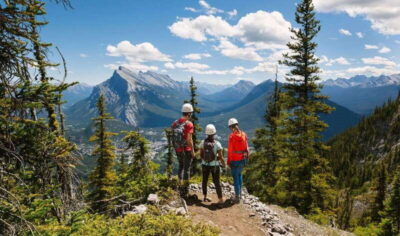
Mount Norquay 2.5 or 4-Hour Guided Via Ferrata Climb
Read our review →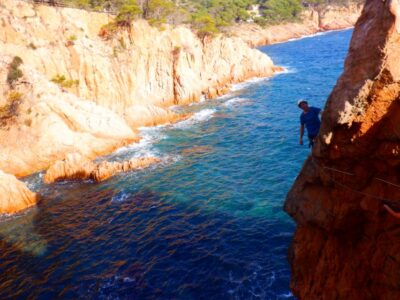
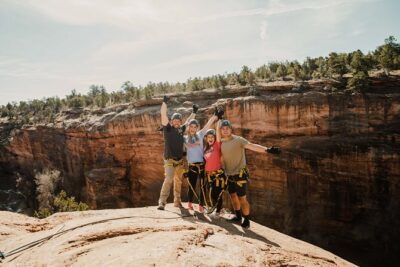
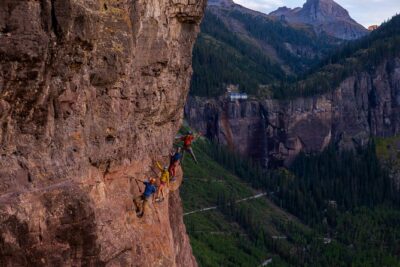
Small-Group Guided Via Ferrata Climbing with Banff’s Best Views
Read our review →
Via Ferrata in Gran Canaria. Vertical adventure park. Small groups
Read our review →Browse the lists this tour appears in