
REVIEW · SPAIN
Elda: El Bolón via ferrata with zipline and abseiling
Elda’s El Bolón route packs a lot into three hours: three linked via ferrata sections, hanging bridges, climbing walls, a zipline, and abseiling. You start with a short walk from the meeting point, learn the safety gear, then clip into the steel lifeline and climb above the Sierra de Bolón.
I like the clear introduction to the equipment and the fact that guides stay with the group. I also like the price: at $53 per person, it covers the guide, safety kit, insurance, and photos and videos. The main thing to check before booking is the zipline length, since the description gives both over 1,000 meters and over 100 meters.
Key points to know before booking
- Three grades in one route: The linked K1, K3, and K2 sections give you a gentle start, a harder middle section, and a return to a lower grade.
- A short approach walk: It takes about 10 minutes to reach the start of the climbing route.
- More than a climb: Expect hanging bridges, horizontal flanking, a zipline, and abseiling as well as metal rungs.
- Safety is built into the price: You get a professional guide, helmet, harness, energy absorber, civil liability insurance, accident insurance, and recorded photos and videos.
- A good group activity: The setup suits friends and families with older children who want a shared physical challenge.
- Check the zipline detail: The information describes it as the longest in Alicante and the Valencian Community, but lists different distances. Ask Masaventuras to confirm the current length.
Starting at the foot of the Sierra de Bolón
The meeting point is at the foot of the Sierra de Bolón, near Elda in the Valencian Community. This is not a sightseeing tour with a long transfer or several separate stops. The activity gets moving quickly, which is useful if you have only part of a day available.
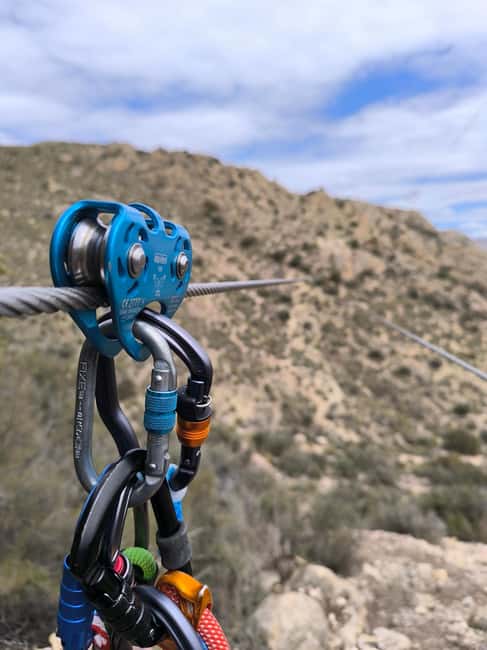
Your guide fits you with a helmet, harness, and energy absorber. That last item is the part that connects you to the via ferrata safety cable and helps protect you if you slip. The guide explains how the equipment works in clear, simple terms before you begin.
That briefing matters. Via ferrata gear can look complicated when you first see the straps and carabiners, but the basic routine is easy to learn. You attach yourself to the lifeline, move along the route, and transfer the carabiners at the fixed points under the guide’s direction.
Wear clothes that allow your legs and shoulders to move freely. The instructions specifically ask you to bring food and drinks, so pack a small supply for the three-hour activity. You do not need to plan on buying refreshments as part of the experience, since food and drinks are not included.
More Via Ferrata Routes in Spain
- Sant Feliu de Guixols: Climb Via Ferrata Cala del Molí
★ 5.0 · 253 reviews - Gran Canaria: Guided Via Ferrata Excursion
★ 4.9 · 198 reviews - Via Ferrata in Gran Canaria. Vertical adventure park. Small groups
★ 5.0 · 183 reviews
The 10-minute walk to the first wall
After gearing up, you walk for about 10 minutes to reach the start. That is short enough to serve as a warm-up rather than a hike, but you should still arrive ready for physical activity.
The approach also gives you a moment to settle your nerves. If this is your first via ferrata, the real challenge begins when you see the wall and the steel cable. The guide can help you get your carabiners attached before you make the first move.
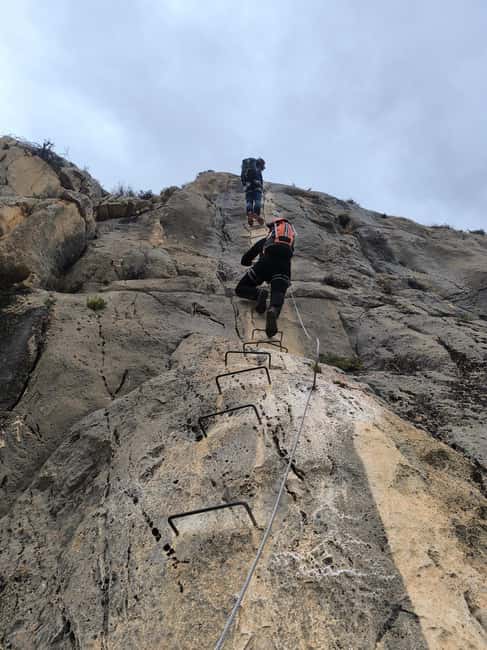
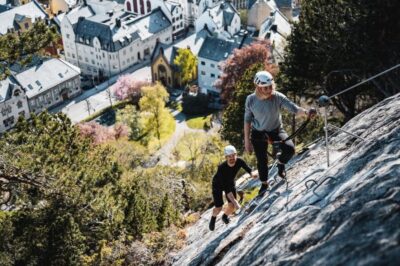
The route begins with a vertical wall fitted with metal rungs. You climb rung by rung, using your arms for balance and your legs to push upward. This is a useful first test because it lets you learn the rhythm of the route without immediately throwing you into the most demanding section.
The grading is listed as K1, K3, and K2. K1 is the easiest grade in the advertised sequence, while K3 is the most demanding of the three. The exact order and location of each grade are not explained in detail, so ask the guide at the briefing where the harder section appears and what to expect from it.
Three linked sections, from K1 to K3 and K2
The appeal of this route is variety. A single short via ferrata can be fun, but three linked sections give you changing levels of effort and different ways to use the rock.
The first section lets you become comfortable with the cable system. You are not simply walking up a ladder. You need to place your feet, keep your body close to the wall, and move your hands from rung to rung while staying clipped in.
The K3 portion is the part to take seriously. The available information does not give a precise length or describe every move, so I would not treat the grade as a minor detail. If you are new to climbing or unsure about heights, tell the guide early. The professional supervision is one of the strongest reasons to book this as a guided activity rather than attempt a route alone.
The K2 section offers another change in pace. It is harder than K1 but below K3 in the stated grading. That progression can make the route feel like a real achievement, especially if the middle section pushes you more than expected.
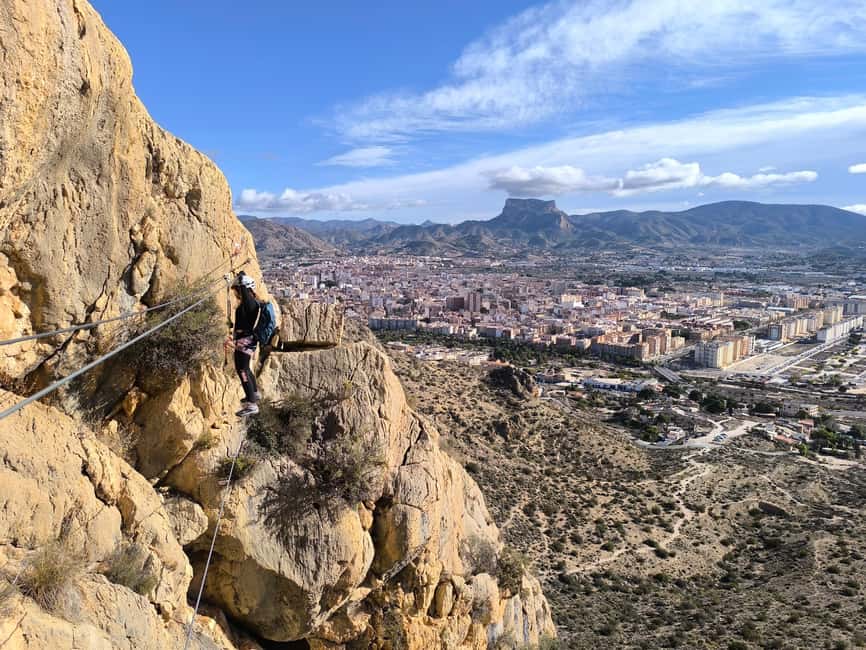
The route also includes horizontal flanking, a section where you move across the rock rather than straight upward. This gives you a wider view and tests balance in a different way. I like this kind of change because it stops the activity from becoming a simple climb up a wall.
Hanging bridges and exposed movement
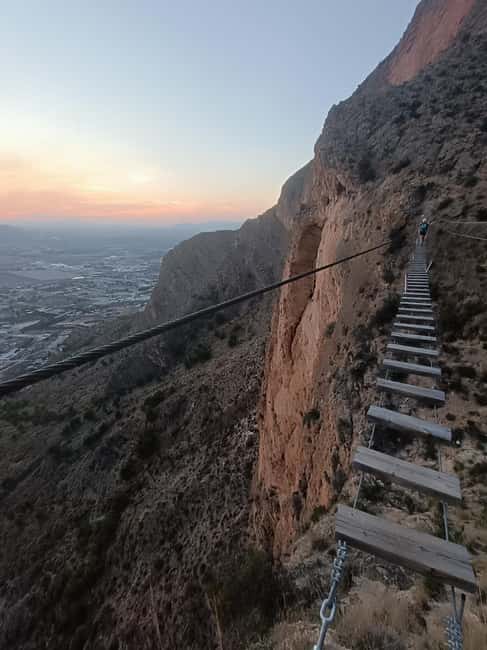
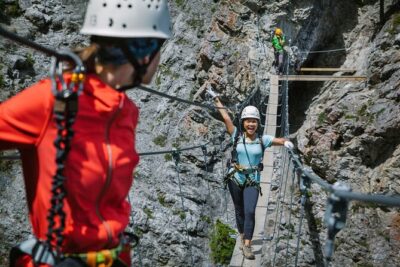
Hanging bridges add the playful part of the route. They shift under your weight and ask you to take careful steps while staying attached to the safety line.
You should expect the bridges to feel more exposed than the fixed rungs. The equipment is there to protect you, but it does not remove the sensation of height or movement. That is exactly why the route is exciting, though it may be uncomfortable if you have vertigo.
The activity is not suitable for people with vertigo or altitude sickness. That restriction is worth taking seriously. A fear of heights is not something the harness can simply solve, since the route is designed around exposure, climbing, and views from above.
The guide-led format helps here. You have someone explaining the next step, checking the equipment, and keeping the group moving. The experience is designed as a shared challenge, so you can encourage the people with you while still getting individual help when needed.
More Zip Lines in Spain
- Climbing + Zipline + Via Ferrata + Cave. Adventure route in Gran Canaria
★ 5.0 · 149 reviews - Agaete: Gran Canaria Coasteering. Marine Ferrata and Zipline
★ 5.0 · 38 reviews - Gran Canaria: Guided Via Ferrata and Zipline Adventure
★ 4.1 · 36 reviews - Caminito del Rey – Via Ferrata & Zip Line Adventure
★ 5.0 · 26 reviews
The zipline and the question of length
The zipline is promoted as a major feature of El Bolón. It is described as the longest zipline in Alicante and also as the longest in the Valencian Community.
There is an important wording issue. One part of the information says the zipline is over 1,000 meters long, while another says it is over 100 meters. That is a large difference, not a minor rounding error. I would contact Masaventuras before paying if the zipline is the main reason you are booking.
The confirmed point is that the activity includes a zipline over the route, presented as a standout feature of the day. You can expect a fast, open-air ride rather than another slow climbing section. The exact position in the route is not specified, so the guide will explain when you reach it.
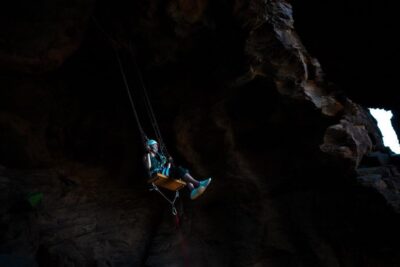
The same applies to abseiling. It is included in the experience title and the general description of the activity, but the detailed route notes do not explain how long the abseil is or where it takes place. Ask about the sequence during the safety briefing if you want to know how the climbing, zipline, and descent fit together.
What the guide does for you
A guide is not just there to lead the way. On this route, the guide explains the gear, shows you how to clip into the lifeline, and supervises the group through the climbing sections.
That is especially valuable on the K3 section and during any change from climbing to the zipline or abseiling. Each part uses the equipment in a slightly different way, and a clear handover makes the activity easier to follow.
Masaventuras provides professional guides who speak English, French, Catalan, Portuguese, and Spanish. That broad language range is useful for mixed groups. The supplied information does not give the guides’ names, so you cannot request a particular guide from the details available.
Photos and videos are included. This adds value because your hands will be busy during the climb, and stopping to take your own pictures would be awkward and less safe. You can focus on the route while the guide or activity team records the experience.
The insurance is also included. The package covers civil liability and accident insurance. That does not mean you can ignore the safety instructions, but it removes one concern when comparing the $53 price with a casual outdoor activity that might not include the same cover.
Is $53 good value for three hours?
At $53 per person, this is a fair price for an active half-day experience. You are paying for professional supervision, specialist equipment, insurance, a multi-part route, and photos and videos.
The value is strongest if you want several activities in one booking. A simple via ferrata would give you the climbing, while this experience adds bridges, a zipline, and abseiling. The three-hour duration is also long enough to feel like a proper outing without taking up an entire day.
Food and drinks are not included. That is not a serious flaw, but you should bring your own supplies. The instructions mention both food and drinks and comfortable clothes, so plan to carry what you need before setting out.
The small number of available ratings means I would avoid treating the perfect score as a guarantee for every group. Still, the specific feedback is useful. Karen from the Netherlands described the activity as challenging and very fun, while Bartosz from Poland said he and his son felt safe and well cared for throughout the trip. That points to the route’s strongest qualities: challenge, organization, and close attention to safety.
Who should book this El Bolón experience?
I would recommend it to active adults, groups of friends, and families with older children who enjoy trying something physical together. The activity creates a clear shared goal, and the mix of climbing and aerial obstacles gives everyone something to talk about afterward.
It can also work well for a first via ferrata, provided you are comfortable with heights and follow instructions. The equipment briefing is designed to make the system easy to understand, and the guide remains with the group.
Children under five cannot take part. Pregnant women and people with vertigo or altitude sickness should not book it. The route involves height, exposed movement, and physical effort, so this is not a gentle walk with a few optional obstacles.
The available information does not set out a detailed fitness requirement. I would still expect to climb, balance, grip rungs, and remain active for much of the three hours. Comfortable clothing is essential, and you should tell the guide if you have concerns about the more difficult section.
How the experience fits into a day in Elda
The three-hour length makes this easy to place in a wider visit to the Valencian Community. It is long enough to feel substantial, but short enough to leave room for a meal or another activity afterward.
Because the meeting point is at the foot of the Sierra de Bolón, allow time to arrive ready rather than rushing in at the last minute. The short walk to the route comes after the equipment fitting, so you want your clothing and personal items sorted before the briefing begins.
This is an outdoor activity, and the practical details matter more than they might on a museum visit. Bring water and food. Wear comfortable clothes. Listen carefully when the guide explains the energy absorber and carabiners. Those small steps will make the route more enjoyable.
The activity offers free cancellation up to 24 hours before the start for a full refund, and you can reserve now and pay later. Those terms help if your plans around Elda are still changing. Check the available starting times before booking because the three-hour duration alone does not tell you whether the outing fits your schedule.
My verdict on El Bolón via ferrata
Book this if you want a guided outdoor challenge with more variety than a basic climb. The combination of K1, K3, and K2 sections, hanging bridges, horizontal movement, a zipline, and abseiling gives the three hours a strong sense of progression.
The best reasons to choose it are the professional supervision, the included equipment and insurance, and the chance to share a memorable challenge with your own group. The feedback from Bartosz is especially useful for families, since he and his son felt safe and looked after while still finding the route thrilling.
I would pause only if you are uncomfortable with height, unsure about physical climbing, or booking mainly for the advertised zipline distance. Ask Masaventuras to confirm whether the current zipline is over 100 meters or over 1,000 meters, and ask how the abseiling fits into the route. If those points are clear and you like active outings, El Bolón offers solid value at $53.
FAQ
Where does the El Bolón via ferrata begin?
The activity begins at the foot of the Sierra de Bolón in the Valencian Community, Spain.
How long does the activity last?
The full experience lasts about three hours.
How long is the walk to the route?
The walk from the meeting point to the start of the route takes about 10 minutes.
Which via ferrata grades are included?
The route includes three linked sections graded K1, K3, and K2.
Does the activity include a zipline?
Yes. The experience includes a zipline described as the longest in Alicante and the Valencian Community. The supplied details give both over 1,000 meters and over 100 meters as its length, so confirm the current distance with Masaventuras.
Is abseiling included?
Yes. Abseiling is included in the experience description, though the exact length and position within the route are not specified.
What equipment is provided?
Masaventuras provides a helmet, harness, and energy absorber, along with professional guide support.
Are insurance and photos included?
Yes. Civil liability insurance, accident insurance, and photos and videos of the experience are included.
What languages can the guide speak?
Guides are available in English, French, Catalan, Portuguese, and Spanish.
Who should not take part?
The activity is not suitable for children under five, pregnant women, people with vertigo, or people with altitude sickness.
More Abseiling and Rappelling in Spain
- Estany d’en Mas: Coastal Hike, Abseil & Sea Cave Exploration
★ 4.9 · 162 reviews - Callosa del Segura: Guided Via Ferrata in Callosa K3 with abseiling
★ 5.0 · 3 reviews - Matacanes : Canyoning + Hiking + Water Jumps + Rappel + Caves
★ 5.0 · 1,497 reviews - Selva Maya Eco Adventure Park: Ziplining, Hanging Bridges, Rappelling and Cenote
★ 5.0 · 1,057 reviews
Just added around Spain
- From Granada: Climb Zafarraya’s ‘Via Ferrata John Hogbin’★ 5.0 · 6 reviews
- Caminito del Rey: Vía Ferrata Rappeling & Zip-Lining★ 5.0 · 22 reviews
- El Chorro: Climb Via Ferrata at Caminito del Rey★ 5.0 · 22 reviews
- Dry canyoning Chimoche★ 4.7 · 2 reviews
- Coasteering South★ 5.0 · 3 reviews
- Mallorca: Cliff Jumping Adventure for Cruise Passengers★ 5.0 · 5 reviews
- Alcudia: Coasteering Cliff Jumping★ 5.0 · 5 reviews
- Coasteering North★ 5.0 · 2 reviews
Via Ferrata Climbing, compared.
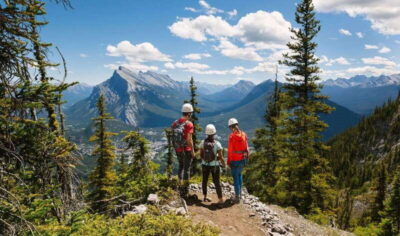
Mount Norquay 2.5 or 4-Hour Guided Via Ferrata Climb
Read our review →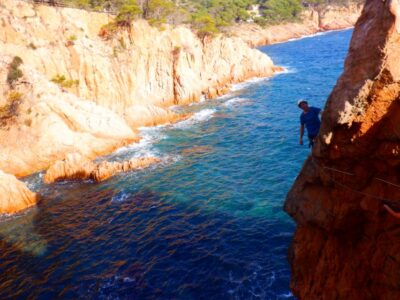
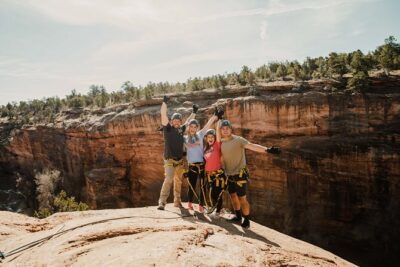
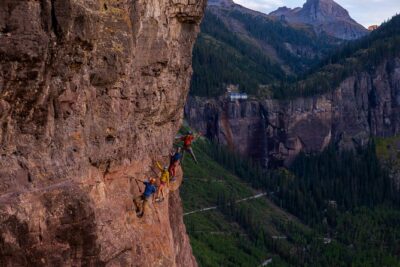
Small-Group Guided Via Ferrata Climbing with Banff’s Best Views
Read our review →
Via Ferrata in Gran Canaria. Vertical adventure park. Small groups
Read our review →Browse the lists this tour appears in