
REVIEW · JAPAN
Fun Canyoning Activity at the bottom of Mt. Fuji
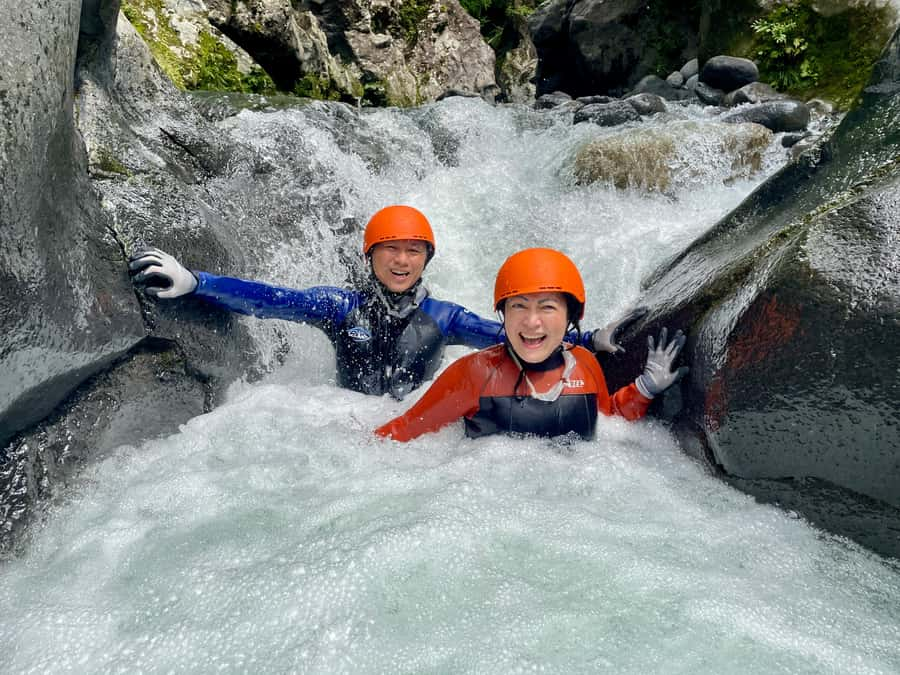
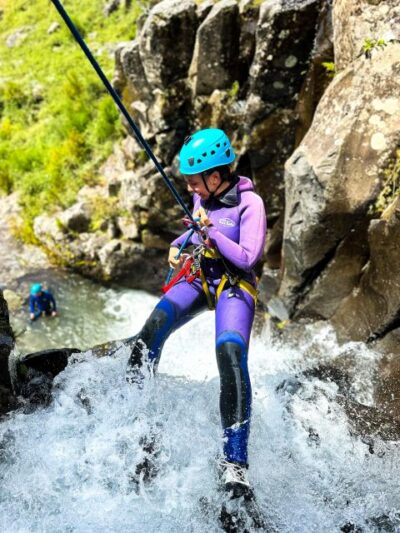
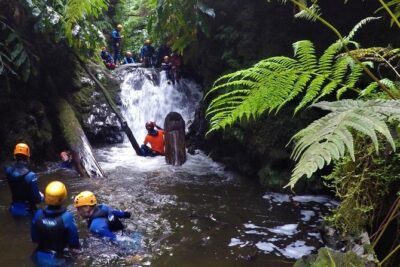
At the foot of Mt. Fuji, black volcanic rock forms a narrow gorge where you can walk in running water, slide down natural chutes, jump into pools, and use ropes to reach the next section. This is a hands-on way to see Fuji’s volcanic side, not just admire the mountain from a viewpoint.
I like the gentle introduction for beginners, with equipment, a safety lesson, and patient English-speaking guides such as Yuki and Sami. I also like the practical extras: photos and videos from the guides, plus a free onsen bathing ticket afterward. The main drawback is that canyoning still involves cold water, heights, and physical effort, so it is not a casual sightseeing stop.
Key points at a glance
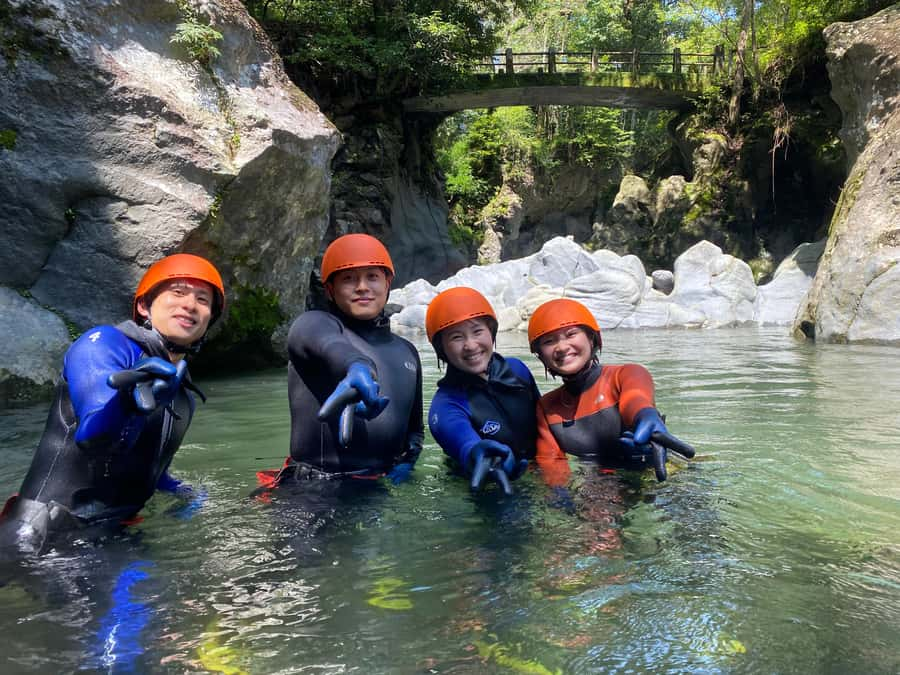
- Volcanic gorge near Mt. Fuji: Walk through natural lava scenery shaped by water and old volcanic activity.
- Made for first-timers: Learn basic techniques before entering the gorge, with no advanced canyoning background required.
- Three hours in the water: Expect jumps, natural slides, pools, and a rope-assisted descent.
- Two trained guides: English and Japanese instruction is available, with Yuki and Sami among the guides named for the experience.
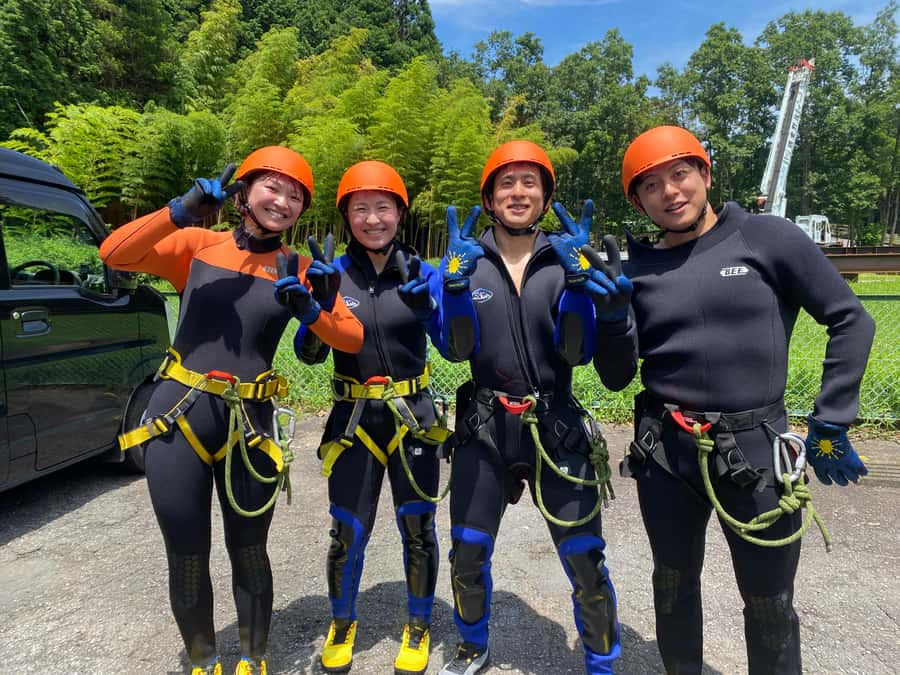
- All main gear supplied: Wetsuit, socks, shoes, gloves, helmet, harness, carabiners, and ropes are provided.
- Onsen afterward: A free ticket for onsen bathing gives you a useful way to warm up and relax after the gorge.
A rare canyoning setting beneath Mt. Fuji
Most Mt. Fuji activities keep you looking up at the mountain. This one turns your attention to the ground beneath it, where lava has created rough channels, pools, and narrow passages. The result is a wet, active outing with scenery you will not get from a standard viewing platform.
The gorge is in Shizuoka Prefecture, in the Fuji area. It is described as the first and only canyoning operation close to Mt. Fuji, which gives the experience a clear sense of place. You are not simply doing a generic river activity in Japan. You are moving through a gorge shaped by Fuji’s volcanic environment.
I like that the natural setting is part of the activity rather than a backdrop. The rock, water, and changing height of the gorge give you something to notice between the more playful sections. The tour is also suitable for families, couples, and friends, provided participants meet the age and fitness requirements.
The experience runs from April through the end of November. That long season gives you useful flexibility, though conditions will change as the year progresses. You should expect to get wet in every season, so your choice of clothing before and after the activity matters more than usual.
More Canyoning Tours in the world:
- Canyoning Da Lat Vietnam
★ 5.0 · 2,063 reviews - Full Day Canyoning Activity in Da Lat with Lunch
★ 5.0 · 1,577 reviews - Matacanes : Canyoning + Hiking + Water Jumps + Rappel + Caves
★ 5.0 · 1,497 reviews
What the three-hour outing actually involves
You meet five minutes before your booked starting time at the designated meeting point. The location depends on how you arrive. By train, pickup is available at JR Iwanami Station. By bus, use the Misyukushimo Bus Stop. If you drive, the meeting point is Keigashima parking lot, where parking is available.
Look for staff wearing Fujiyama Canyoning Japan T-shirts. That detail sounds small, but it makes the meeting easier, especially if you are arriving at a station or bus stop and do not know the area.
The first practical task is changing into the equipment. Bring your swimsuit, and expect to use changing tents at the meeting point. The outfitting includes a wetsuit and socks, shoes, gloves, helmet, harness, carabiners, and ropes. Gloves are listed twice in the equipment information, but the useful point is simple: the main protective and technical gear is supplied.
Hand valuables to the guide for safekeeping. Your dry clothes are placed in a basket or safe storage area in the tour vehicle, so you can change after the activity. Do not bring alcohol or drugs, and leave anything you do not need out of the gorge.
Before entering the water, the guides give a short lesson on canyoning technique and general rules. This matters for first-timers. You are not expected to arrive knowing how to use a harness or move through a gorge. The briefing gives you the basic habits needed for the jumps, slides, and rope sections.
The gorge portion includes walking, jumping into natural pools, sliding down water chutes, and rappelling with ropes and devices. The exact order and difficulty can depend on conditions and the group, so you should think of the outing as a guided sequence of water features rather than a fixed list of identical obstacles.
Why first-timers are the right audience
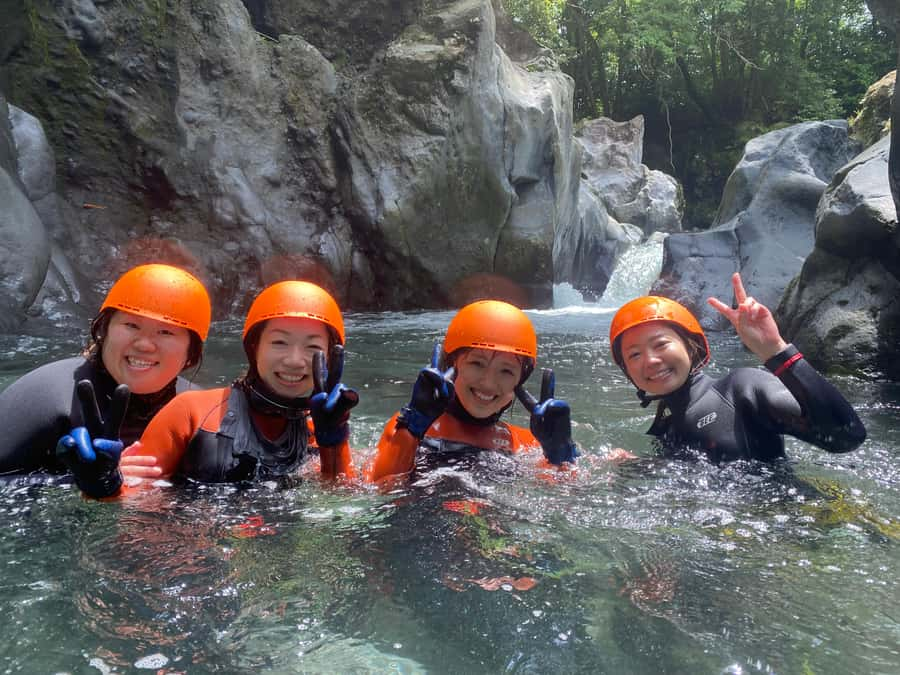
The tour is built around a beginner level, and that is one of its strongest features. You do not need excellent swimming skills, and there are no long distances to swim. You do need to feel comfortable in water, have a reasonable level of fitness, and, if possible, feel reasonably calm around heights.
That distinction is important. You can be a weak swimmer and still participate, but you should not book this if being in moving water makes you panic. Canyoning is not completely safe because natural water levels, rock, and weather can change. The guides cannot remove every risk, but two highly trained professional guides accompany the group and teach you how to handle the activity.
The most encouraging part for beginners is that technical skill is not treated as the point of the day. A more advanced participant may handle harder features, but that does not automatically make the experience more enjoyable. Here, the aim is to give you a manageable introduction to the sport in a memorable setting.
Children under 10 cannot join, and the activity is not suitable for pregnant women. The information does not provide a maximum age or a detailed fitness test, so you should judge your own comfort with cold water, climbing, jumping, and walking over uneven rock.
The guides make the difference
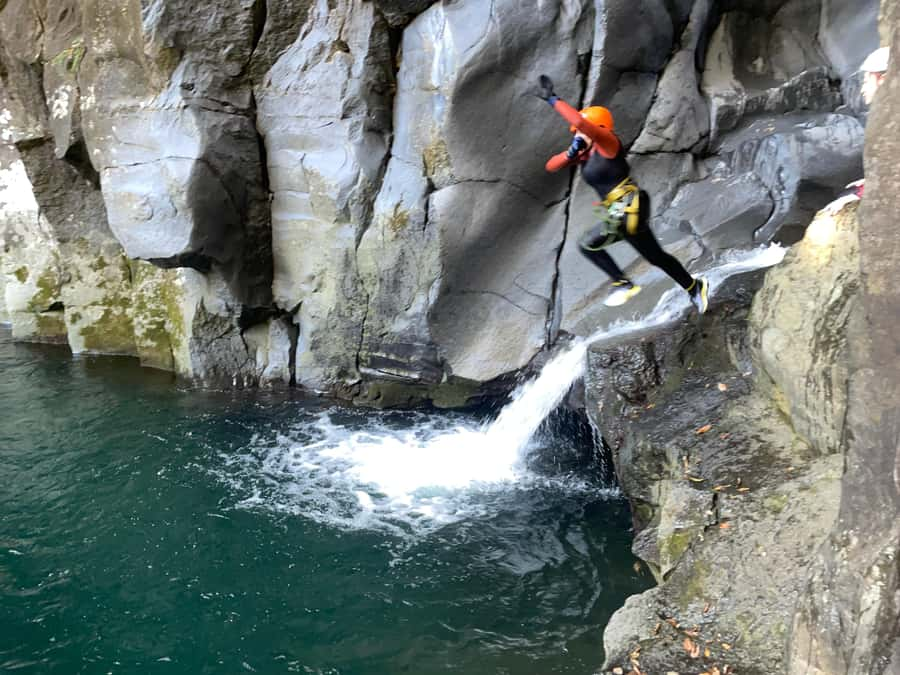
Guided canyoning requires more than someone who knows the route. You need clear instructions before each feature, calm decisions when conditions change, and enough patience to let a beginner work through a jump or rope section at their own pace.
Yuki and Sami are named as guides for this experience. The feedback about them highlights a calm, well-prepared approach and an outing adapted to beginner ability. That is exactly what you want here. A loud or rushed guide could make a first canyoning trip stressful, while a calm guide gives you room to concentrate.
Instruction is available in English and Japanese. You should still pay close attention to hand signals and demonstrations, since water noise and helmets can make conversation harder once you are inside the gorge.
The guides also take photos and videos using a GoPro and a waterproof iPhone Pro. If you use an iPhone, the files can be sent by AirDrop right after the tour. Android users receive a Google Drive link after the evening of the same day, and GoPro footage is also sent through Google Drive. This is a useful inclusion because taking your own phone into a wet gorge would be a poor plan.
More Adrenaline Activities in the world:
- ThrillSeekers: Aruba UTV Tour & Cliff Jump at Natural Pool
★ 5.0 · 5,733 reviews - Luquillo Beach Horse Ride from Carabalí Rainforest Adventure Park
★ 5.0 · 4,762 reviews - Aruba UTV Tour with Natural Cave Pool and Cliff Jumping
★ 5.0 · 4,492 reviews - Barcelona Costa Brava Kayak, Snorkel & Cliff Jump Day Tour
★ 5.0 · 3,872 reviews
Lava rock, water chutes, and natural pools
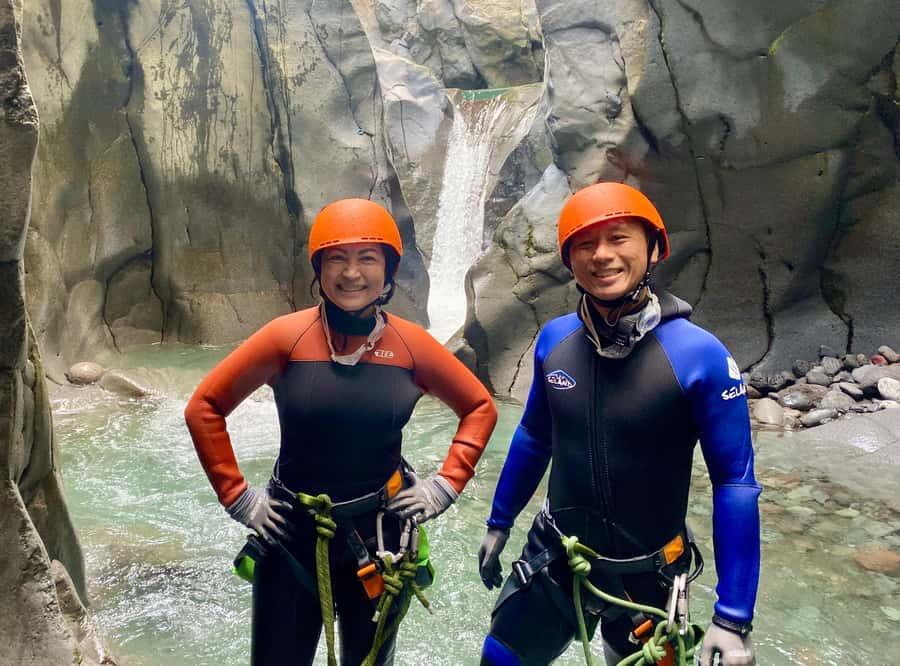
The best part of the outing is the mix of movement and scenery. Lava rock gives the gorge an uneven, dark character, while running water has shaped pools and channels through it. You are not just passing through a canyon on foot. You interact with each section by sliding, jumping, climbing, or using a rope.
Natural pools provide the setting for jumps and water entries. The information does not specify jump heights, so do not book expecting a particular adrenaline level. The guides will manage the route according to conditions and the group’s ability.
The water chutes are another highlight. Natural slides are more irregular than a purpose-built water park ride, which is part of their appeal. They also require you to listen carefully to the guide and use the correct body position. This is one reason the briefing and equipment matter.
Rappelling adds a more technical element. You descend toward a pool using ropes and devices rather than simply walking down. If you have never used a harness before, this can feel like the most serious part of the day, but the beginner format means the technique is introduced before you need it.
Rain, water levels, and the limits of nature
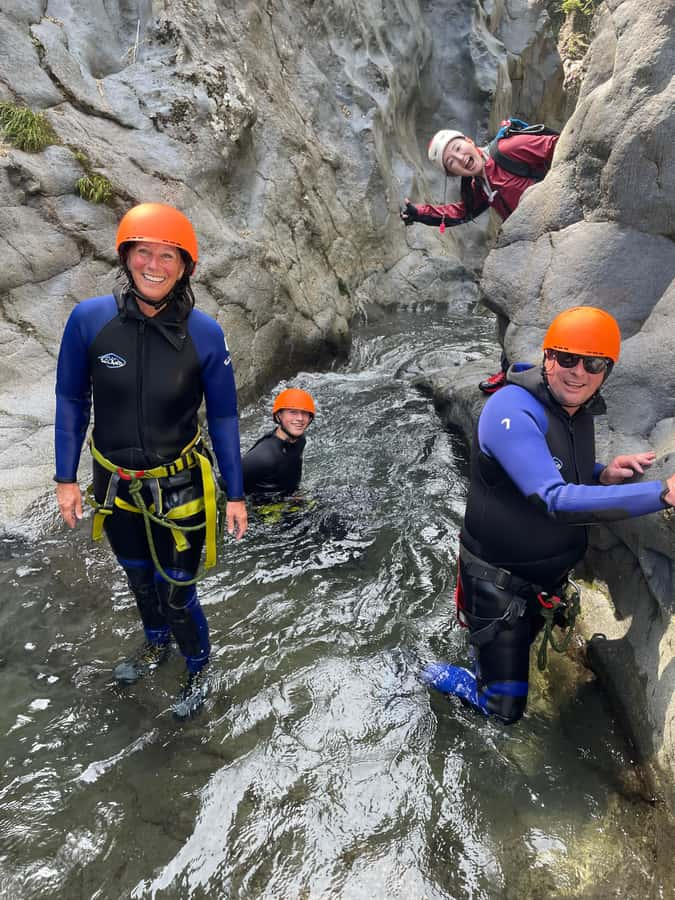
Canyoning can continue in rain because you are already going to get wet. A light or ordinary rainy day does not automatically cancel the activity, and the gorge may even feel more connected to its natural setting in wet weather.
The important limit is prolonged heavy rain. If the water rises to a dangerous level, the tour is suspended. This is a sensible safety rule, but it also means you should keep some flexibility in your Fuji-area plans if the forecast is poor.
You should not treat the activity as guaranteed in every condition. The guides make the final safety call based on water levels. If your schedule is tight, the free cancellation policy helps: you can cancel up to 24 hours in advance for a full refund. Same-day weather changes may still affect the tour, so check the operator’s instructions before setting out.
What to bring and what to leave behind
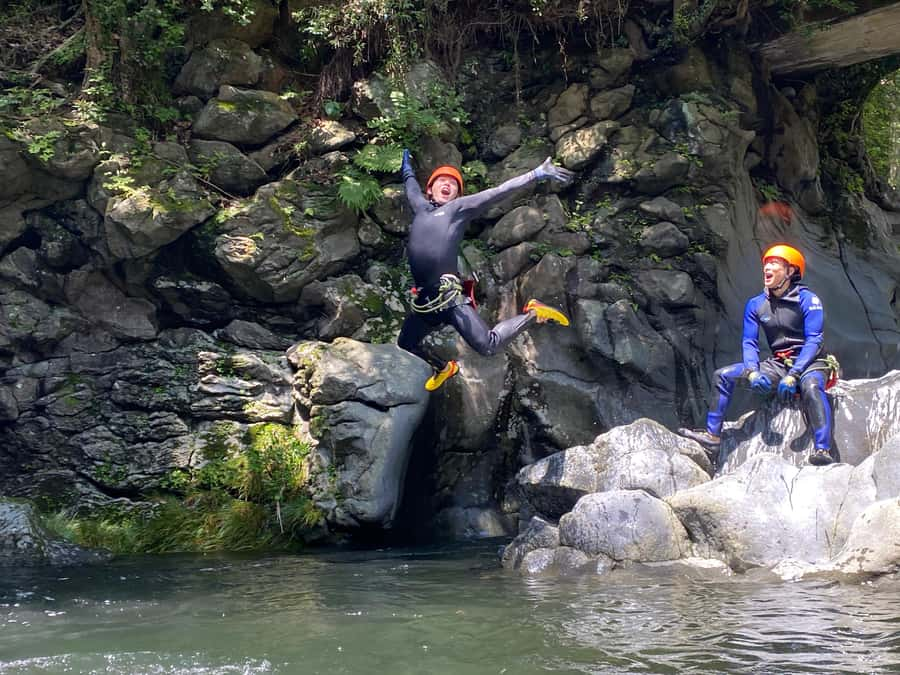
Your packing list is short:
- Swimsuit
- Towel
- Beachwear or dry clothing
- Any personal items you need after the tour
The wetsuit and technical equipment are provided, but the towel is not. A towel becomes especially useful if you plan to use the included onsen ticket afterward.
Keep valuables to a minimum. The guides provide safe storage for belongings, but there is no reason to bring expensive items into an activity built around water, rock, and rope. Your phone is not needed in the gorge because the guides handle the photos and videos.
The onsen ticket is a welcome practical touch. After three hours in cold water and wet gear, a hot bath can make the experience much more comfortable. Bring the items you need for changing, since food, drinks, swimsuits, and towels are not included in the tour package.
Is $130 a fair price?
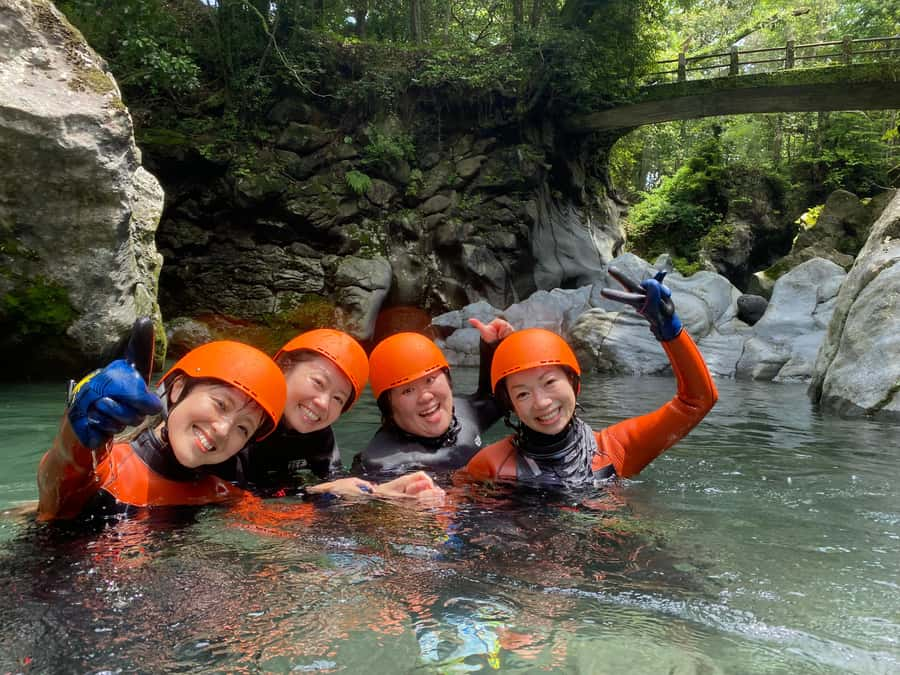
At about $130 per person, this is not a cheap add-on like a short walk or a simple scenic stop. You are paying for a three-hour guided activity, specialist safety equipment, two professional guides, transport pickup from listed public-transport points, photos and videos, and an onsen bathing ticket.
The value improves if you would otherwise need to rent gear or arrange transport to a remote gorge. The wetsuit, shoes, helmet, harness, ropes, and related equipment are already organized. The guide support is also important because canyoning is not an activity I would recommend attempting independently.
The price makes the most sense for you if you want an active Fuji-area experience rather than a packed sightseeing day. It is less suitable if your goal is simply to see Mt. Fuji with minimal exertion. You should also remember that food and drinks are not included, and you need to bring your own towel and swimwear.
Private or small-group arrangements are available. A small group can be worth considering if you are nervous about your first jump or want more direct instruction. If you are alone, you can join a group, but a one-person booking carries an additional fee of 16,500 Japanese yen.
Who should book this Fuji activity?
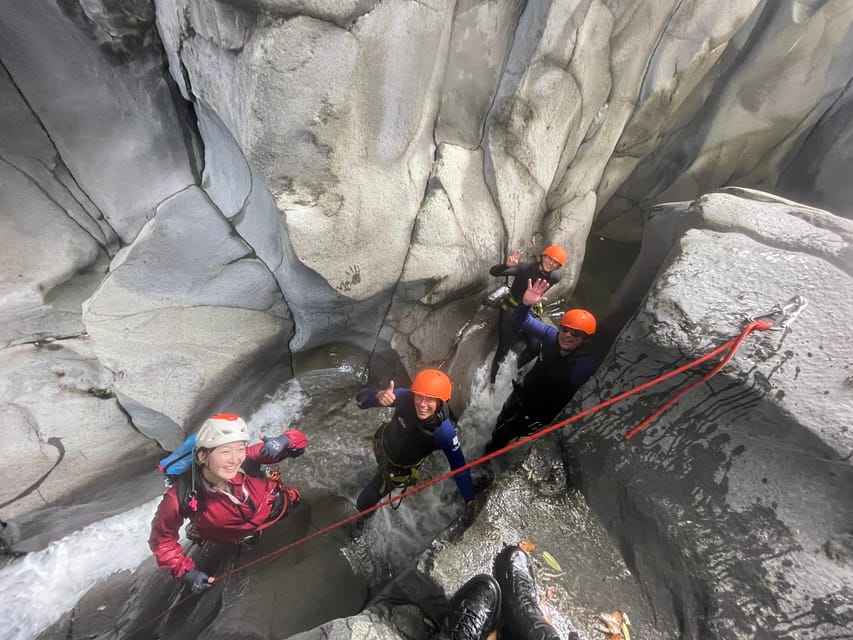
I would recommend it to adults and children aged 10 or older who feel comfortable in water and want a physical, playful day. It suits couples and friends especially well because the jumps and slides give you a shared challenge without requiring advanced skill.
Families should think about each child’s reaction to cold water, heights, and changing conditions. The activity is family-friendly in its beginner level, but it is not a passive family attraction. Everyone needs to participate physically.
This is also a good choice if you have already seen the main Fuji viewpoints and want a different way to experience the area. The volcanic gorge gives the day a stronger local character than another standard observation stop.
It is not the right choice if you dislike getting wet, cannot manage uneven ground, or feel uneasy around natural pools and ropes. If you already have canyoning experience, the beginner route may feel too easy. An advanced Fuji canyoning tour is recommended for participants with more experience.
Booking details that matter
The tour lasts three hours, but allow extra time around the start and finish for changing and using the onsen. Confirm the starting time when you check availability, since several time options may be offered.
You can book and pay later, which helps if your Fuji plans are not fully fixed. Pickup is available from JR Iwanami Station and Misyukushimo Bus Stop, while drivers can meet at Keigashima parking lot.
The operator offers English and Japanese support, private bookings, and small groups. Booking is required, and you should arrive five minutes before the start rather than treating the meeting time as a loose suggestion.
Should you book it?
Book this canyoning trip if you want to get wet, move through a volcanic gorge, and try jumps and natural slides with strong beginner support. The calm guiding style associated with Yuki and Sami, the supplied equipment, photo service, and onsen ticket make the $130 price easier to justify.
Skip it if you want a relaxed Fuji viewpoint, dislike cold water, or have a very tight schedule with no room for weather changes. For most active visitors, though, this is a memorable way to experience the mountain from below rather than simply photograph it from afar.
FAQ
Where does the canyoning tour take place?
It takes place in the Fuji area of Shizuoka Prefecture, in a natural lava gorge close to Mt. Fuji.
How long does the activity last?
The canyoning experience lasts three hours. Starting times are shown when you check availability.
Is the tour suitable for beginners?
Yes. The tour is designed for first-timers, with an introductory lesson covering canyoning technique and general rules before entering the gorge.
Do I need to be a strong swimmer?
No. You do not need perfect swimming skills or long-distance swimming ability. You should feel comfortable in water.
What equipment is included?
The tour provides a wetsuit, socks, shoes, gloves, helmet, harness, carabiners, and ropes.
What should I bring?
Bring swimwear, a towel, and beachwear or dry clothing. Food and drinks are not included.
Can I join if I am traveling alone?
Yes. One-person bookings can join a group, but an additional fee of 16,500 Japanese yen applies.
What happens if it rains?
The tour can operate in rain because you will get wet during canyoning. After a long period of heavy rain, the water may become dangerous and the tour can be suspended.
Just added around the world
- Sierra de las Nieves: Zarzalones Canyoning For Rappel Lovers★ 5.0 · 11 reviews
- Zanzibar Extreme Tandem Buggy Adventure★ 4.3 · 7 reviews
- WOOKEY HOLE CAVES: Wild Wookey Caving Adventure★ 5.0 · 9 reviews
- Zakopane: Extreme Quad Adventure with Bonfire & Transfers★ 4.8 · 22 reviews
- Zakopane: Extreme Quad Ride & Highlander BBQ + Thermal Pools★ 5.0 · 2 reviews
- Warsaw: Extreme Shooting Range Experience with Transfers★ 4.2 · 9 reviews
- Water activity, kayak tours with a guide, cliff jumping★ 4.8 · 71 reviews
- Wild canyoning in Sierra de las Nieves, Málaga★ 5.0 · 22 reviews
Canyoning Tours, compared.
Full Day Canyoning Activity in Da Lat with Lunch
Read our review →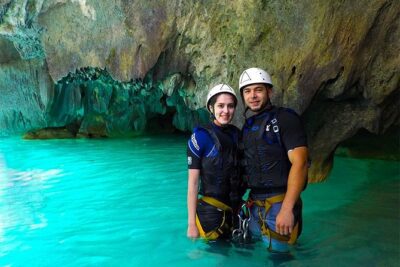
Canyoning + Hiking + Water Jumps + Rappel + Caves
Read our review →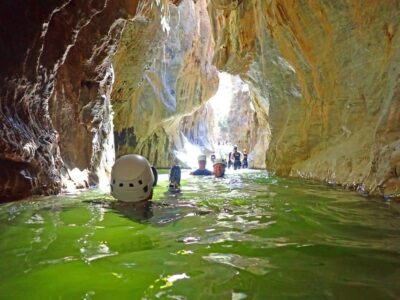
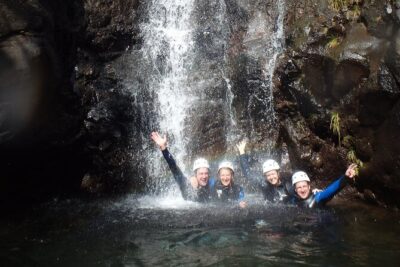
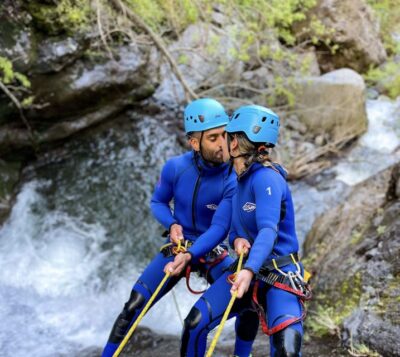
Browse the lists this tour appears in