
REVIEW · ITALY
Via Ferrata Rio Sallagoni
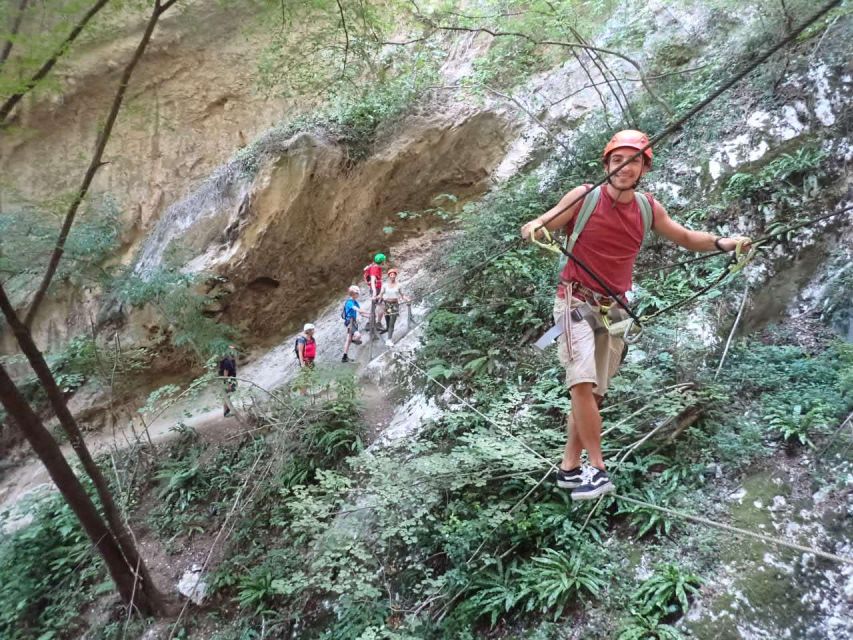
Rio Sallagoni is a short via ferrata with a big sense of adventure. You move along the steep sides of a cool, shaded gorge, passing little waterfalls and pockets of light before reaching the distinctive Castle of Drena. It feels part hike, part canyon route, and part very well-organized aerial obstacle course.
I like the fairy-tale canyon setting and the fact that the route stays cool in summer. I also like the small groups of up to six, since a guide can give more direct help on the cable sections and bridges. The main caution is simple: a medium C route still demands strength, balance, and comfort with heights, even though exposure is described as limited.
Key points
- Two Tibetan bridges: One is roughly 10 metres long and gives the route its clearest balance test.
- A shaded gorge: Rio Sallagoni stays cool, with waterfalls and changing light along the rock walls.
- Medium C difficulty: Easier variants are possible, but some iron steps are spaced far enough apart to require effort.
- A compact outing: The approach takes about 10 minutes, the ferrata is short and varied, and the return takes about 30 minutes.
- A memorable finish: The route leads near the characteristic Castle of Drena.
- Guided and small-scale: A UIAGM mountain guide leads up to six people, with equipment and liability insurance included.
Inside the cool walls of Rio Sallagoni
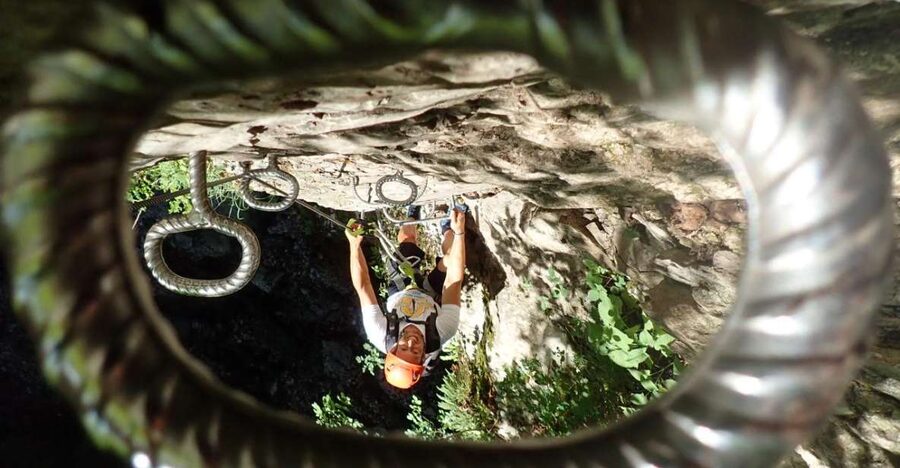
The appeal of Rio Sallagoni is how quickly the setting changes. After a short approach of about 10 minutes, you reach a narrow gorge where rock walls, water, and fixed climbing hardware replace an ordinary walking trail.
Light slips into the canyon in shifting patches. Small waterfalls add sound and movement, while the shaded rock keeps the air cooler than you may expect on a hot summer day. You are close to water, but the goal is to stay above it, moving along the sides of the gorge rather than walking through the stream.
That gives the outing a canyoning feel without requiring you to get wet. You still have the sensation of entering a rough, enclosed natural passage, but your route follows iron steps, cables, and rock ledges.
I find this setting more interesting than a standard cliffside ferrata. The canyon does much of the work. Even when the route is technically straightforward, the walls and waterfalls make each short section feel distinct.
More Via Ferrata Routes in Italy
- Dolomites Via Ferrata Experience
★ 5.0 · 58 reviews - Via Ferrata Cima Capi
★ 5.0 · 27 reviews - Via Ferrata Rio Sallagoni
★ 5.0 · 22 reviews
What the medium C rating means here
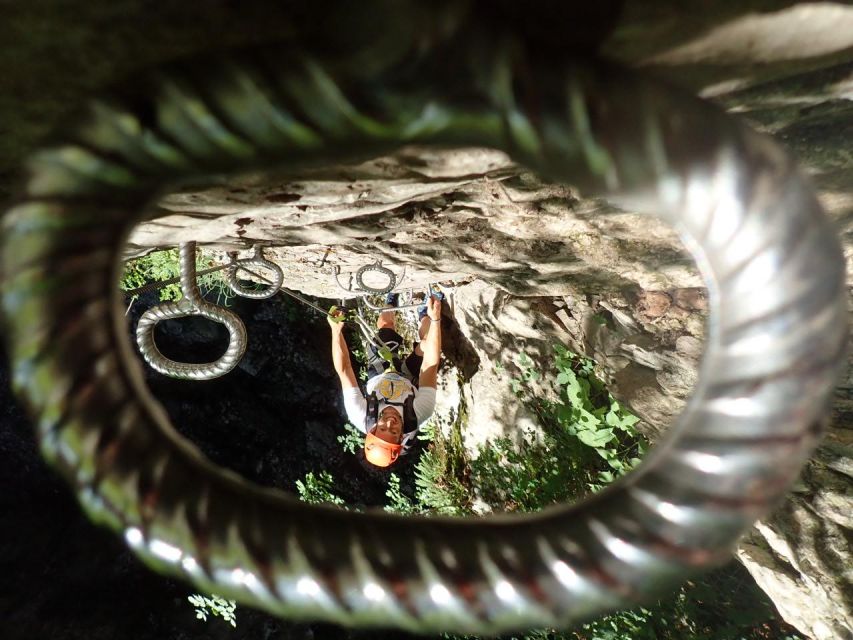
The Rio Sallagoni route is rated medium, or C. That places it beyond a casual walk, but it is not presented as an extreme mountain climb. The gorge has scarce exposure, which may help if you are new to via ferrata but still want a real introduction to the activity.
You will clip your ferrata set to the fixed safety cable as you move. The iron steps and holds provide a clear line through the rock, yet the route still asks you to use your arms and legs with care.
Some sections jut out from the wall. At other points, the iron steps are spaced far enough apart to test your reach and strength. This is where the rating matters. The route may be short, but you cannot treat it like a flat path with a cable for decoration.
Easier variants are possible, which gives the guide some room to match the route to the group. You should still arrive ready for physical effort. If you are worried about your ability, tell the guide early rather than waiting until you reach a more awkward section.
The most important skill is controlled movement. Keep your body close to the rock when possible, use your legs rather than pulling only with your arms, and let the guide set the pace. The equipment protects you, but it does not remove the need for balance or stamina.
The bridges bring the most drama
The two Tibetan bridges are the clearest set pieces on the route. One is roughly 10 metres long, long enough to make balance feel like a serious part of the outing.
A Tibetan bridge typically consists of a walking cable with hand cables above or to the sides. Your ferrata set remains attached to the safety system as you cross, but your feet still have to find a steady rhythm. The bridge may sway, and the gorge below can make the crossing feel larger than its actual length.
This is a good place to remember that safety gear and personal comfort are different things. The gear offers protection when used correctly. It does not stop your stomach from noticing the drop or the bridge from moving.
If you dislike heights, this is probably not the right activity. The route has limited exposure compared with more open ferratas, but the bridges still require you to look down, balance, and move across empty space.
For most people who are comfortable with that idea, the bridges add a useful change of pace. The iron steps test strength and reach. The bridges test balance. The canyon supplies the atmosphere.
A three-hour outing with little wasted time
The full activity lasts about three hours. That includes the short approach, the ferrata route, time with the guide, and the return walk of roughly 30 minutes.
This compact timing is one of the route’s strengths. You get a genuine protected climbing outing without giving up an entire day. It can fit well into a wider visit to the Trentino area, especially if you want to combine outdoor activity with a stop at Drena Castle.
The short approach means you do not spend most of your energy reaching the start. The return is also quick, though 30 minutes on foot still matters after a route that has used your legs, hands, and concentration.
Bring food and drinks because they are not included. The available information does not specify a meal stop, so pack what you need for the three-hour period and any time you plan to spend near the castle.
Wear hiking shoes, not casual sneakers. You need stable footing on the approach and return, as well as confidence on rock and iron steps. The ferrata set is supplied, so you do not need to bring that specialized equipment.
Same rush, a different way to get it:
- Canyoning “Gumpenfever” – beginner Canyoningtour for everyone
★ 5.0 · 391 reviews - From Tignale, Lake Garda: Beginner-Friendly Canyoning Tour
★ 4.9 · 377 reviews - Private Tour explore Vulcano Island by Kayak & Coasteering
★ 5.0 · 338 reviews - Bagni di Lucca: Canyoning in the Cocciglia’s Gorge
★ 4.9 · 215 reviews
Why the guide matters on a short ferrata
A short route can still benefit greatly from good guiding. The UIAGM mountain guide supplies the ferrata set, checks how you use it, and helps the group move through sections that may feel awkward.
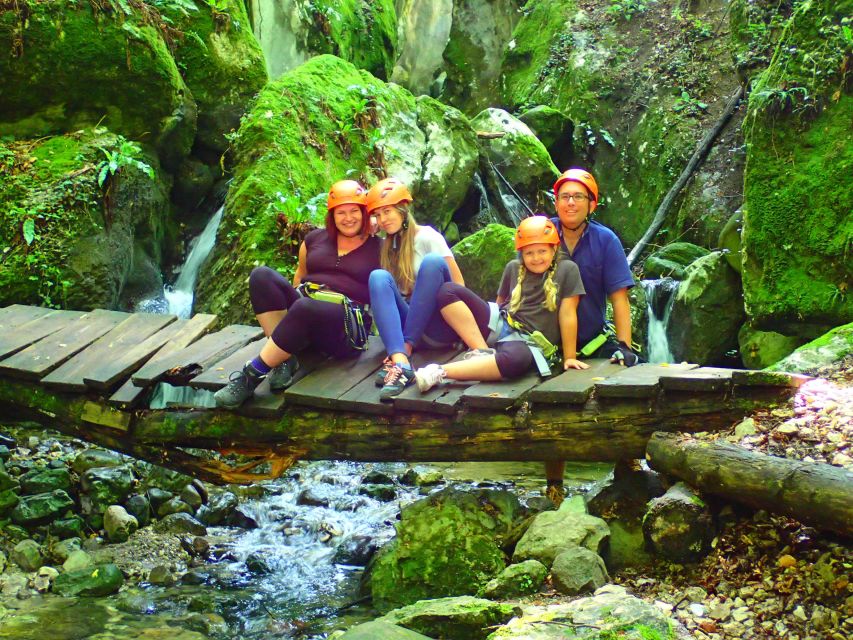
The group is limited to six people. That is small enough for the guide to keep an eye on individual pace and confidence, rather than managing a long line on the cable. It also means you may spend less time waiting at the bridges or at tighter sections of the gorge.
Guiding is useful here for more than safety. The guide can explain how to approach a cable crossing, where to place your feet, and when an easier option makes sense. The available guiding languages are English and Italian.
Guide Giovanni has also added geology about the valley during the outing. That kind of explanation suits this route because the rock walls are not just scenery. They form the narrow passage, control the light, and make the waterfalls and ledges possible.
You should expect the guide to manage the technical side of the activity, but you still need to follow instructions closely. Keep your equipment attached as directed, wait when asked, and tell the guide if a section feels beyond your comfort level.
The gorge is the main attraction, not just the climbing
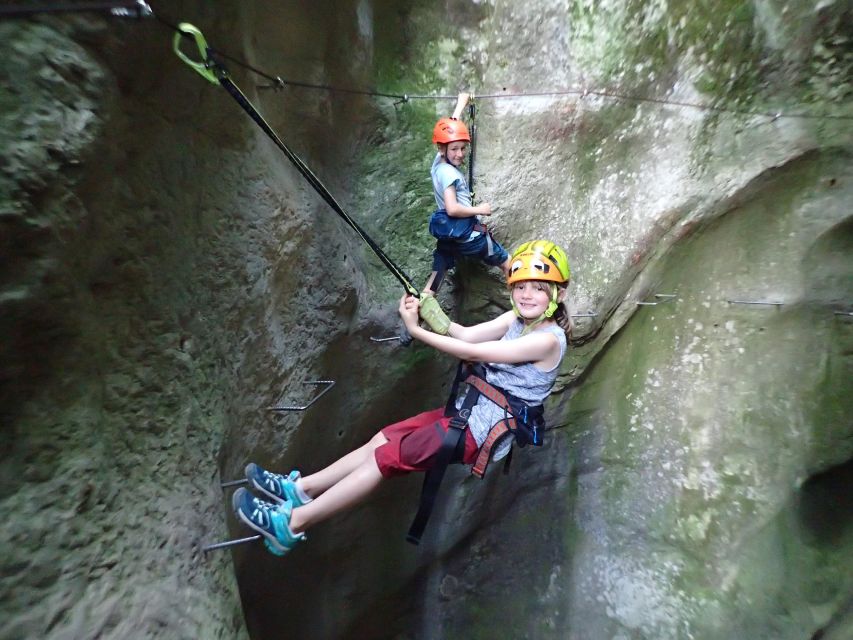
The fixed cables and bridges give Rio Sallagoni its action, but the canyon is what makes the route memorable. The play of light changes as the walls open and close. Water appears in small falls, and the shaded setting creates a cool, almost storybook mood.
The route feels wild without being a remote expedition. That balance is valuable if you want something more unusual than a regular walk but do not want a full-day mountain commitment.
You also get variety in a small area. One moment you are working up iron steps beside the wall. The next, you are crossing a cable bridge or moving past wet rock and a small waterfall. The changes keep the route from feeling repetitive.
Do not expect a long high-alpine panorama. This is a gorge experience, not a summit route. Your views are close, vertical, and enclosed for much of the outing. If you want wide mountain vistas, another ferrata may suit you better. If you prefer rock walls, water, shade, and a strong sense of place, Rio Sallagoni has more to offer.
Reaching Drena Castle at the end
The route leads you near the characteristic Castle of Drena. That gives the outing a satisfying destination rather than ending at an anonymous trail junction.
The castle adds a human-made landmark to a day otherwise shaped by rock and water. Its position near the gorge helps connect the activity to the surrounding area, and it gives you a clear point to look for after the technical section is over.
The supplied details do not state that castle admission is included, so do not assume the activity price covers entry. Treat the castle as the scenic endpoint of the route unless you confirm separate access details.
The 30-minute return keeps the finish practical. You are not left with a long, tiring walk after the ferrata, though you should still allow enough time to cool down and have your food and drinks.
Is $82 a fair price?
At $82 per person, this is not priced like a simple guided walk. You are paying for a mountain guide, ferrata equipment, and RC insurance, along with a small group capped at six people.
That package makes the price easier to justify if you do not own or want to rent a ferrata set. A guide also matters more on a technical route than on an ordinary trail. You are paying for route management, equipment use, and help with the sections that require strength or balance.
The value is strongest for a first or early via ferrata outing. You can get a feel for the sport in a controlled setting, with limited exposure and possible easier variants. A recent outing described the route as a good first training ground for understanding ferrata travel safely, while still providing the thrill of being suspended above the gorge.
The value is less clear if you are an experienced ferrata climber who already has equipment and prefers a longer or harder route. Three hours is a modest duration, and the route is short. Its appeal comes from the setting and compact variety, not from a major physical challenge.
Free cancellation up to 24 hours before the start and the option to reserve now and pay later reduce the risk of booking around uncertain plans. Check available starting times before committing, since the activity lasts three hours and the route is best enjoyed without rushing.
Who should book Rio Sallagoni?
I would point this outing toward an active adult or older child who meets the minimum height of 135 centimetres, can manage hiking shoes and iron steps, and feels reasonably calm around heights.
It suits you especially well if:
- You want to try a via ferrata without signing up for a full-day route.
- You like cool, shaded outdoor settings in summer.
- You prefer a small group and direct help from a mountain guide.
- You enjoy a mix of physical activity and natural scenery.
- You want to finish near a notable castle.
I would be cautious if you have heart problems, a pre-existing medical condition, mobility impairment, or altitude sickness. Pregnant women should not take part. The activity is also not suitable for anyone afraid of heights, even though exposure is limited.
The information provided does not give an age limit, but the minimum height is clear. A child who meets the height requirement still needs the strength, focus, and comfort with suspension to follow the route safely.
What to pack and how to prepare
Bring hiking shoes with a firm, secure fit. Food and drinks are not included, so carry enough for the three-hour activity and the return walk.
Wear clothing suited to movement. The canyon is cool and shaded, but the route still requires physical effort. Avoid anything that restricts your legs or makes it hard to manage the harness and ferrata set.
You do not need to bring the ferrata equipment. A UIAGM mountain guide provides the ferrata set, and RC insurance is included.
Most of all, arrive ready to listen. The route is short enough that you may be tempted to rush, especially once you see the castle ahead. Take the guide’s pace, keep your safety system attached as instructed, and use the easier variant if needed.
Should you book this canyon ferrata?
Book it if you want a compact, guided introduction to via ferrata in a cool gorge with waterfalls, two Tibetan bridges, and a castle finish. The small group and supplied equipment make it practical for a first serious outing, while the C rating and easier options leave some room to adjust the challenge.
Skip it if heights unsettle you, if you need a fully accessible route, or if you want a long mountain traverse with open views. Rio Sallagoni is short and enclosed, but it packs plenty into three hours. For the right person, the combination of rock, water, balance, and controlled adrenaline is exactly the point.
FAQ
How long does the Rio Sallagoni via ferrata last?
The activity lasts about three hours, including the approach, the ferrata route, and the return.
How long is the approach?
The approach to the route takes about 10 minutes.
How long is the return walk?
The return takes roughly 30 minutes.
What difficulty is the route?
The route is rated medium, or C. Easier variants are possible.
Are there bridges on the route?
Yes. The route includes two Tibetan bridges, and one is roughly 10 metres long.
Does the route involve water?
You pass through a gorge with little waterfalls and a canyoning-like atmosphere, but the activity follows the sides of the walls and is designed to avoid getting wet.
What equipment is included?
A UIAGM mountain guide, a ferrata set, and RC insurance are included.
What should I bring?
Bring food, drinks, and hiking shoes.
Is the activity available in English?
Yes. The live guide languages are English and Italian.
Just added around Italy
- Villacidro: Rio Zairi Canyoning Adventure★ 5.0 · 3 reviews
- Via ferrata Lake of Como★ 5.0 · 2 reviews
- Via Ferrata “Rio Sallagoni”★ 5.0 · 6 reviews
- Vanilla- Wild Coasteering★ 5.0 · 2 reviews
- Tuscany: Canyoning Adventure Day Trip★ 4.9 · 72 reviews
- Canyoning in the Dolomites (Lake Santa Croce, Val Maggiore)★ 5.0 · 4 reviews
- Wild Canyoning★ 5.0 · 17 reviews
- 3-Hour Guided Canyoning in the Cocciglia Gorges★ 5.0 · 33 reviews
Via Ferrata Climbing, compared.
Mount Norquay 2.5 or 4-Hour Guided Via Ferrata Climb
Read our review →
Small-Group Guided Via Ferrata Climbing with Banff’s Best Views
Read our review →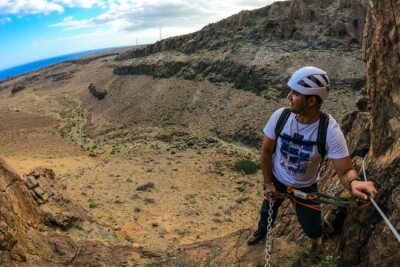
Via Ferrata in Gran Canaria. Vertical adventure park. Small groups
Read our review →Browse the lists this tour appears in