
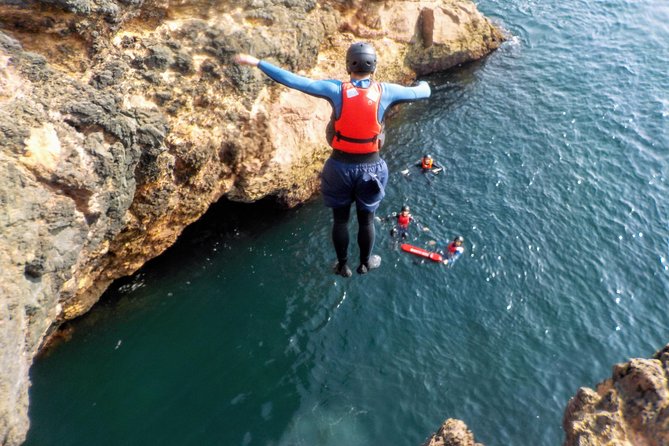
REVIEW · ALGARVE
Coasteering and Cliff Jumping Near Lagos
The best part of this Algarve adventure is that the coast becomes your playground. You swim through sea caves, scramble over rock, reach quiet beaches, and work from small jumps up to cliffs as high as 10 meters. Nelson leads the session with calm, careful instruction, and guides such as Clara, Francesco, and Billy have also assisted groups.
I like the gradual build-up and the chance to see parts of the Costa Vicentina Natural Park that are hard to reach on foot. I also like that jumping is not compulsory. The main drawback is simple: this is a serious physical outing, not a gentle coastal walk. Expect sustained swimming, climbing, balancing, and pulling yourself from the water in a wetsuit and buoyancy aid.
Key points before you book
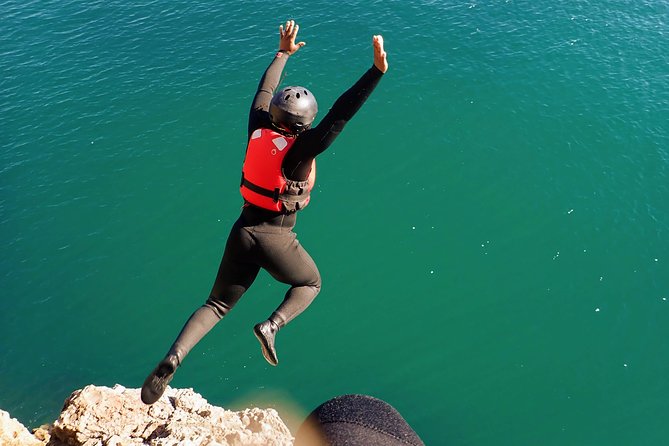
- The route begins with small jumps: You learn the basics before reaching higher cliffs.
- Caves and secluded beaches are part of the route: The scenery is active, close-up, and reached from the water.
- All core equipment is provided: You receive a wetsuit, buoyancy aid, helmet, and footwear.
- Nelson puts safety first: Guides explain the conditions, demonstrate techniques, and offer alternatives to jumps.
- The activity lasts about three hours: Much of that time is spent swimming, climbing, and moving along uneven rock.
- Groups can reach 14 people: A smaller group may give you more direct help during difficult sections.
Starting near Praia da Ingrina
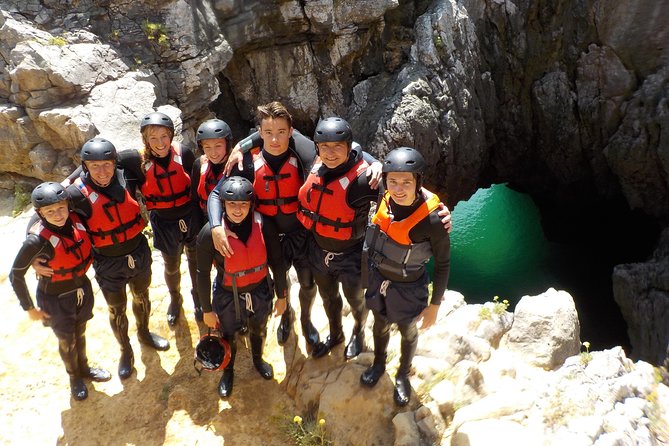
You meet Coastline Algarve at EM1257 6, 8650-310 Raposeira, near Praia da Ingrina. The address is described as a garage on a street rather than a conventional shop, so do not expect a large reception area or clear commercial signage. Look for the provider’s white van and arrive prepared.
The meeting point is near public transportation, but the information provided does not promise a restroom there. This matters more than it sounds. You should arrive ready for the activity, since the operating area is inside a natural park with limited facilities.
From the meeting point, you are taken to the coasteering area. Some groups have followed the guide’s vehicle to the beach, which makes the short transfer easier to manage. The exact route depends on the sea and weather conditions, so the day is shaped by safety rather than a rigid set of stops.
The location near Praia da Ingrina gives you a more rugged side of the Algarve. This is not the polished beach experience of a resort promenade. You are heading toward cliffs, rough rock, sea caves, and open water.
More Coasteering Tours in Portugal
- Award Winner Premium Kayak and Coasteering Adventure with Lunch
★ 5.0 · 472 reviews - Lisbon: Sesimbra/Arrábida Natural Park Coasteering Adventure
★ 4.9 · 345 reviews - Sagres: Coasteering – Swimming, Cliff Jump & Rock Climbing
★ 4.9 · 226 reviews
Getting fitted for the water
Before entering the sea, you put on the supplied equipment: a wetsuit, buoyancy aid, helmet, and coasteering shoes. The thick wetsuit helps with cool Atlantic water. One account describes water around 15 degrees Celsius, with the suit keeping the group warm during the session.
Footwear deserves your attention. The provider uses European sizes, and the equipment is handed out before walking to the shore. Check the fit carefully and ask the guide for help if you are unsure. One group had trouble getting correctly sized shoes, while the provider explained that spare footwear was available and that confusion came from European and US size conversions.
That small issue points to a useful practical lesson: give your shoe and wetsuit sizes as early as possible, then check everything again at the meeting point. You will be walking on rough rock, so loose or painfully tight footwear can spoil an otherwise excellent outing.
Once you are dressed, the guides assess the conditions. They explain how to move over the rocks, how to enter the water, how to climb, and how to approach a jump. Pay close attention here. The safety talk is not a formality, since the route involves waves, uneven footing, open-water swimming, and exposed cliff edges.
Small jumps first, higher cliffs later
The activity begins with low jumps close to the water. This is a sensible way to start. You learn how the equipment feels, how to enter the water, and how to climb back out before the height increases.
As you move along the coast, the jumps get higher. Some people may work up to the full 10-meter jump, while others may stay at lower levels. The guide does not treat the tallest jump as a test you must pass. You can choose another route or continue without jumping.
That flexibility is one of the strongest features of the experience. A parent can join active teenagers without forcing every family member into the biggest leap. Someone nervous about heights can still enjoy the climbing, swimming, caves, and rock formations. Nelson’s role is part coach and part traffic controller, keeping people together, taking turns, and giving clear directions at tricky points.
You should still be honest with yourself. The height is not the only challenge. Getting to each jump can involve technical climbing, balancing on small rocks, moving across uneven ledges, and pulling yourself up by a rope. The jumps may be the most visible feature, but the route between them is where much of the work happens.
Swimming through caves and along the rocky shore
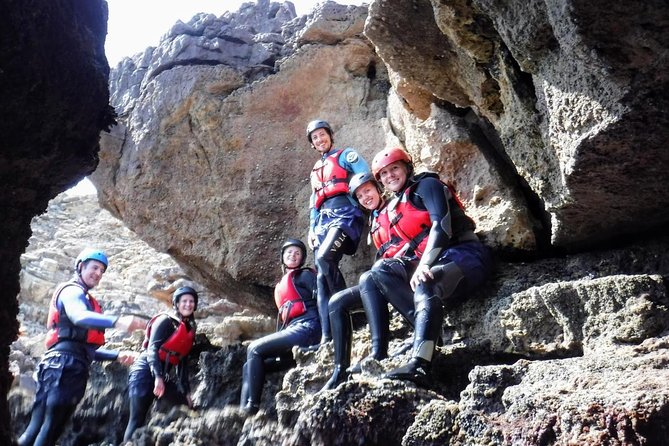
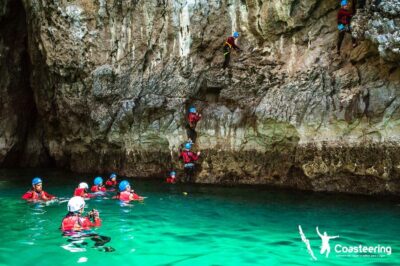
Coasteering is more than cliff jumping. You swim from one section of shore to another, enter sea caves, pass through rock formations, and follow the coastline from the water. Some groups finish with a jump into a grotto, which gives the session a memorable final moment.
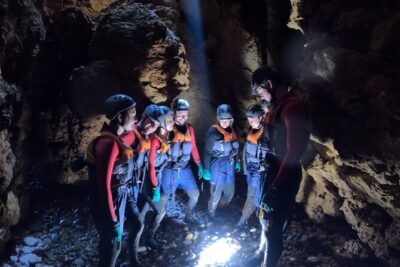
The caves are special because they change the way you see the coast. From a beach overlook, you see cliffs as scenery. Inside the rock, you notice the water, shadows, passages, and openings from a much closer angle. The guide also points out marine life and explains parts of the local sea environment.
This nature element gives the activity more substance than a string of jumps. Nelson is known for talking about sea life, local traditions, tides, and the coast’s natural features during the outing. You are still there for the adrenaline, but you also get a guided look at an environment most visitors only see from a boat or viewpoint.
The sea section can be tiring. A buoyancy aid helps you stay afloat, but it does not remove the effort of swimming in open water while wearing a wetsuit. One three-hour session included a long swim, and the group found the full gear and life jacket demanding. Plan to finish tired, even if you skip the tallest jumps.
Same rush, a different way to get it:
- Canyoning Madeira Island – Level One
★ 5.0 · 1,362 reviews - Canyoning in Madeira Island- Level 1
★ 5.0 · 1,125 reviews - From Funchal: Intermediate (Level 2) Canyoning Adventure
★ 4.9 · 1,111 reviews - Madeira: Beginner Canyoning – Level 1
★ 5.0 · 1,072 reviews
The return walk across the cliffs
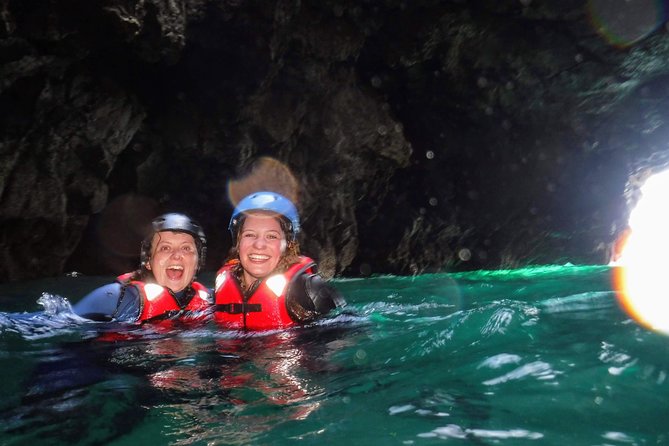
After the water section, you walk back along the coastal path above the shore. This gives you a chance to catch your breath and see the route from land. It also lets the guide talk with you about the session, the coast, and the places you have just reached from the water.
The return is not simply a transfer back to the van. It adds a quieter ending after the cold water, jumps, and climbing. You get broad views of the cliffs and coastline, while the guide can point out features that were difficult to notice from sea level.
The walk also confirms why good footwear matters. You have already spent time on wet rock, and the final section still involves uneven coastal ground. This is one reason the experience suits people with a moderate level of fitness rather than anyone looking for an easy beach activity.
How hard is the three-hour route?
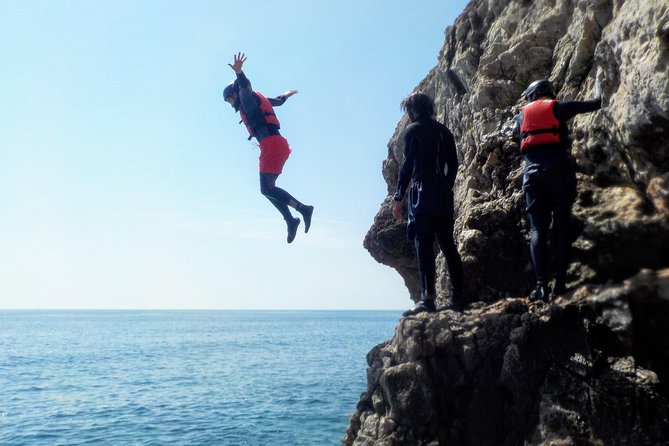
You should think of this as a moderate-to-demanding physical activity. The exact effort varies with the group, sea conditions, and route, but the basic demands are clear:
- Swimming in the ocean and sometimes through caves
- Climbing over rocky shoreline
- Balancing on small rock surfaces
- Getting out of the water
- Pulling yourself up with help from a rope in some areas
- Walking back along a coastal path
- Wearing a wetsuit, helmet, buoyancy aid, and shoes for much of the outing
You do not need to be an expert climber, but you must be comfortable in the water and able to follow instructions. The activity is not recommended for non-swimmers or children under 13. A 13-year-old has joined successfully, and active teenagers often love the challenge, but age alone does not determine readiness.
If you have a fear of heights, you can still enjoy the experience if you are willing to use the lower routes and alternatives. The guides provide encouragement, but they do not need to push you into a jump. If you are uncertain about your fitness or comfort in open water, contact Coastline Algarve before booking.
Guide style and group size
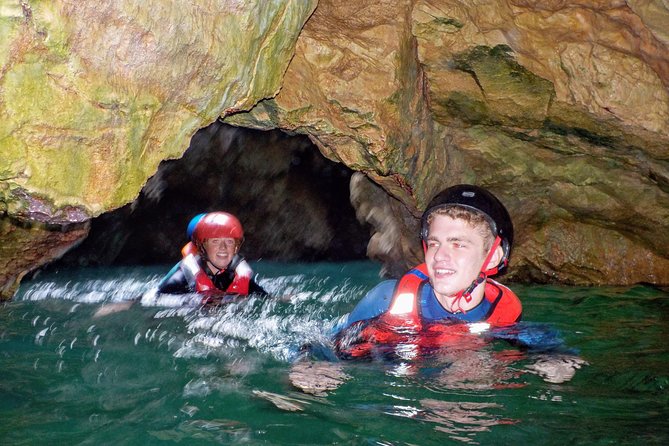
Nelson is the main guide associated with this experience. His strongest practical quality is his attention to safety. He gives instructions before the group reaches the cliffs, explains where to step, helps with harder climbs, and keeps everyone moving in an orderly way.
That matters when a group contains different ages and confidence levels. One family included two older adults and three teenage boys, while another group brought children and young adults. The guide can allow confident participants to progress while giving nervous members a different option.
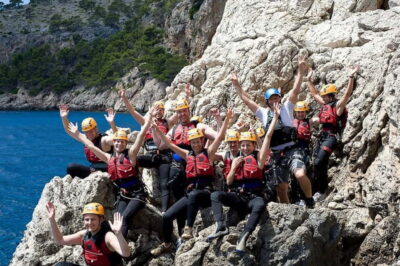
The maximum group size is 14 people. That is not a private tour, but it is still small enough for a guide to keep track of the group. Smaller departures may feel more personal, and one session ended up with only two participants. At full capacity, expect some waiting while people take turns at the more popular jumps.
Photos and videos may also be taken during some sessions. This is a nice bonus if you want a record of the jumps and cave sections, but the main value is the guide’s presence during the activity, not the photography.
Is $70.17 good value?
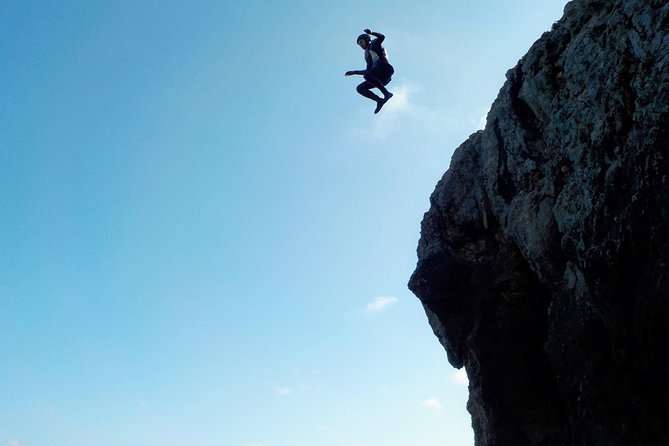
At $70.17 per person for about three hours, this is a fair price for an active Algarve excursion. The fee includes the key gear and guided instruction, and the experience combines several activities: swimming, climbing, cliff jumping, cave exploration, coastal walking, and nature interpretation.
The value is strongest if you want access to places you cannot reach by a normal path. You are not paying only for a jump. You are paying for equipment, route planning, safety management, and a guide who knows how to adjust the session to the sea and the group.
It is less compelling if you mainly want a scenic coastal outing with little effort. A beach visit or viewpoint costs less and leaves you much fresher. Here, the price makes sense for someone who wants an active half-day and considers the physical challenge part of the holiday.
The tour is also a good use of time for visitors based around Lagos who want something different from the usual beaches and boat trips. It takes you toward the natural park near Praia da Ingrina and gives you an up-close view of the coast rather than a distant panorama.
What to bring and how to prepare
You receive the main technical equipment, but you should arrive ready for a wet, active morning or afternoon. Wear a swimsuit under the wetsuit and bring anything you need for changing afterward. Since the meeting point has limited facilities and no promised restroom, handle changing-room needs before you arrive.
Give the provider accurate sizes in advance, especially for footwear. If you use US sizes, confirm the European equivalent rather than guessing. At the meeting point, try the shoes on and speak up immediately if they do not fit.
Allow enough time to find the garage and white van. The meeting point may not look like a standard tour office. Once you arrive, listen carefully to the briefing, even if you have done similar water activities elsewhere.
The cancellation policy allows a full refund if you cancel at least 24 hours before the start time. Changes or cancellations inside that window are not refunded. The experience also depends on good weather, and poor conditions can lead to a different date or a full refund.
Who should book this Algarve adventure?
You should book it if you are a confident swimmer who wants an active way to see the Algarve coast. It works especially well for couples, families with active teenagers, and friends who enjoy a challenge but appreciate having a guide set safe limits.
It is a good match if you like variety. You are not repeating the same jump for three hours. You move through caves, swim across sections of coast, climb rocks, learn about marine life, and finish with a scenic walk.
You should think twice if you are a non-swimmer, uncomfortable in open water, or looking for an easy outing. You also need to accept that the tallest jump may not happen for you, either because of personal choice or sea conditions. That is not a failure. The experience has enough other elements to remain worthwhile.
Should you book Coasteering Near Lagos?
I would book this if you want one of the more memorable active experiences around Lagos and have the fitness for sustained swimming and climbing. The combination of clear water, rough cliffs, sea caves, and steadily higher jumps gives the session a strong sense of place.
The most important advice is to judge the physical demands honestly. If you can swim well, follow instructions, and handle uneven rock, the guides give you a safe way to try something far outside the usual sightseeing routine. If that sounds exhausting rather than exciting, choose a gentler coastal activity instead.
FAQ
Where does the coasteering tour start?
The meeting point is Coastline Algarve, EM1257 6, 8650-310 Raposeira, Portugal, near Praia da Ingrina in the Algarve.
How long does the activity last?
The experience lasts approximately three hours and ends back at the meeting point.
What equipment is included?
The provider supplies a wetsuit, buoyancy aid, helmet, and shoes, along with instruction in coasteering techniques.
How high are the cliff jumps?
The jumps can reach up to 10 meters, or about 30 feet. The route also includes smaller jumps, and alternatives are available if you do not want to jump from a particular height.
Do I need to be a strong swimmer?
You need a moderate level of physical fitness and must be comfortable swimming in the ocean. The activity is not recommended for non-swimmers.
Is the activity suitable for children?
It is not recommended for children under 13. The experience can suit active teenagers, but participants must also be comfortable with swimming, climbing, and cliff-jumping conditions.
What happens if the weather is poor?
The experience requires good weather. If it is canceled because of poor conditions, you will be offered a different date or a full refund. You can also cancel for a full refund up to 24 hours before the start time.
More Cliff Jumping in Portugal
- Coasteering Algarve: Cliff Jump, Swim & Climb in Sagres
★ 4.9 · 158 reviews - ThrillSeekers: Aruba UTV Tour & Cliff Jump at Natural Pool
★ 5.0 · 5,733 reviews - Aruba UTV Tour with Natural Cave Pool and Cliff Jumping
★ 5.0 · 4,492 reviews - Barcelona Costa Brava Kayak, Snorkel & Cliff Jump Day Tour
★ 5.0 · 3,872 reviews
Just added around Portugal
- Serra D’Arga Canyoning★ 5.0 · 21 reviews
- Canyoning from Porto★ 5.0 · 23 reviews
- Private Canyoning Adventure from Porto★ 5.0 · 25 reviews
- Madeira Island Canyoning Adventure★ 5.0 · 126 reviews
- Lisbon: Arrábida Kayak and Coasteering Adventure Tour★ 5.0 · 130 reviews
- Coasteering at Portinho da Arrábida★ 5.0 · 139 reviews
- Canyoning Tour in Portugal★ 4.9 · 133 reviews
- Canyoning Experience Level I Beginners in Ribeira das Cales★ 5.0 · 133 reviews
Coasteering Tours, compared.
Award Winner Premium Kayak and Coasteering Adventure with Lunch
Read our review →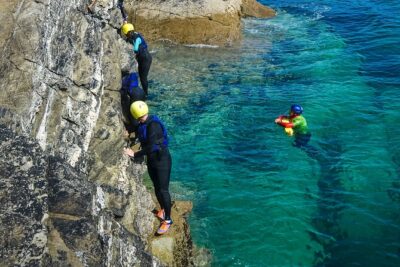
Sesimbra/Arrábida Natural Park Coasteering Adventure
Read our review →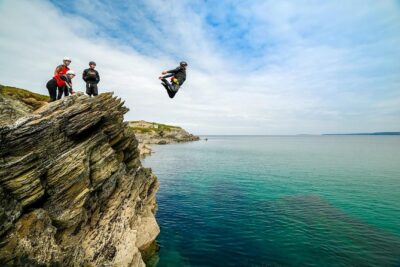
Newquay Coasteering x Cornish Wave | Original Since 2012
Read our review →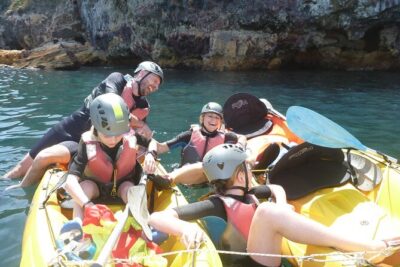
Private Tour explore Vulcano Island by Kayak & Coasteering
Read our review →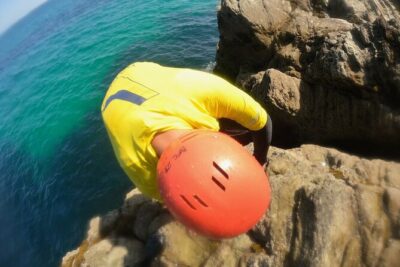
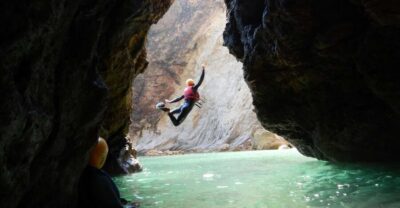
Coasteering – Swimming, Cliff Jump & Rock Climbing
Read our review →Browse the lists this tour appears in