
REVIEW · UK
Half-Day Coasteering in Newquay Cornwall
Newquay’s coast becomes your playground on this three-hour coasteering session, where you swim through sheltered sections, scramble along rocks, and work up from small jumps to higher ledges. Guides such as Nick, Tony, Paul, and Noah lead the route, with the sea deciding exactly what is possible on the day.
I like the warm 5mm wetsuit and safety kit, especially in Cornwall’s cooler months. I also like that GoPro photos and videos are included, so you can focus on the jumps instead of trying to protect a phone. The main caution is practical: the changing area has drawn criticism for poor upkeep and a lack of toilets or showers, and rough water can delay the start or shorten the active coasteering time.
Key points at a glance
- Start at Fistral Beach: You meet in Newquay, then walk a short distance to the coastal route.
- Build up gradually: The session can move from basic swimming and small jumps to higher cliff ledges, depending on conditions and confidence.
- Qualified lifeguard guides: Nick, Tony, Paul, and Noah are among the guides who may lead the group.
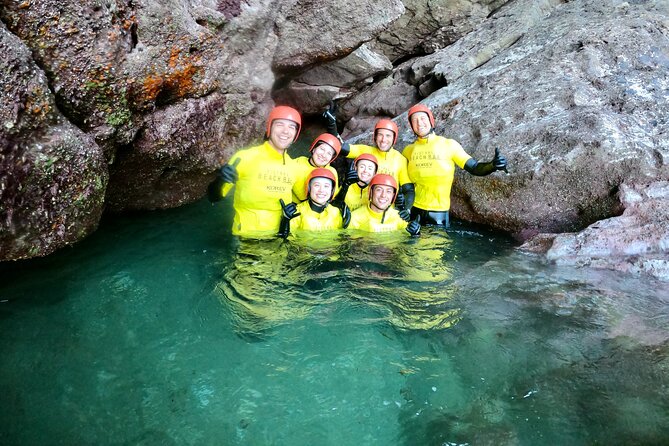
- Warm equipment included: A 5mm wetsuit and helmet are supplied, with boots and gloves included in winter.
- Photos and videos included: GoPro footage gives you a record of the experience without carrying a camera.
- Fitness matters: You must be able to swim 50 metres and should have a strong level of physical fitness.
What coasteering in Newquay really involves
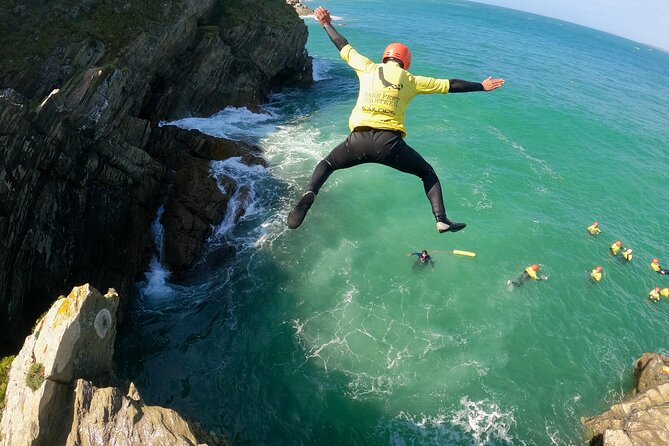
Coasteering is part sea swim, part rock scramble, and part controlled cliff jump. You are not simply walking along the coast to admire the view. You are moving through it, using the water and rock shelves as the route.
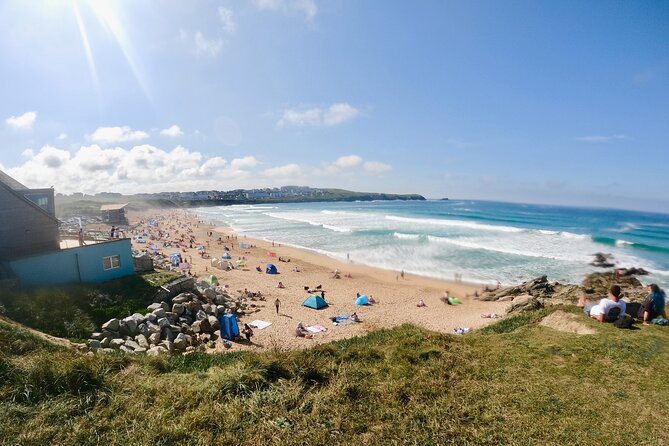
This Newquay session begins close to famous Fistral Beach. After changing and receiving your equipment, you walk to the start point. The guides explain how to move through the water, how to approach a jump, and how to land safely before the route becomes more demanding.
The activity has a useful rhythm. You swim, climb, wait for instructions, jump, and repeat. That variety keeps the three hours moving, though the exact route depends on tides, swell, wind, and the group’s ability.
You do not need previous coasteering experience. You do need confidence in the water, a reasonable level of fitness, and the ability to swim 50 metres. If you are uneasy with heights or cold water, the session may feel more demanding than the simple description suggests.
More Coasteering Tours in the UK
- Coasteering Experience in Newquay
★ 5.0 · 465 reviews - Newquay Coasteering x Cornish Wave | Original Since 2012
★ 5.0 · 342 reviews - Coasteering
★ 5.0 · 191 reviews
From Fistral Beach to the first swim
The meeting point is in Newquay, postcode TR7 1HY, with an advertised start time of 11:00 am. Fistral Beach is a useful base because it is easy to find and close to the coastal section used for the activity.
The walk to the route is short, but you should arrive ready for an active morning. Allow time to find the meeting point, change, and listen to the safety briefing. A late arrival could create pressure at the start of a session that already depends on the sea and daylight conditions.
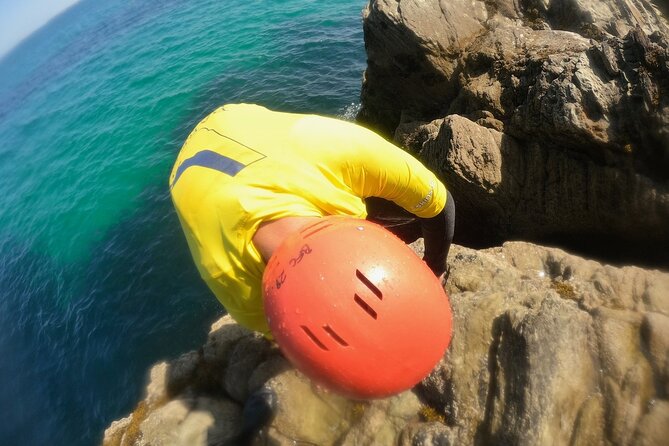
The first entry into the water can feel like the biggest mental hurdle. One session began with a belly flop into the sea, followed by a swim toward small jumps. That opening gives the guide a chance to check how the group handles the water before moving on.
This early part is important. You learn the basic technique while the jumps are still modest. You also get used to the wetsuit, helmet, boots, and the sensation of swimming close to the rocks.
Small jumps, rock ledges, and steady progress
The route is designed to build confidence rather than throw you straight at the highest jump. You may start with low ledges and short drops, then progress to larger jumps as the group settles.
The guides are a major part of the experience. Nick is repeatedly praised for being patient, funny, encouraging, and clear with instructions. Tony, Paul, and Noah are also named as guides who help groups move through the course safely and at a comfortable pace.
That personal guidance matters. A good coasteering leader does more than point out the next rock. The guide checks the water, explains where to place your feet, controls the order of jumps, and gives you a clear choice about how far you want to go.
You are not required to complete every jump. The activity is built around encouragement, not forced bravery. If you prefer to stay with a lower option, the guides can help you make that choice. Families especially benefit from this approach, since one adult and two teenagers can have different comfort levels.
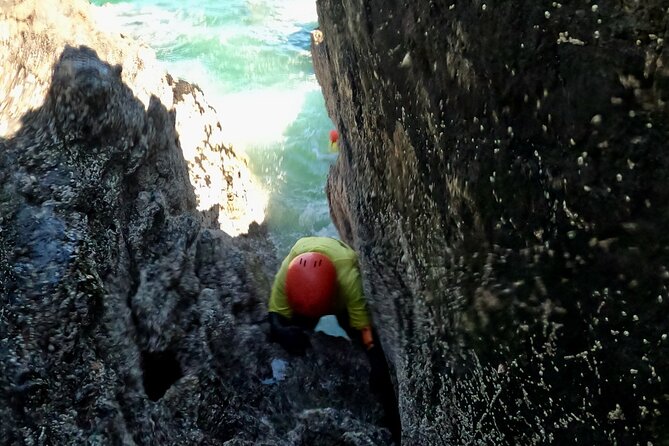
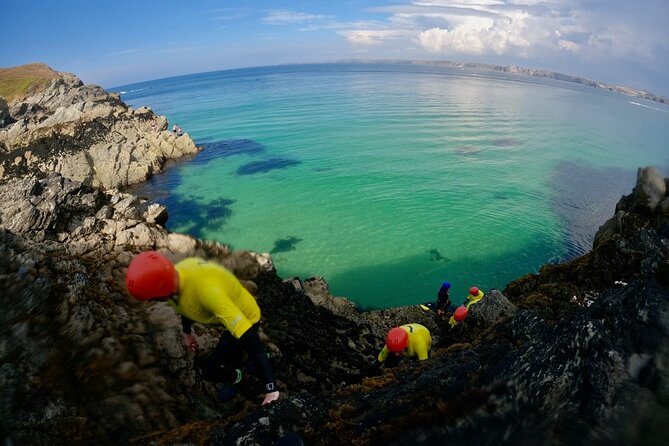
As the route develops, you may climb onto cliff ledges and move around the edge of the coast without falling into the water. The climbing is not presented as a technical climbing course, but you should be ready to pull yourself over rocks, balance carefully, and use your arms and legs for several hours.
The higher jumps and the role of the sea
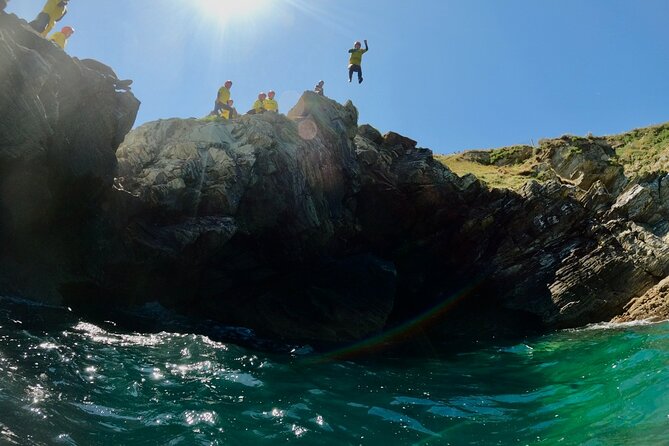
The most exciting part comes when the group reaches higher jumping spots. One described session worked up to a final jump of about 40 feet. That height is not a guarantee, and the ocean decides what can be used on any particular day, but it gives you an idea of the possible range.
The higher jumps are optional in spirit, even if the group is encouraged to try them. You can watch first, ask questions, or choose a smaller drop. The guide’s job is to confirm that the landing area is safe and to explain the correct approach.
You should also understand that rough water can change the plan. One session started late and delivered about an hour and a half of active coasteering because the sea became difficult, even for strong swimmers. Another session reported that ocean conditions can produce a slightly different experience from one day to the next.
That is not a flaw in the idea of coasteering. It is the nature of the activity. The same swell that makes the route exciting can make a landing unsafe or a swim too tiring. The provider can cancel for poor weather and offer another date or a full refund, but conditions can also affect the length and shape of a session that does go ahead.
Same rush, a different way to get it:
- Extreme Paranormal Underground Ghost Tour in Edinburgh
★ 4.5 · 1,587 reviews - Edinburgh: Extreme Paranormal Underground Ghost Tour
★ 4.2 · 850 reviews - Bungee jump from 40 meters in the stunning valley of Killiecrankie, Scotland
★ 5.0 · 500 reviews - Discover Canyoning at Bruar Falls
★ 5.0 · 409 reviews
Warm clothing and what you need to bring
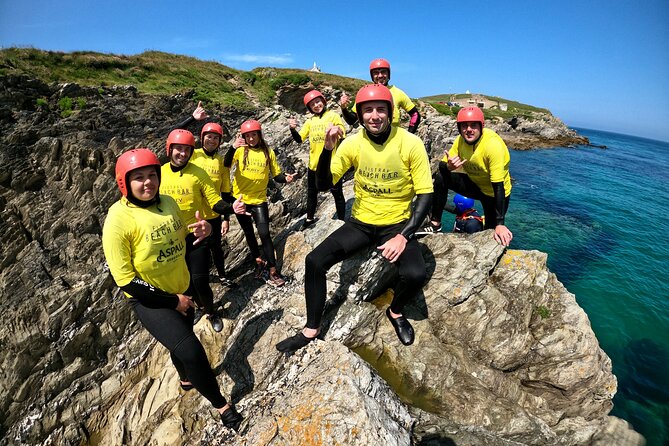
The standard equipment includes a 5mm wetsuit and helmet. In winter, buoyancy boots and gloves are also supplied, helping keep your hands and feet warm during a cold-water activity.
The winter equipment is a real value point. Cornwall’s air temperature may look pleasant, but sea water and wind can make a long session uncomfortable without proper insulation. A thick wetsuit also gives you some protection from scrapes against rock, though you should still move carefully.
From May through November, you are asked to bring your own trainers or wetsuit boots. Check this detail before leaving home. Ordinary footwear that is secure and suitable for wet rocks is more useful than sandals or loose shoes.
The equipment is included in the $76.25 price, along with the instruction and GoPro photos and videos. You should still bring whatever dry clothing you need for before and after the session. The changing facilities have been described as neglected, with no toilets or showers available, so keep your expectations basic.
That facilities issue is the clearest weakness of the experience. The coast itself is the attraction, not a polished activity centre. If a proper shower, clean changing room, and easy toilet access matter greatly to you, plan around this limitation or choose another activity.
GoPro photos and videos add real value
The included GoPro footage is more than a small extra. Coasteering is hard to photograph from inside the group. You need both hands for climbing, and keeping a phone dry while swimming is not realistic.
The camera can capture the jumps, swims, and scrambles from a useful angle. It also lets you remember details that are easy to lose once the session becomes a blur of cold water, nerves, and laughter.
You should confirm how and when the files are delivered during the session, since the available information does not give a precise download process. The key point is that photos and videos are included rather than sold as an added package.
For a family or group of friends, that helps the price feel more reasonable. You are paying for an active guided experience, but you also receive a record of the day to share afterward.
Is $76.25 good value?
At $76.25 per person, this is not a low-cost beach activity. It is fair value if you want a properly supervised experience with specialist equipment and recorded photos and videos.
The comparison depends on what you would otherwise pay for. You receive a three-hour session, a 5mm wetsuit, helmet, winter boots and gloves when required, qualified lifeguard supervision, route instruction, and GoPro footage. You are also using a coastal route that would be difficult to explore safely without a guide.
The value drops if poor sea conditions lead to a late start or a shorter active session. It also feels less polished because the changing facilities lack the comfort many people expect from a paid attraction.
I would view the price as reasonable for an adventure activity, not as a bargain. It suits someone who wants a memorable physical experience and will make use of the instruction and footage. It is less suitable if you mainly want a relaxed coastal walk or a comfortable beach-based outing.
Group size, fitness, and family suitability
The maximum group size is 16. That is large enough to create some waiting at the jumps, but small groups can move more quickly through the route. A group of one is not accepted, so contact the provider if you are booking alone and need to find the nearest suitable session.
The strongest praise goes to the guides’ ability to adjust the pace. Groups can move through a series of jumps one level at a time, with no pressure to attempt a height that feels wrong. That makes the activity suitable for families with teenagers and mixed-confidence groups.
You should not confuse beginner-friendly with easy. Swimming in open water, climbing over wet rocks, and repeated jumps demand energy. The stated requirement is a strong physical fitness level, and you must be able to swim 50 metres.
If you have asthma or another medical concern, plan ahead and tell the guide before starting. One guide carried an inhaler in a medicine bag for a participant with asthma, but you should not rely on that arrangement without discussing your own needs in advance.
Seasonal differences and weather planning
The activity operates throughout the year, but winter bookings are available only on weekends. Winter provides the coldest conditions, yet the supplied boots, gloves, and thick wetsuit are intended to keep you comfortable.
Summer and winter can produce very different moods on the coast. In warmer months, the water may feel easier to face, but you still need your own suitable footwear from May through November. In winter, the equipment is more complete, but the weather may be less settled.
The route is always subject to sea conditions. If poor weather causes a cancellation, you are offered another date or a full refund. The experience also requires a minimum number of participants, so a cancellation for that reason brings the same choice of another date or a refund.
For your own schedule, leave some flexibility around the booking. The provider can control the safety briefing and guide the group, but cannot control swell and wind.
Who should book this Newquay adventure?
I would recommend it to confident swimmers, active families, couples, and groups of friends who want more than a standard beach day. It is particularly good for teenagers who enjoy a physical challenge but still benefit from clear limits and close supervision.
It is also a strong choice if you want to see Newquay’s coast from water level. The cliffs and rock shelves are not just scenery here. They become part of the route, giving you a more direct sense of the coast’s shape and power.
I would think twice if you dislike cold water, heights, wet rocks, or uncertain timing. You should also reconsider if you need clean showers and comfortable facilities immediately before or after the activity.
Book at least a few weeks ahead if your dates are fixed. The experience averages around 28 days of advance booking, and winter availability is limited to weekends. If you are booking one person, contact the provider first rather than assuming an individual place is available.
Should you book it?
Book this coasteering session if you want a lively, physical way to experience Newquay and you are comfortable with open water, rock scrambling, and optional jumps. The strongest reasons are the lifeguard-led instruction, gradual progression, warm equipment, and included GoPro footage.
Go in with realistic expectations about the facilities and the weather. The route may change, the start may be delayed, and rough water can reduce the active time. If you accept those limits, this is a memorable choice for an active Newquay day, especially with family or friends.
FAQ
How long does the Newquay coasteering session last?
The session lasts approximately three hours, including preparation, training, walking to the route, and the coasteering activity.
Where does the activity start?
The meeting point is in Newquay, England, at TR7 1HY. The base is near Fistral Beach, followed by a short walk to the coastal route.
What time does the session start?
The advertised start time is 11:00 am.
Do I need previous coasteering experience?
No. Previous experience is not required, but you need confidence in the water, good physical fitness, and the ability to swim 50 metres.
What equipment is included?
A 5mm wetsuit and helmet are included. Buoyancy boots and gloves are supplied during winter.
What should I bring in summer?
From May through November, you should bring your own trainers or wetsuit boots.
Are photos and videos included?
Yes. GoPro photos and videos of the session are included in the price.
What happens if the weather is poor?
If the activity is canceled because of poor weather, you can choose another date or receive a full refund. The same options apply if the minimum number of participants is not reached. Free cancellation is available when you cancel at least 24 hours before the start time.
More Half-Day Trips in the UK
- Half-Day Rafting Experience on Cetina River with Cliff Jumping and more
★ 5.0 · 940 reviews - Mallorca: Half-Day Coasteering Experience
★ 4.7 · 447 reviews - Queenstown Half-Day Canyoning Adventure
★ 5.0 · 420 reviews - Riviera Maya Jungle Half-Day Tour: ATV, Ziplines, Cenote Swim, Rappel
★ 4.5 · 339 reviews
Just added around the UK
- Canyoning in Snowdonia★ 5.0 · 96 reviews
- Dollar Falls Canyoning Trip★ 5.0 · 69 reviews
- Canyoning Day Trip from Edinburgh★ 5.0 · 75 reviews
- Coasteering Geopark Adventure In Torquay★ 5.0 · 150 reviews
- Anfield Abseil with Free Entry to the LFC Museum★ 5.0 · 171 reviews
- Coasteering★ 5.0 · 191 reviews
- Newquay Coasteering x Cornish Wave | Original Since 2012★ 5.0 · 342 reviews
- Discover Canyoning at Bruar Falls★ 5.0 · 409 reviews
Coasteering Tours, compared.
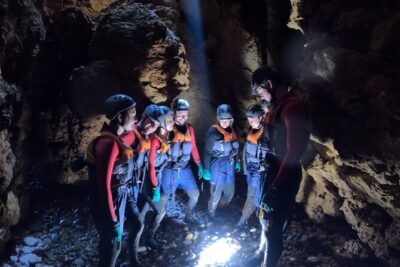
Award Winner Premium Kayak and Coasteering Adventure with Lunch
Read our review →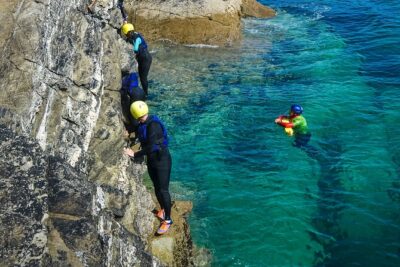
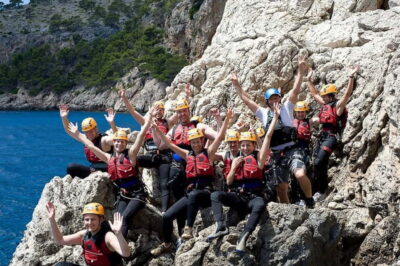
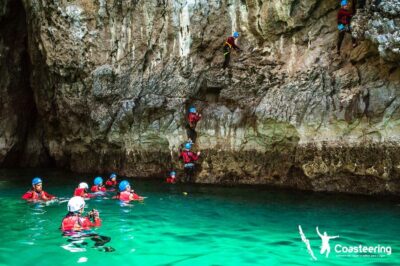
Sesimbra/Arrábida Natural Park Coasteering Adventure
Read our review →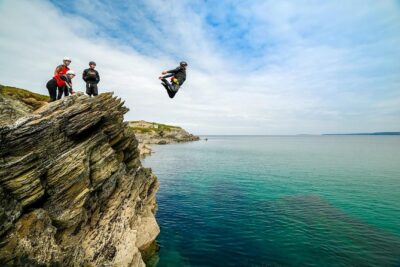
Newquay Coasteering x Cornish Wave | Original Since 2012
Read our review →
Private Tour explore Vulcano Island by Kayak & Coasteering
Read our review →
Coasteering – Swimming, Cliff Jump & Rock Climbing
Read our review →
Browse the lists this tour appears in