
REVIEW · UK
Coasteering
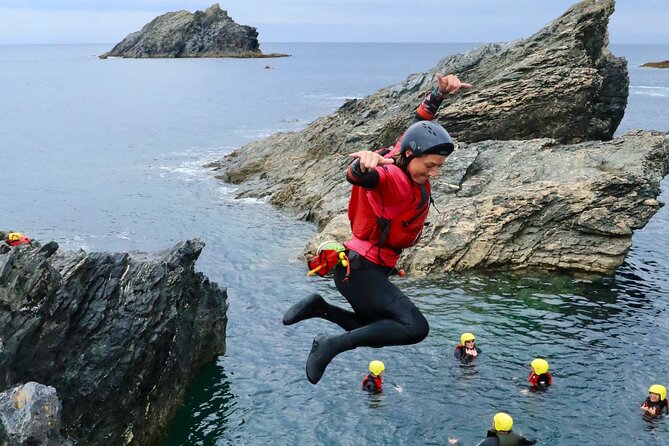
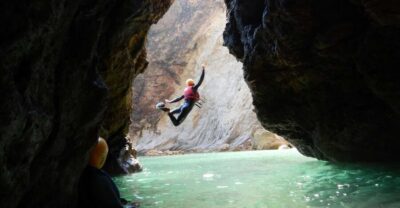
Devon’s coast is best seen from the waterline, where you can scramble across cliff bases, swim through gullies, squeeze into caves, and jump from ledges into the sea. This 2.5-hour session turns the shore into an active playground, with a bespoke route rather than a fixed sightseeing path.
I like the range of jumps, from easy steps into the water to higher ledges for those who want more of a test. I also like the calm, encouraging way the guides build confidence, with Zac, Eli, Alex, Matt, Andy, and Jess all praised for clear instruction and patient support.
The main consideration is physical effort. You need a moderate fitness level, and the sea can be choppy. The route depends on good weather, so keep some flexibility in your Devon plans.
Key points to know before you book
- Expect a changing coastal route: The session can include swimming, rock traverses, gullies, caves, and cliff-base sections around Ilfracombe, Hele Bay, or Croyde.
- Jumps are not all-or-nothing: You can work up from smaller jumps, while confident participants may choose higher ledges, including jumps of roughly 4.5 to 9 metres on some sessions.
- Safety kit is supplied: You receive a wetsuit, helmet, footwear, and buoyancy aid before entering the water.
- The meeting point is in Ilfracombe: Start at 23 Beach Road, Ilfracombe, and return there when the activity ends.
- It suits mixed-age groups: Families, teenagers, scout groups, and adults have all taken part, but everyone needs moderate physical fitness.
- Weather matters: You can cancel for a full refund up to 24 hours before the start, while poor weather may lead to a new date or full refund.
What coasteering in Devon actually feels like
Coasteering is not a boat trip and it is not a simple coastal walk. You move along the edge of the sea under your own power, using your arms and legs to swim, climb, balance, and push through the water.
That mix gives the activity its appeal. One minute you may be edging along a rock shelf. The next, you are floating in a gully or preparing to jump from a ledge. The coastline becomes something you interact with, not just something you look at from a path.
The session lasts about two and a half hours. That is long enough to create a real sense of adventure without taking up the whole day. You should expect steady activity rather than a short photo stop, so eat and drink sensibly beforehand and arrive ready to get wet.
The route is described as bespoke. In practical terms, that means the exact outing can be shaped around the coast, sea conditions, and the group. Do not book this expecting a rigid checklist of identical jumps. The changing route is part of the point.
More Coasteering Tours in the UK
- Coasteering Experience in Newquay
★ 5.0 · 465 reviews - Newquay Coasteering x Cornish Wave | Original Since 2012
★ 5.0 · 342 reviews - Half-Day Coasteering in Newquay Cornwall
★ 5.0 · 239 reviews
Starting at 23 Beach Road in Ilfracombe
You begin at 23 Beach Road in Ilfracombe, EX34 9QZ. The activity ends back at the same meeting point, which keeps the logistics simple. You do not need to arrange a separate pickup after the session.
The team gets you fitted with a wetsuit, helmet, footwear, and buoyancy aid. A proper safety briefing follows before you head toward the water. The equipment matters here: the wetsuit helps with cold water, the buoyancy aid supports you in the sea, and the helmet and footwear are useful when you are moving over uneven rock.
The guides also explain how to handle the different parts of the route. You may receive tips for climbing, traversing rock, entering the water, and managing jumps. The strongest part of the experience is not just the equipment. It is having an instructor close by to judge the conditions and help you choose a sensible next step.
Names connected with the sessions include Zac, Eli, Alex, Matt, Andy, and Jess. Their approach is described as friendly, clear, and encouraging. That matters when you are standing in a wetsuit beside a cold sea and wondering why you agreed to this.
Verity Statue and the North Devon setting
Verity Statue is listed as the first stop. The statue is a useful Ilfracombe reference point and places you in the town’s seafront setting before the active part of the outing takes over.
Do not think of this as a conventional sightseeing stop with a long explanation and time for formal photographs. The real value is geographical. It helps frame the Ilfracombe end of the route and connects the activity with the town’s waterfront.
From there, the experience focuses on North Devon’s rocky edge. You will see the coast from below the cliffs, looking up at rock faces and out through gullies rather than following a high path. That low viewpoint is one of the best reasons to choose coasteering instead of a standard beach visit.
Because the route is bespoke, the precise order and length of each section can vary. The activity description includes cliff bases, caves, gullies, and open-water swimming. You should expect a varied outing rather than a single long swim or one dramatic jump.
Croyde, waves, and the second named stop
Croyde is listed as the second stop and is also one of the named areas connected with the coasteering experience. It is known for its attractive sandy beach and energetic sea, but this activity takes you beyond simply sitting on the sand.
Around the rocky shoreline, you can move from one section to another by swimming through waves, climbing across rock, and entering natural gullies. You might explore caves or use the current to help carry you toward shore. One family session included riding rapids in a current, a good example of how water movement can become part of the fun.
There is a practical point here: choppy water adds excitement, but it also adds effort. You need to be comfortable getting wet and working with the sea rather than expecting calm, pool-like conditions. The guide decides how to use the coast safely, and poor weather can lead to cancellation.
The Croyde setting also makes this appealing for people who want more than a beach day. You get a close look at the shore, but your time is active and structured. The tradeoff is that the activity is less relaxing than a simple coastal stroll.
Same rush, a different way to get it:
- Extreme Paranormal Underground Ghost Tour in Edinburgh
★ 4.5 · 1,587 reviews - Edinburgh: Extreme Paranormal Underground Ghost Tour
★ 4.2 · 850 reviews - Bungee jump from 40 meters in the stunning valley of Killiecrankie, Scotland
★ 5.0 · 500 reviews - Discover Canyoning at Bruar Falls
★ 5.0 · 409 reviews
The jumps build confidence gradually
The jumps are likely to be the feature you remember most. They are also the part that can cause the most nerves, especially for first-timers.
The sessions are designed to build up gradually. You may start with smaller jumps before deciding if you want to try a higher ledge. This gives children, teenagers, and less confident adults a chance to find their footing without being pushed straight into the biggest challenge.
The range can be substantial. Participants have described finishing jumps of about 4.5 metres, or 15 feet, while another young participant completed a jump close to 9 metres at Hele Bay. Those figures are not a promise of the exact route or height on your date. They show the possible scale of the activity and why the guide’s judgment matters.
You are not required to take every jump. The group sessions are praised for allowing people to move at their own pace, with smaller options available. That makes the experience more family-friendly than the word coasteering might suggest, although you still need to be ready for a physically active outing.
A useful mental trick is to treat each jump as a choice rather than a test. You can listen to the guide, look at the landing area, and decide what feels right. The small jumps can be satisfying too, especially when the water is moving and the rocks are slippery.
Swimming, gullies, caves, and rock traverses
The jumps get the attention, but the quieter sections give the activity its texture. You may swim through a gully, move between rocks, or traverse along the base of a cliff with the sea beside you.
These parts require balance and steady movement. Good footwear helps, but you still need to place your feet carefully. The buoyancy aid supports you in the water, yet it does not remove the need to swim and follow instructions.
Caves add another change of pace. Instead of simply looking at the coast from a distance, you enter spaces shaped by the sea. The exact caves and passages depend on the route, so think of them as possible features rather than guaranteed stops.
The group may also use currents and small rapids to move back toward shore. That can be a thrilling finish, but water movement can make the activity tiring. If you are not used to swimming in open water, tell the guide early and follow the pace set for the group.
How the guides shape the experience
The guides are central to the value of this outing. The equipment is useful, but a good instructor makes the activity feel manageable and helps you understand the coastline.
Zac is praised for being patient and relaxed with a parent and 13-year-old on their first coasteering experience. Alex and Matt helped two boys, aged 10 and 12, build confidence through a sequence of increasingly bold jumps. Zac and Eli led a Croyde session, while Zac and Jess were noted for offering technique tips and keeping people safe.
Andy is also associated with a session where the final jump tested the group’s nerve. That is an important detail: the guides encourage you, but the activity still asks you to make your own decisions. The best support is not loud pressure. It is clear advice and a steady presence when your instincts are telling you to stay on the rock.
The staff also receive praise for being organized before the activity begins, answering questions, and helping groups get ready. A scout group of nine young people and three leaders found the process well managed. That makes the experience a reasonable option for organized groups, not only families.
Who will get the most from this activity?
This is a strong choice for families with active children and teenagers. Several sessions included young people aged 10, 12, and 13, and the gradual jumps helped them move past early nerves. The experience can also suit a wide age range, with one family group spanning ages 8 to 76.
Those age examples do not replace the need for individual judgment. You should be ready to swim, climb over rocks, and stay active for much of the session. The stated requirement is moderate physical fitness, so this is not a good fit if you are looking for a gentle sightseeing tour.
It also works well for friends, scout groups, and adults trying coasteering for the first time. Experienced participants may enjoy choosing the larger jumps, while beginners can focus on the smaller challenges and the scenery.
The private format is appealing if you want a more personal outing and fewer concerns about mixing with a large public group. At the same time, the stated maximum is 16 people, so clarify the exact group arrangement when booking if privacy is especially important to you.
Is $83.34 good value?
At $83.34 per person, this is not a cheap way to spend two hours and thirty minutes. It is also more than a simple beach activity, because the price covers instruction, safety equipment, and a guided route along a demanding section of coast.
I think the value is strongest if you are new to coasteering. Buying or renting the right kit, choosing a safe route, and judging sea conditions on your own would be difficult. Here, the wetsuit, helmet, footwear, and buoyancy aid are supplied, and an instructor manages the progression.
The cost also makes more sense for a family or group that wants one memorable shared activity. You are paying for a guided experience, not just access to the water. Group discounts are available, which may improve the price for larger bookings.
If you are comfortable in the sea and only want to swim or jump casually, you may find the price harder to justify. For a first coasteering session in North Devon, though, the equipment and guidance add real value.
Timing, weather, and cancellation
The activity is offered in English and confirms your booking at the time of reservation. It is usually booked about 18 days ahead, so I would not leave it until the last part of a summer trip if your dates are fixed.
Good weather is required. If the operator cancels because conditions are poor, you can choose another date or receive a full refund. The same applies if the minimum number needed for the session is not met.
You can cancel for a full refund up to 24 hours before the start time. Changes or cancellations inside that 24-hour window are not accepted for a refund, and the cutoff follows local Devon time.
Keep the activity near the middle of your holiday rather than placing it on your departure morning. That leaves room for a weather change and avoids trying to fit a wet, active outing around a tight travel schedule.
Should you book this Devon coasteering session?
Book it if you want to experience North Devon from the waterline, enjoy a bit of controlled nerve, and like the idea of combining swimming, caves, rock scrambling, and jumps in one outing.
I would especially recommend it to families with active children, first-time coasteerers, scout groups, and friends who want a shared challenge. The gradual jumps and encouraging instruction make it less intimidating than the name suggests, while the possible higher ledges give confident participants something to work toward.
Skip it if you want a quiet coastal tour, dislike cold open water, or have limited physical fitness. Also keep your schedule flexible because sea conditions can change the plan.
For most active visitors, the best reason to book is the variety. You do not simply walk along the coast or jump from one platform. You swim through it, climb over it, and see Devon from a position that ordinary sightseeing cannot provide.
FAQ
Where does the coasteering activity start?
It starts at 23 Beach Road, Ilfracombe, EX34 9QZ, United Kingdom.
Where does the activity finish?
The session ends back at the same meeting point in Ilfracombe.
How long does the experience last?
The coasteering session lasts approximately 2 hours and 30 minutes.
What equipment is provided?
A wetsuit, helmet, footwear, and buoyancy aid are provided.
What locations are included?
The named itinerary points are Verity Statue and Croyde. The activity also refers to North Devon coastal areas, including Hele Bay, with the exact route arranged as a bespoke experience.
How many people can join?
The activity has a maximum of 16 participants. Group discounts are available.
What happens if the weather is poor?
If poor weather causes the activity to be canceled, you can choose a different date or receive a full refund. You can also cancel at least 24 hours before the start time for a full refund.
Just added around the UK
- Dollar Falls Canyoning Trip★ 5.0 · 69 reviews
- Canyoning Day Trip from Edinburgh★ 5.0 · 75 reviews
- Canyoning in Snowdonia★ 5.0 · 96 reviews
- Coasteering Geopark Adventure In Torquay★ 5.0 · 150 reviews
- Anfield Abseil with Free Entry to the LFC Museum★ 5.0 · 171 reviews
- Half-Day Coasteering in Newquay Cornwall★ 5.0 · 239 reviews
- Newquay Coasteering x Cornish Wave | Original Since 2012★ 5.0 · 342 reviews
- Discover Canyoning at Bruar Falls★ 5.0 · 409 reviews
Coasteering Tours, compared.
Award Winner Premium Kayak and Coasteering Adventure with Lunch
Read our review →
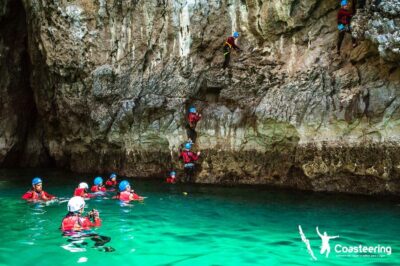
Sesimbra/Arrábida Natural Park Coasteering Adventure
Read our review →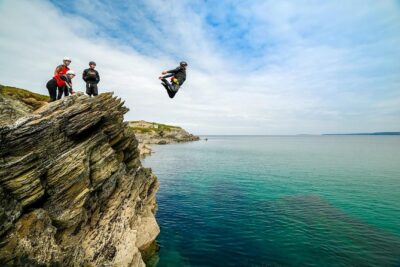
Newquay Coasteering x Cornish Wave | Original Since 2012
Read our review →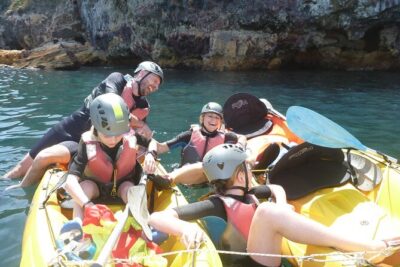
Private Tour explore Vulcano Island by Kayak & Coasteering
Read our review →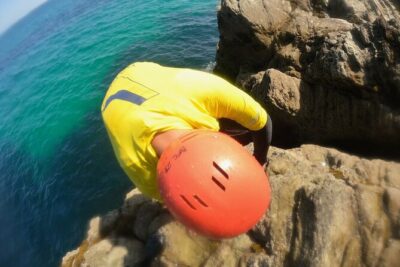
Coasteering – Swimming, Cliff Jump & Rock Climbing
Read our review →Browse the lists this tour appears in