
REVIEW · GRAN CANARIA
Coasteering Gran Canaria: The Atlantic Mountains Adventure Route
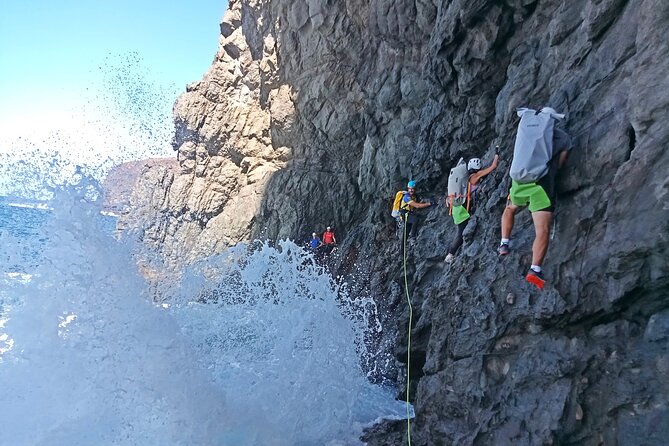
The most unusual part of this Gran Canaria outing is how quickly the day shifts from an ancient cave to a rope descent, then to a 35-meter zipline over the Atlantic. Guide Pablo leads you through the route, teaches each technique, and stays connected to your safety system during the abseiling sections.
I like the mix of mountain and sea. You get a short hike, local Aboriginal history, cliff work, coastal climbing, and time in the water rather than one repeated activity. I also like the small group size, capped at eight, which gives Pablo room to explain the equipment and encourage you through the harder moments.
The main consideration is physical effort. You need moderate fitness, a steady head for heights, and comfort with swimming in open water. The four-hour estimate does not make this a gentle half-day stroll, and long sleeves or light hiking clothes are sensible protection against rock and rope contact.
Key points before you book
- A real route, not a single stunt: The day links hiking, cave exploration, abseiling, coastal climbing, a sea zipline, and snorkeling.
- Pablo handles the safety system: You receive instruction and use a harness, helmet, ropes, and other required equipment.
- The cave adds local context: The route visits an ancient Aboriginal cave before descending toward the coast.
- You fly 35 meters above the waves: The zipline provides the most unusual return section of the outing.
- Small groups matter: A maximum of eight people keeps the instruction more personal.
- Plan your clothing carefully: Wear a swimsuit under light hiking clothes, with long sleeves or long shorts useful for the rock sections.
Starting above the Atlantic at El Turman
The meeting point is at Lugar El Turman, 33P, 35480 El Turman, Las Palmas, Spain. You arrange your own way there, since private transportation is not included. The activity finishes at the same point, so you do not need to organize a second pickup location.
From the start, expect a route that asks you to use your legs and pay attention to your footing. The first walk takes about 25 minutes according to the practical timing supplied for the outing. It leads along the cliff toward a high point, where the cave visit begins.
That opening walk serves two purposes. It warms you up before the rope work, and it puts the route into context. You are not simply being lowered onto a beach for a set of unrelated activities. You first see the height you will later descend and the coastline you will eventually cross.
The scenery is a major part of the value. From above, you can take in the full line of the route, and at the end you have time to look back across the cliffs and sea. If your main aim is a quick swim or a standard coastal walk, this outing will feel demanding. If you want the coast to be the setting for a proper adventure, the gradual build works well.
More Coasteering Tours in Spain
- Coasteering experience in Gran Canaria
★ 5.0 · 112 reviews - Gran Canaria: Adrenaline-Filled Coasteering Experience
★ 4.5 · 65 reviews - Las Palmas: Coastering, Via Ferrata, Water Jumping & Snorkel
★ 4.9 · 40 reviews
An ancient Aboriginal cave before the ropes
The cave appears near the high point of the hike. Your guide explains its history before the descent, giving the first section a cultural note that many adrenaline activities skip.
The information provided describes it as an ancient Aboriginal cave on the island. It is not presented as a long museum-style visit, so expect a short, field-based stop rather than a formal archaeological tour. Still, the setting gives you a useful pause before the physical work begins.
I like this order. You reach the cave while you are still dry and fresh, then look down toward the coast before committing to the descent. It also makes the climb feel connected to Gran Canaria itself rather than something that could have been set up anywhere.
Bring your attention, not just your camera. The cave is one of the few moments on the route where you slow down and hear about the island’s earlier inhabitants. You may take photos during the outing, and Pablo has used a GoPro to capture images of the route and participants, but the exact photo arrangements can vary.
Four sections of guided abseiling
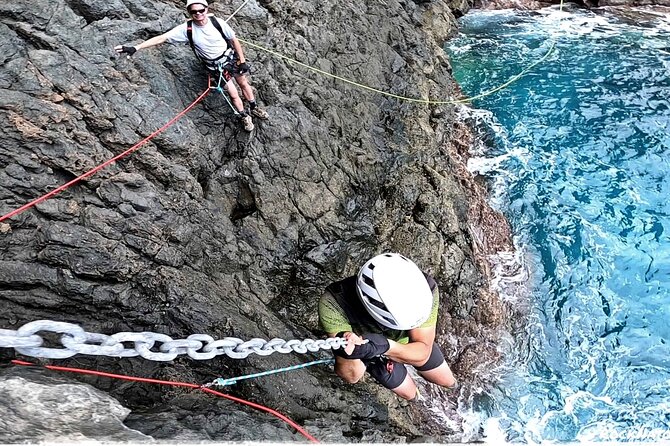
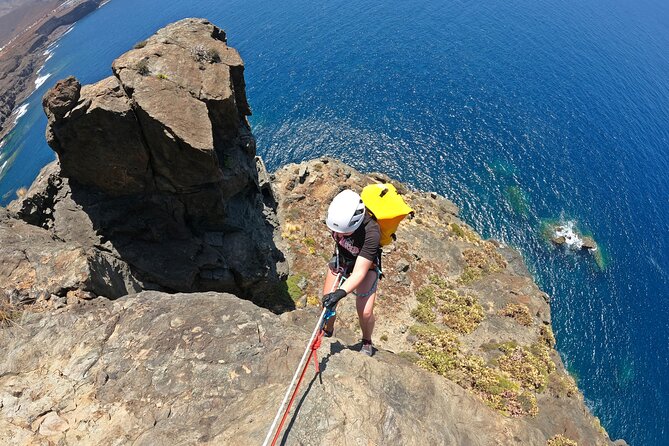
The descent from the cave area takes place by abseiling, also called rappelling. One practical account describes four sections before reaching the water level. You are always belayed by a professional mountain guide with a safety rope, and the guide teaches you how to use the system.
You do not need prior experience. That does not mean the descent is easy. You still need to listen closely, control your feet, and trust the equipment while lowering yourself down the rock. The height can feel intimidating at first, especially if you have never climbed or rappelled before.
Pablo’s role is important here. He gives clear instructions, checks how you are handling the rope work, and offers encouragement through the awkward early steps. The equipment supplied includes a harness and helmet, along with the other technical gear needed for the route.
Wear clothes that can take contact with rock. Light hiking trousers, long shorts, or a long-sleeved top are more useful than delicate holiday clothing. One useful plan is to wear a swimsuit underneath, so you can change into the wetsuit for the water section without a full clothing shuffle.
The descent is also where the route earns its adventurous name. You are not merely looking at a cliff from a viewpoint. You are moving down it under instruction, with the Atlantic getting closer at every section.
Coastal climbing and the chain pass
Once you reach the coastal level, the route turns into a climbing course along the sea. The supplied details refer to a section called the chain pass, where you use easy climbing techniques and the fixed support provided along the route.
This is a different test from abseiling. On the ropes, you are mainly controlling a descent. Along the coast, you are moving sideways and upward, placing your hands and feet carefully while the sea sits below. Your guide explains the techniques before you begin, so the challenge is about following directions rather than arriving with climbing knowledge.
The sea makes the route feel exposed. That exposure is part of the fun, but it also means you should not rush. If you are uncomfortable with heights, tell the guide early. The small group limit helps because instruction can be adjusted to the pace of the people on the route.
You should expect wet, uneven conditions near the water. The provided gear protects you during the technical sections, but it does not remove the need for balance or careful movement. I would treat the chain pass as a focused activity, not a place to look away and take constant photos.
More Coasteering Tours in Gran Canaria:
- Agaete: Gran Canaria Coasteering. Marine Ferrata and Zipline
★ 5.0 · 38 reviews - Award Winner Premium Kayak and Coasteering Adventure with Lunch
★ 5.0 · 472 reviews - Coasteering Experience in Newquay
★ 5.0 · 465 reviews - Mallorca: Half-Day Coasteering Experience
★ 4.7 · 447 reviews
The 35-meter zipline over the waves
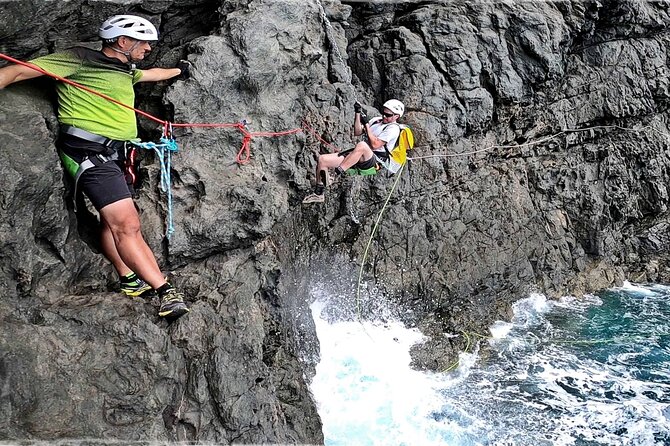
The route’s most unusual feature is a zipline above the sea. You travel about 35 meters over the waves, using the line to return before continuing upward.
This is a short section, but it creates a big change of mood. After the concentration of coastal climbing, you leave the rock and glide above the water. The height and open view make it feel larger than the distance covered.
The zipline also explains why the route is more than a standard coasteering swim. You are not only jumping into the sea or scrambling around a cove. You are using several different forms of movement, each with its own rhythm.
Your helmet and harness remain central to the safety setup. Listen to the guide’s instructions about how to approach, ride, and finish the zipline. The details supplied do not specify the exact landing arrangement, so follow the on-site briefing rather than assuming it works like a theme-park zipline.
Climbing back toward the 125-meter viewpoint
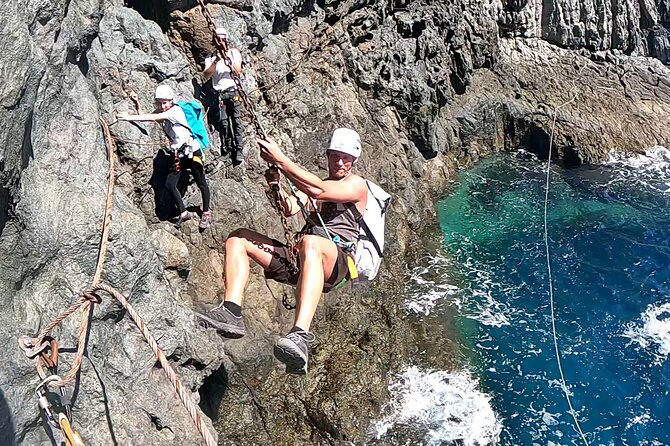
After the zipline, you climb the Atlantic rock using straightforward climbing techniques. The high point reaches more than 125 meters above sea level, giving the final ascent a strong sense of progress.
This upward section is likely to feel different depending on how you handle the earlier activities. If the abseil was your hardest moment, the climb may feel more comfortable because you can focus on moving upward. If you find sustained climbing tiring, the final section may test your legs after the swim and coastal route.
The reward is the view back over the course. From above, you can see the cliffs, the sea sections, and the route you have just completed. That final look helps explain the geography of the activity better than a quick photo from ground level.
The route finishes back at the meeting point. There is time to relax and have snacks while taking in the view. Snacks are described as part of the ending atmosphere, but the supplied information does not list a full meal, so eat beforehand and do not treat this as a food tour.
Swimming, snorkeling, and the water section
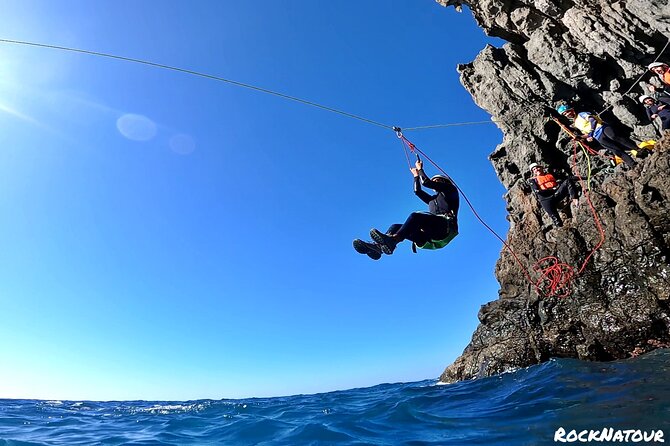
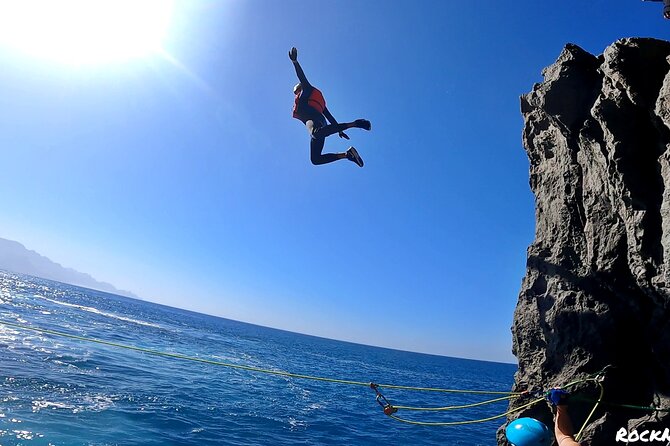
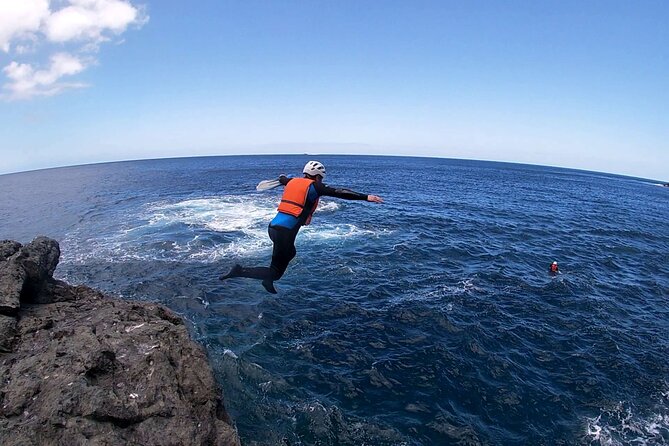
The water portion begins after the climbing and cliff work. You jump from the top of a cliff into the sea, then swim or snorkel afterward. One description places the swim at about 300 meters to a bay before the walk back.
The precise order can depend on the route and conditions, but you should prepare for a genuine open-water section rather than a quick dip. A wetsuit is part of the practical clothing plan described for the outing, and wearing your swimsuit underneath makes changing easier.
This is also the point where comfort in water matters. You do not need prior climbing experience, but the activity still asks you to swim and handle yourself in the sea. If you are not a confident swimmer, ask RockNatour about suitability before booking.
The jump is optional only if the guide and route allow an alternative, and no alternative is specified in the supplied information. Do not book this expecting to watch from the side. The activity is designed around active participation in the rock and water sections.
What the $83.45 price gives you
At $83.45 per person, the price is reasonable if you want a guided technical outing rather than an ordinary coastal excursion. The fee covers the main specialist equipment, including the harness and helmet, plus the guide’s instruction and safety supervision.
You are also paying for a route that combines several activities in about four hours. Booking separate sessions for abseiling, climbing, a zipline, and snorkeling would likely take more planning and transport. Here, the pieces are linked into one continuous outing.
The value is less clear if you only want a relaxed beach morning. You will need to reach El Turman yourself, wear practical clothes, and commit several hours to physical activity. Group discounts may improve the cost for people booking together, though the amount of the discount is not specified.
The maximum group size is eight. That matters more here than it would on a sightseeing bus. Rope instruction and climbing support require real attention, and a smaller group gives the guide more opportunity to watch technique and answer questions.
Who will enjoy this route most
I would recommend it to an active adult, a fit older teenager, or a parent and adult child who want a shared challenge. One successful pairing included a fit 58-year-old mother and her 28-year-old daughter, both new to mountain climbing. That does not guarantee the same level of ease for everyone, but it shows that prior climbing experience is not required when fitness is adequate.
You should be comfortable with heights, uneven rock, ropes, and swimming. Moderate physical fitness is specifically required. The day will suit you best if you enjoy learning as you go and can accept a little nervousness before the next section.
This is not the right pick if you want a passive boat trip, an easy walk, or a predictable sightseeing schedule. Weather can affect the activity, and the sea and cliff setting make conditions part of the decision.
RockNatour offers the outing in English. If the date you want has no space, you can contact the company by WhatsApp or email and ask to join the waiting list. Confirmation is provided at booking.
Practical clothing and preparation advice
Wear a swimsuit beneath lightweight hiking clothes. Long sleeves, trousers, or long shorts can help protect your skin during the climb and rappel, while bulky clothing will be awkward once you put on a wetsuit.
Bring the attitude of a beginner. The guide teaches the techniques, so you do not need to arrive knowing how to rappel or use climbing equipment. You do need to listen carefully and follow the safety instructions each time the activity changes.
Eat enough before you arrive, since the outing includes a hike, rope work, climbing, a swim, and an ascent. Snacks are available at the end, but no private transport is included, and the supplied details do not list a full meal or personal items.
The tour requires suitable weather. If RockNatour cancels because conditions are poor, you can choose another date or receive a full refund. The same applies if the minimum number needed to run the outing is not reached. For your own cancellation, cancel at least 24 hours before the start for a full refund. Changes or cancellations inside that window are not accepted.
Should you book the Atlantic Mountains route?
Book it if you want Gran Canaria’s coast as an active playground and like the idea of moving from cave to cliff, cliff to sea, and sea back to the high rock. The route has real variety, a small group cap, and strong safety support from Pablo.
Skip it if you dislike heights, are not comfortable swimming, or want a low-effort morning. For the right person, $83.45 buys far more than a scenic walk. It buys a guided challenge with a memorable sequence of rope descent, coastal climbing, a sea zipline, and open-water time.
FAQ
Where does the coasteering activity start?
It starts at Lugar El Turman, 33P, 35480 El Turman, Las Palmas, Spain.
Where does the activity finish?
The route ends back at the same meeting point.
How long does the experience last?
The activity lasts approximately four hours.
Is prior climbing or abseiling experience required?
No. Prior experience is not required, and the guide teaches the techniques during the activity.
What equipment is included?
A harness and helmet are included. The guide also provides the other necessary safety equipment for the route.
How many people can join the group?
The activity has a maximum of eight participants.
Is the activity offered in English?
Yes. The experience is offered in English.
Do I need to be physically fit?
You should have a moderate level of physical fitness. The route includes hiking, abseiling, climbing, swimming, snorkeling, and a final ascent.
What happens if the weather is poor?
If poor weather causes cancellation, you will be offered another date or a full refund. You can also receive a full refund if you cancel at least 24 hours before the experience begins.
Just added around Gran Canaria
- Cliff Jumping Canyoning in The Rainbow Rocks Ravine★ 5.0 · 12 reviews
- Dry Canyoning Half Day Trip★ 5.0 · 5 reviews
- Coasteering experience in Gran Canaria★ 5.0 · 112 reviews
- Via Ferrata Gran Canaria: Adventure Route for First Time Climbers★ 5.0 · 66 reviews
- Half-Day Adventure and Climbing Via Ferrata in Gran Canaria★ 5.0 · 25 reviews
- Canyoning in Gran Canaria: The Hidden Waterfalls and Magic Pools★ 5.0 · 92 reviews
- Las Palmas: Coastering, Via Ferrata, Water Jumping & Snorkel★ 4.9 · 40 reviews
- Las Palmas, Gran Canaria: Canyoning Adventure★ 4.8 · 33 reviews
Coasteering Tours, compared.
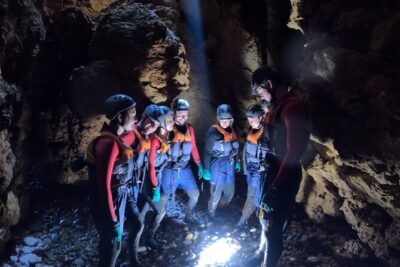
Award Winner Premium Kayak and Coasteering Adventure with Lunch
Read our review →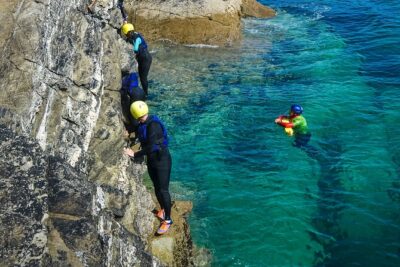
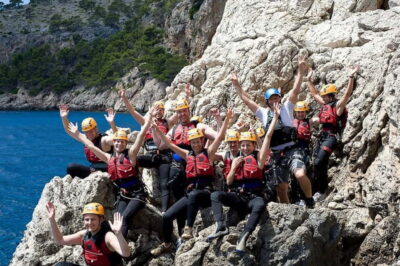
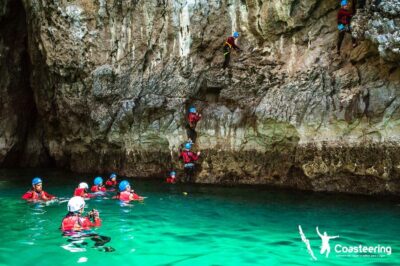
Sesimbra/Arrábida Natural Park Coasteering Adventure
Read our review →
Newquay Coasteering x Cornish Wave | Original Since 2012
Read our review →
Private Tour explore Vulcano Island by Kayak & Coasteering
Read our review →
Coasteering – Swimming, Cliff Jump & Rock Climbing
Read our review →Browse the lists this tour appears in