
REVIEW · UK
Tenby: Coasteering Adventure
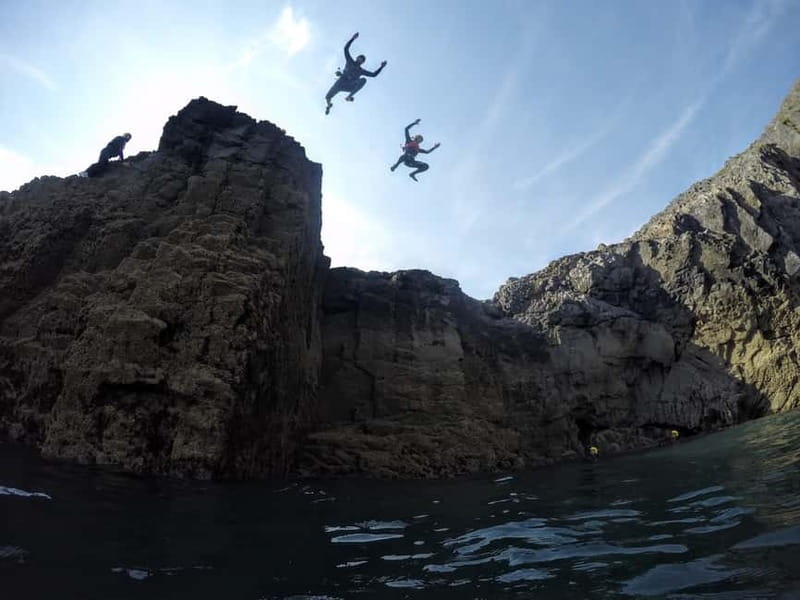
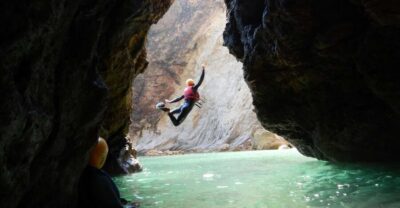
Tenby’s coast is best seen from the water, where cliffs open into caves, rocks form natural pools, and the sea does the sightseeing. This 2.5-hour coasteering trip mixes swimming, scrambling, wave play, and optional jumps around Lydstep Headland, about 10 minutes from Tenby.
I like the freedom to set your own pace, and I like that jumping is only one small part of the outing. The guides also handle nervous first-timers well. Merv and Rachel patiently supported a 9-year-old who found the scrambling hard, while Charles, Marc, and Tom have earned praise for calm, capable guidance.
The catch is simple: this can work your body hard. One first-time participant loved it but said the aches lasted into the next day. You need to swim 25 metres confidently, scramble over rocks, and feel comfortable in open seawater.
Key points to know before you book
- Lydstep Headland is the usual base: You get a free car park close to the starting point, roughly 10 minutes from Tenby.
- Jumps are optional: You can enjoy caves, pools, swims, and rock work without leaving a ledge.
- The sea sets the route: Wind and swell may change the location, route, or date, even though rain does not stop the activity.
- Bring old trainers: Secure shoes with thick soles and good grip matter more than looking smart.
- The guides suit mixed groups: Children from age 8 can join if they swim confidently and manage light scrambling.
- You are in the water for up to 2.5 hours: Expect a full physical outing, not a short seaside dip.
Why Tenby coasteering is more than a swim
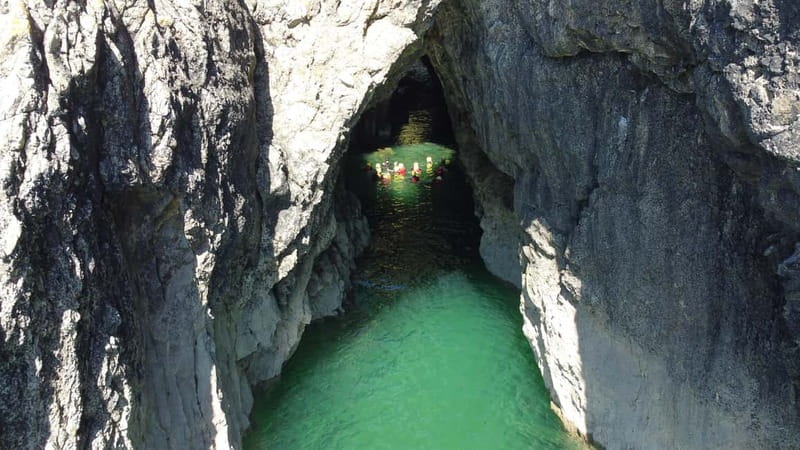
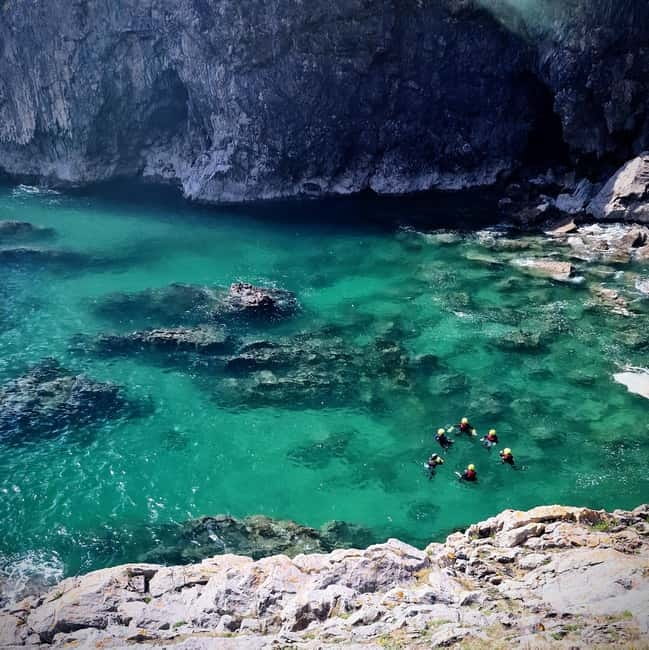
Coasteering is a practical way to reach parts of the Pembrokeshire coast that are difficult to see from a footpath or beach. You move along the edge of the sea instead of simply looking at it. That means swimming around rock shelves, pulling yourself over low ledges, entering sea caves, and pausing in sheltered pools.
The activity can be quite gentle or fairly adventurous. Your guide adjusts the route and the challenges to suit the group. You might spend more time swimming and exploring, or you might try several jumps and play in areas where the swell pushes and spins you around.
That flexibility is important. Some people book coasteering for the jumps, while others want a safe first taste of wild swimming. You can take part without jumping at all. A leap into deep water is encouraged only when you feel ready.
The setting around Tenby adds plenty of interest. Pembrokeshire has a rugged coast with cliffs, rocky shelves, caves, and open water. From sea level, the views change as you move. A cave entrance may look small from shore, then open into a larger space once you swim closer.
More Coasteering Tours in the UK
- Coasteering Experience in Newquay
★ 5.0 · 465 reviews - Newquay Coasteering x Cornish Wave | Original Since 2012
★ 5.0 · 342 reviews - Half-Day Coasteering in Newquay Cornwall
★ 5.0 · 239 reviews
Starting at Lydstep Headland near Tenby
For most of the year, you meet the group at Lydstep Headland, around 10 minutes by car from Tenby. The free car park is usually quiet, and it sits about two minutes from the start of the coasteering route. That short walk is useful when you are carrying a towel, clothing, and wet kit.
Do not rely on the map supplied with the booking page. Use the supplied Google Maps link or the what3words location instead. From Tenby, drive past Lydstep Holiday Park into Lydstep village. Turn left about 75 metres after the Lydstep Tavern, follow the rough lane for roughly 500 metres, then turn right at the blue parking sign after the cottage.
Coming from Manorbier or Pembroke, the turn is on the right about 170 metres after entering the village. The approach includes a bumpy lane, so allow a little time and watch for the parking sign rather than rushing to the meeting point.
Weather can change the plan. Rain does not usually affect the activity, but strong winds or large swell can make another location safer. If conditions require a different venue, the operator contacts you before the session. A postponement or cancellation caused by conditions comes with a full refund if you cannot attend the replacement date.
Wetsuit, helmet, and the right shoes
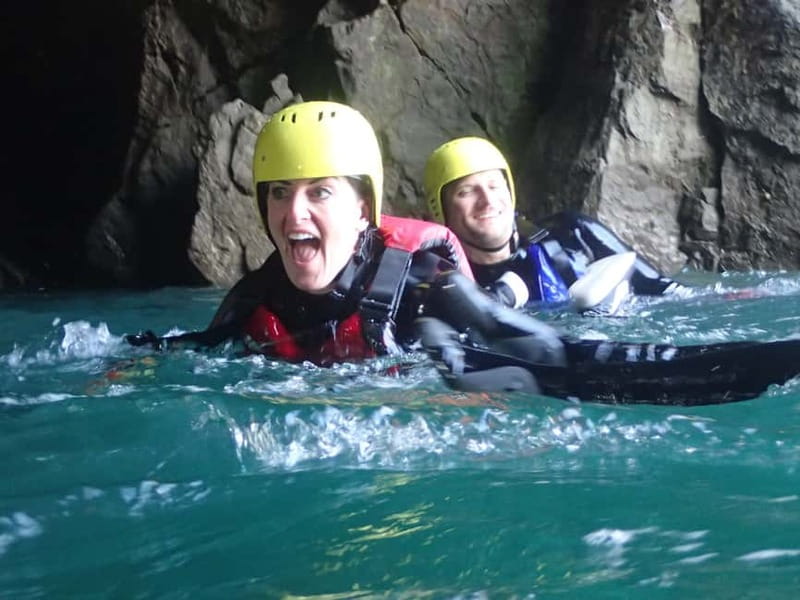
You receive a specialist coasteering wetsuit, buoyancy aid, and helmet. These are the pieces of equipment that make the session possible in cold water and around rough rock. You still need to bring your own footwear.
Old trainers are the best choice. They stay on your feet, give you grip, and have thicker soles than many beach shoes. Wetsuit boots can work if they have a decent sole. Reef or beach shoes are acceptable only if they fit securely and offer good protection.
This is not the place for loose sandals or shoes that might slip off. Losing a shoe halfway along a rocky route is uncomfortable and can create a safety problem. Bring a pair of shorts to wear over your wetsuit, too. They add a little padding during scrambling and help protect the wetsuit from rough rock.
Pack a towel. A changing robe is also useful because changing facilities are not always available. You may want dry clothes that are easy to pull on after the session, though the key items specifically required for the activity are closed-toe shoes, shorts, and a towel.
What the 2.5-hour session feels like
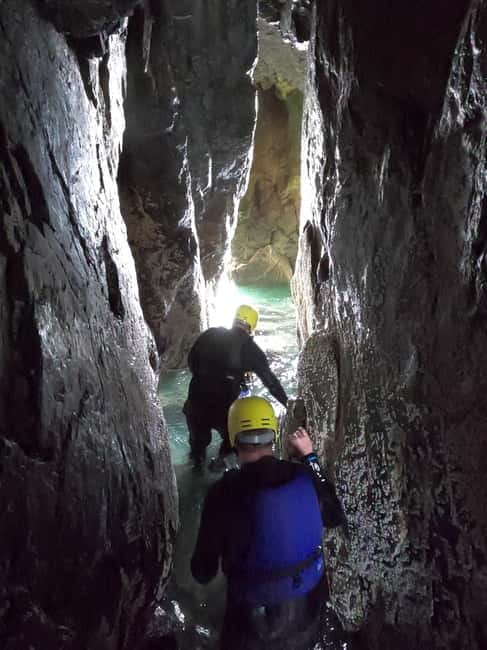
The full booking lasts about two and a half hours, with roughly two to two and a half hours in the water. That is a long time for a physical sea activity, particularly if you have never tried it before.
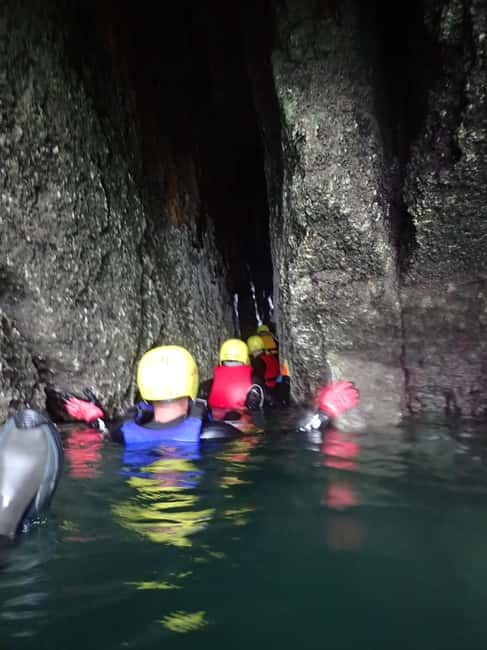
Your guide leads you along a route that combines several small challenges rather than one continuous stunt. You may swim between rocks, scramble along ledges, enter caves, and pause in calmer pools. The route also includes what the operator calls swirly play spots, places where the shape of the rock and movement of the water create a playful current.
The pace is not just about covering distance. You stop to look into corners of the coast and learn about what lives there. Depending on the conditions, you might spot seals, examine crabs and sponges, notice birdlife, or even taste seaweed. These small details give the outing more character than a simple swim along the shoreline.
The guide also explains how to approach the rock and the water. That matters because coasteering is not a race. You need time to place your feet, listen to instructions, and decide which challenges suit you.
Same rush, a different way to get it:
- Extreme Paranormal Underground Ghost Tour in Edinburgh
★ 4.5 · 1,587 reviews - Edinburgh: Extreme Paranormal Underground Ghost Tour
★ 4.2 · 850 reviews - Bungee jump from 40 meters in the stunning valley of Killiecrankie, Scotland
★ 5.0 · 500 reviews - Discover Canyoning at Bruar Falls
★ 5.0 · 409 reviews
Caves, pools, and optional jumps
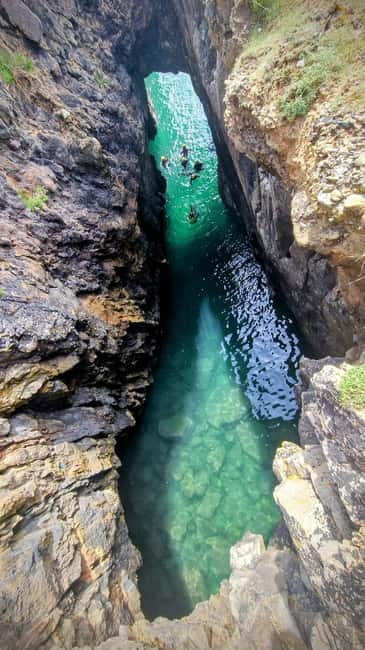
The caves are one of the strongest reasons to choose this activity instead of a standard boat trip. You enter at water level, so you see the rock from a close angle and move through spaces that are not part of a normal walking route.
Secret pools and narrow corners add variety. Some sections may feel calm and sheltered, while others bring you closer to the movement of the sea. Conditions affect how much of each feature you can safely explore, so the exact route is not fixed.
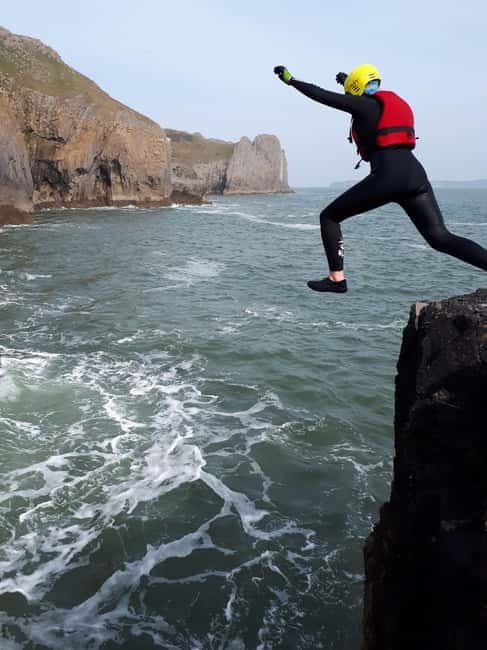
Jumps get the most attention, but they are not the whole activity. You can choose not to jump and still take part in the swimming, scrambling, caves, wildlife, and wave play. If you do want to jump, your guide identifies a safe platform and helps you decide when to go.
This is a good setup for a mixed group. One person can take a jump while another watches from the rocks or uses an easier route. Nobody should feel pushed into a leap. The trip works best when you treat each challenge as an option rather than a test.
How demanding is it?
You do not need to be an expert swimmer. The stated guideline is that you should be able to swim 25 metres confidently. You also need reasonable fitness and mobility, plus the ability to scramble lightly over rocks.
That description is accurate but should not make the outing sound effortless. You spend a long period in a wetsuit and buoyancy aid, and you repeatedly move between swimming and rock work. Climbing over low rocks can tire your arms and legs, especially when the surface is uneven.
The most useful self-check is not whether you like swimming pools. Ask yourself if you are happy entering open sea, putting your hands and feet on rough rock, and continuing when your body starts to feel tired. If yes, the activity should be within reach for many reasonably fit beginners.
The session is suitable from age 8, provided children swim confidently and can manage the physical parts. A child who is nervous around water or struggles with basic scrambling may find the route too much. The experience with a 9-year-old who found the rocks challenging shows why an adult should think about strength and confidence, not just the minimum age.
The guide makes a real difference
Tenby Adventure uses guides with extensive coasteering experience and training. Safety equipment follows the standards recommended by the National Coasteering Charter, and lead guides carry satellite locator beacons. The operator reports a safety record covering more than 30,000 people taken coasteering safely.
That information matters because the sea is never completely predictable. A guide must choose where the group enters the water, which rocks are suitable, and how much swell is manageable. Good judgment matters more than theatrical bravado.
The guides named in recent sessions include Marc, Tom, Merv, Rachel, and Charles. Marc and Tom were praised for making a first coasteering attempt enjoyable despite the physical toll. Merv and Rachel showed patience with a young participant who struggled on the rocks. Charles was described as experienced and supportive.
You should still expect to take responsibility for your own limits. Tell the guide if you are tired, worried, or unsure about a jump. A well-run coasteering trip gives you choices and clear instructions, not pressure to perform.
Is $81 good value?
At $81 per person, this is not the cheapest way to spend a morning near Tenby. You are paying for a specialist guide, safety equipment, a full half-day session, and access to a part of the coast that would be difficult to explore alone.
The wetsuit, buoyancy aid, and helmet are included, which saves you from hiring several separate items. The guide is also doing more than leading a walk. They are watching the sea, managing the route, helping with technical sections, and explaining the natural features around you.
Value depends on what you want from a coastal activity. If you prefer a quiet beach visit or a short scenic stop, $81 may feel high. If you want active time in the sea and a structured way to reach caves, pools, and rock formations, the price is easier to justify.
A sit-on-top kayak with storage for snacks and spare clothing is also part of the listed experience. Confirm how that element fits into your session when booking, since the main outing is described around swimming and scrambling. It may be useful for comfort and carrying small items, but it does not replace the need for suitable clothing and footwear.
Who should book this Tenby adventure?
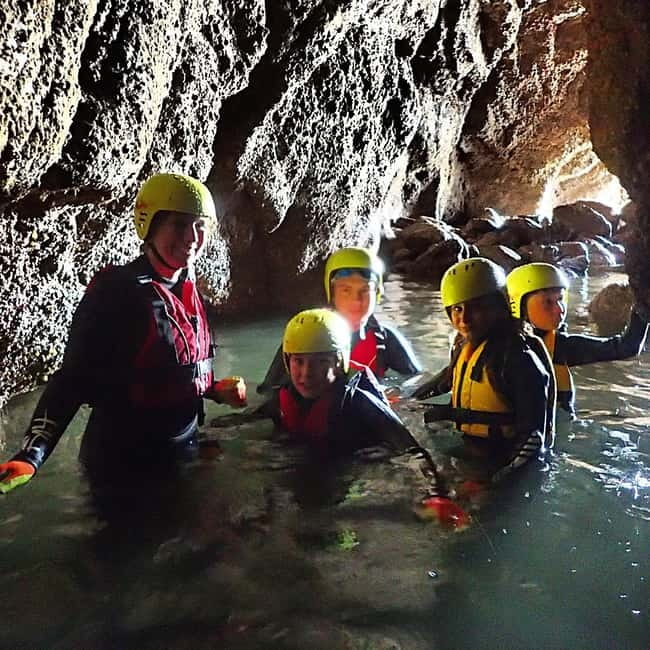
I would choose this for an active adult, family, or group that wants a hands-on day by the sea. It suits people who enjoy trying a new physical activity without needing to be elite swimmers.
It is especially good for first-timers who want options. You can try a jump, skip it, spend time in a cave, or focus on swimming and wildlife. The guide-led format gives you a safer way to test your confidence than setting out along unfamiliar rocks alone.
I would think twice if you dislike cold water, feel uneasy on uneven rock, or want a relaxed sightseeing trip. The session may leave you tired, and the combination of wetsuit, waves, and scrambling asks more of you than a normal coastal walk.
You should also keep your plans flexible if the forecast shows strong wind or heavy swell. Rain is not the main issue. Sea conditions are.
Booking details worth knowing
You can cancel up to 24 hours before the session for a full refund. The reserve-now, pay-later option lets you hold a place without paying immediately, which is useful when your Tenby plans depend on the weather.
The activity is in English and runs at set starting times, so check availability for your chosen date. Transport to Lydstep Headland is not included. You need to drive or arrange your own way there.
The usual meeting point is close to Tenby, but an alternative venue may be used if conditions make it more suitable. Check your messages before setting out, and use the correct navigation links rather than the inaccurate map.
Should you book it?
Book this coasteering trip if you want to feel the Pembrokeshire coast at water level, not just photograph it from above. The caves, natural pools, sea life, and optional jumps create a varied outing, while the guides give beginners room to build confidence.
Skip it if you want low effort or dislike open water. For everyone else, the mix of choice, scenery, and expert support makes this one of Tenby’s stronger active experiences. Bring old trainers, expect a workout, and let the guide decide how far the sea should take you.
FAQ
Where does the Tenby coasteering session meet?
The usual meeting point is Lydstep Headland, about 10 minutes from Tenby. The free car park is about two minutes from the start of the route.
How long does the activity last?
The session lasts 2.5 hours. You are typically in the water for between two and two and a half hours.
What age can children join?
Children from age 8 can join if they can swim confidently and manage light scrambling.
Do I need to be an advanced swimmer?
No. You generally need to swim 25 metres confidently. You also need reasonable fitness and mobility and should feel comfortable in the sea.
Are jumps compulsory?
No. Jumps are completely optional. You can take part through swimming, scrambling, cave exploration, pools, and wave play without jumping.
What equipment is provided?
A specialist coasteering wetsuit, buoyancy aid, and helmet are provided. Footwear is not included.
What shoes should I bring?
Old trainers are the best choice because they are secure, have good grip, and protect your feet. Wetsuit boots or secure beach shoes with thick soles can also work.
What happens if the weather is poor?
Rain does not usually affect the activity. Strong winds or large swell may lead to a route change or postponement. If the session is rescheduled or cancelled and you cannot attend, you receive a full refund.
Can I cancel the booking?
Yes. You can cancel up to 24 hours in advance for a full refund.
Just added around the UK
- Portsmouth: Spinnaker Tower Abseiling Experience★ 5.0 · 3 reviews
- Perthshire: Discover Bruar Canyoning Experience★ 5.0 · 6 reviews
- Pitlochry: Lower Falls of Bruar Guided Canyoning Experience★ 4.7 · 3 reviews
- Pembrokeshire: Coasteering Adventure at Stackpole Quay★ 5.0 · 6 reviews
- North Wales: Extreme Coasteering with Cliff Climbing & Jumps★ 5.0 · 2 reviews
- Newquay: Coasteering★ 4.9 · 21 reviews
- Neath: Canyoning, Gorge Walking & Waterfall Trekking Tour★ 4.8 · 20 reviews
- Liverpool: The Anfield Abseil & Liverpool FC Museum★ 4.8 · 117 reviews
Coasteering Tours, compared.
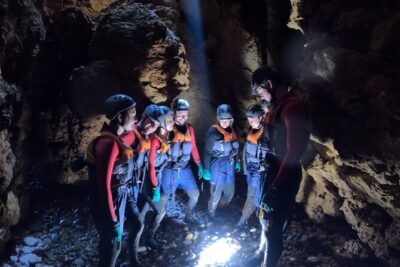
Award Winner Premium Kayak and Coasteering Adventure with Lunch
Read our review →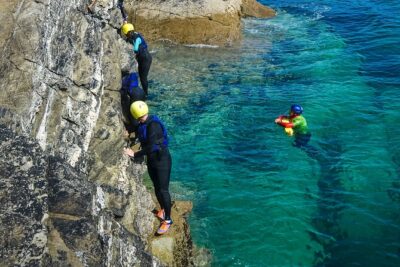
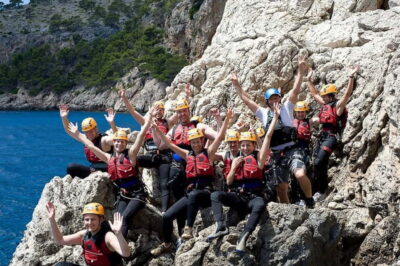
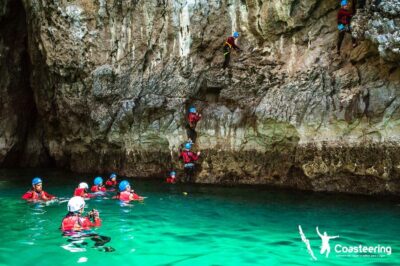
Sesimbra/Arrábida Natural Park Coasteering Adventure
Read our review →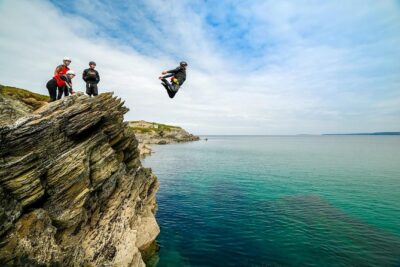
Newquay Coasteering x Cornish Wave | Original Since 2012
Read our review →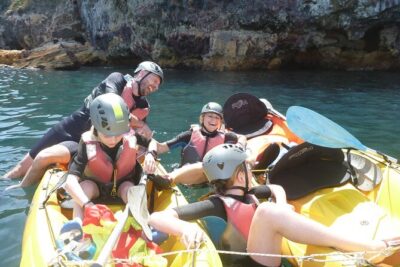
Private Tour explore Vulcano Island by Kayak & Coasteering
Read our review →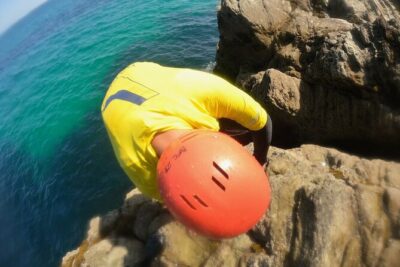
Coasteering – Swimming, Cliff Jump & Rock Climbing
Read our review →Browse the lists this tour appears in