
REVIEW · UK
Newquay: Coasteering
A sea cave, a clear deep-water gully, big jumps, and slippery rock crossings give this two-hour Newquay coasteering trip more bite than a simple coastal walk. You swim, scramble, climb sideways along rock, and learn how to enter and leave the water safely.
I like the small groups of up to eight, which should give you more time with the instructor, and I like the no-pressure approach. You can skip a jump or section without spoiling the session. The main caution is simple: this is physical work, and one recent participant found it more demanding than expected.
- Crystal-clear gully: Make controlled jumps into a deep natural water channel.
- Cave and sea tunnels: Swim and scramble through unusual coastal features.
- Proper instruction: Learn techniques for jumps, water entry, exits, and horizontal climbing.
- Wildlife along the route: Keep watch for marine animals, including seals.
- Useful facilities: Heated changing rooms, hot showers, toilets, and a lock box are provided.
- Small-group format: A maximum of eight people keeps the session focused.
What coasteering in Newquay really involves
Coasteering is not a sightseeing cruise with a little swimming added. It is a moving route along the waterline, using your whole body to get around the coast.
You may swim through sheltered sections, scramble over rock, cross natural channels, and climb horizontally along the cliff edge. The route also includes sluices, natural rapids, and large gully wash troughs. Some parts call for strength and balance. Others are about staying calm in the water and following instructions.
That mix is what makes the activity special. You are not simply looking at Cornwall from the shore. You are using the rock, water, gullies, and sea tunnels as part of the route.
The session lasts two hours, which is long enough to feel like a real outing without taking up your entire day. At $74 per person, it is not a cheap way to spend an afternoon, but the price includes the equipment, instruction, insurance, changing facilities, and a 10 percent discount on other Newquay Activity Centre activities. For an active experience rather than a passive tour, the price is reasonable if you will make full use of it.
Starting with safety, kit, and technique
You begin at the Newquay Activity Centre, where wetsuits, buoyancy aids, and helmets are provided. There is also a lock box for valuables and clothing storage, plus heated changing rooms, hot showers, and separate male and female toilets.
That setup matters more than it may sound. Getting changed after cold-water activity is much easier when you have a warm place to return to. It also means you do not need to arrive carrying specialist equipment.
The session includes a full safety briefing before you reach the water. You learn the correct methods for jumping, entering the sea, climbing across rock, and getting back out. This is important because coasteering can look easy from a distance. A poor landing, an awkward exit, or a rushed move across wet rock can quickly create trouble.
The instructors also explain how to move through sea tunnels and natural water features without putting yourself at risk. You are not expected to guess your way through the route. Listen closely at the start, then keep applying those instructions as conditions change.
The English-language instruction is clear and direct. Rosie and Harrison led one recent session and were praised for being friendly and capable. Your own instructors may differ, but the experience is built around an active teaching style rather than simply guiding you from one point to the next.
More Coasteering Tours in the UK
- Coasteering Experience in Newquay
★ 5.0 · 465 reviews - Newquay Coasteering x Cornish Wave | Original Since 2012
★ 5.0 · 342 reviews - Half-Day Coasteering in Newquay Cornwall
★ 5.0 · 239 reviews
Entering the cave and meeting the first challenges
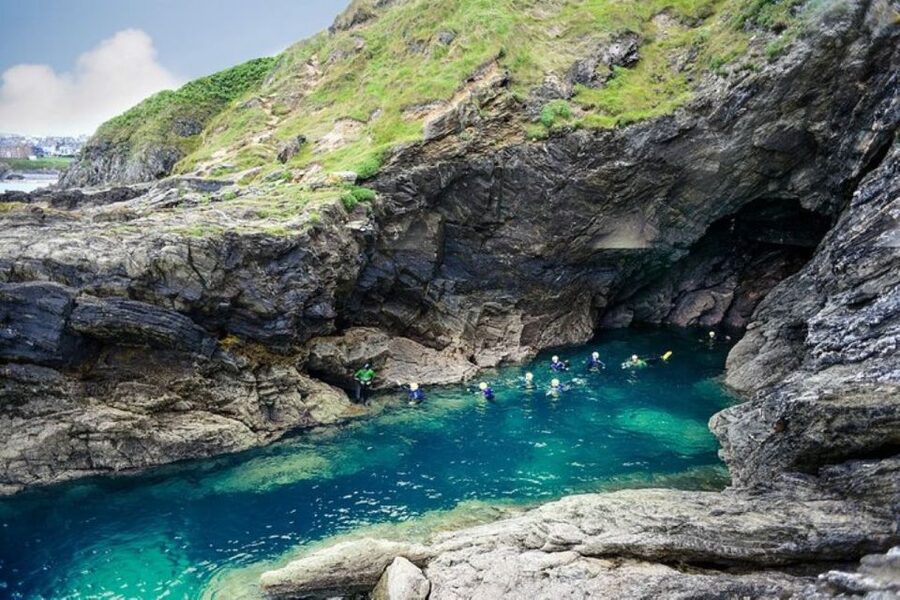
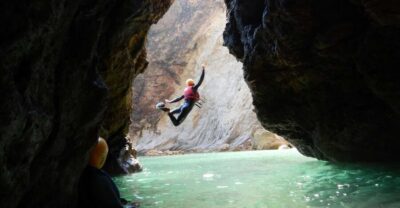
The cave is one of the most memorable parts of the route. It is filled with natural features that make you look closely at the rock instead of rushing past it.
You may need to swim, scramble, and use your hands as you work through the space. A helmet is useful here, not just for protection but also for giving you confidence in a confined, uneven setting.
The cave section is a good early test of how comfortable you are with changing movement. One minute you may be swimming. The next, you may be finding a handhold or stepping across a wet ledge. These transitions are at the heart of coasteering.
If you dislike enclosed spaces or do not feel steady on uneven rock, this part may be uncomfortable. You are not trapped into completing every feature, though. The guides make it clear that you can leave out a section if it does not suit you.
The deep-water gully and controlled jumps
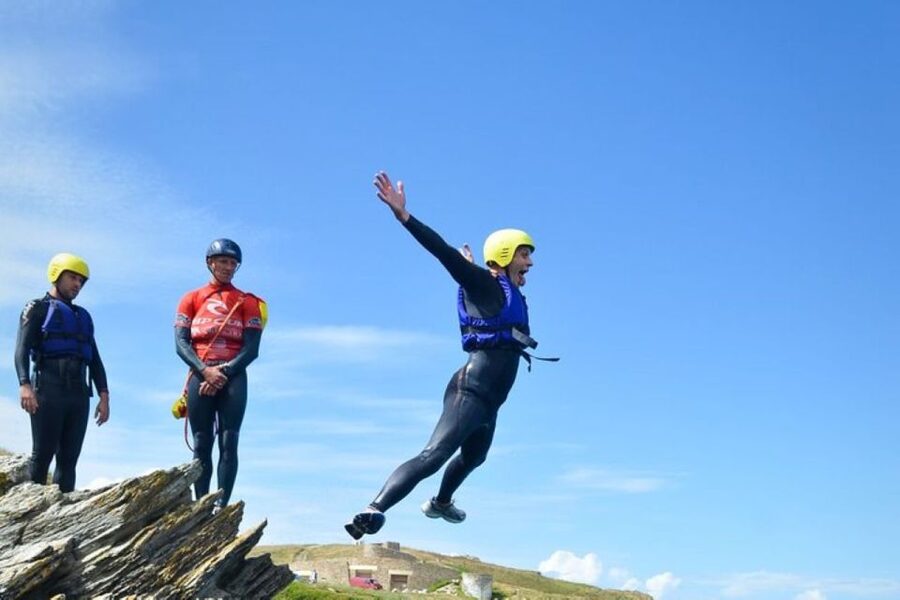
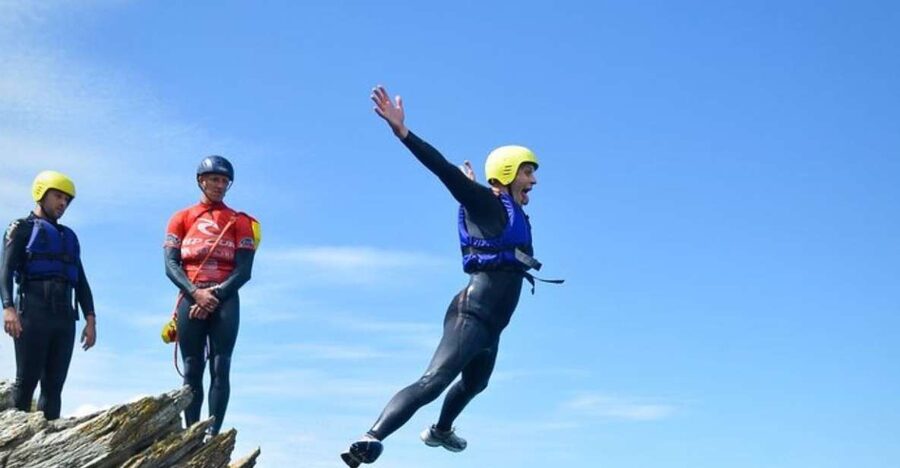
The route includes jumps into a renowned deep-water gully. This is likely to be the most obvious adrenaline moment of the session, but the aim is not reckless height or bravado.
You are taught how to approach the edge, enter the water, and come up safely. The buoyancy aid helps you stay afloat after the jump, while the instructor controls the process and explains the correct technique.
The gully is described as crystal clear, which adds to its appeal. Clear water lets you see more of the natural channel and makes the jump feel less like a blind plunge. Even so, you should expect a real physical and mental challenge. One participant described the experience as more demanding than expected, yet also valued the way it pushed them.
That is a useful warning. You do not need to be an extreme sports expert, but you should be ready for repeated effort. If you are nervous about one jump, say so. The no-pressure policy means you can miss a section rather than turn the whole session into a test of courage.
Traverses, tunnels, sluices, and natural rapids
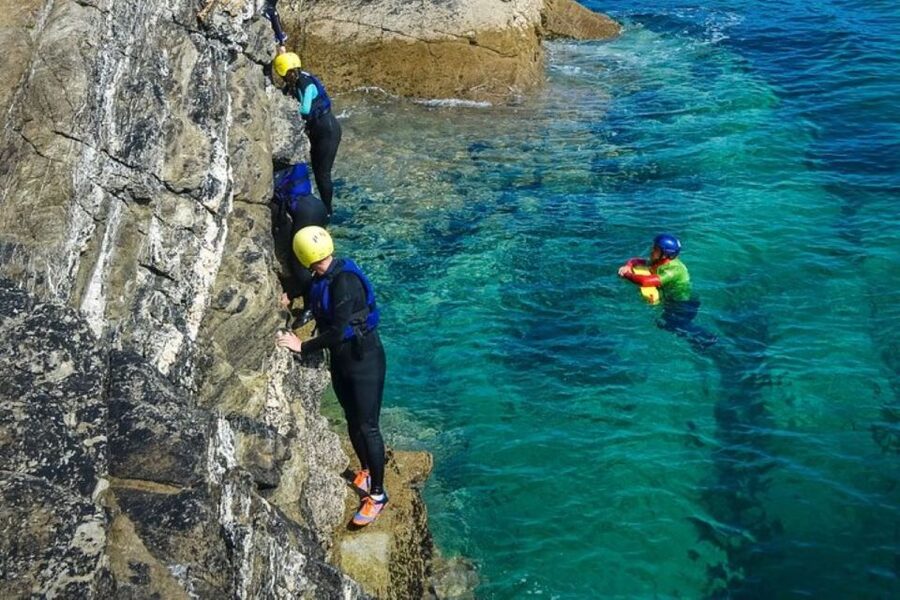
The horizontal climbing sections add a different kind of challenge. Instead of moving up a cliff, you cross along the rock with the water close by. These traverses test balance, grip, foot placement, and patience.
The word climbing can sound intimidating, but the activity also includes instruction in the right techniques. Your job is not to perform a difficult route alone. It is to use the safest available holds and move at a pace you can control.
The sea tunnels bring another change in mood. You swim and scramble through them while learning how to manage water entry and exits. The route also includes sluices, natural rapids, and large gully wash troughs. These features show how the coast has been shaped by moving water, while also making the session feel varied from start to finish.
You should expect to get thoroughly wet. The wetsuit helps with warmth, but it does not remove the need for effort. Crossing rock and moving through water can be tiring, especially if you are not used to swimming in open coastal conditions.
Same rush, a different way to get it:
- Extreme Paranormal Underground Ghost Tour in Edinburgh
★ 4.5 · 1,587 reviews - Edinburgh: Extreme Paranormal Underground Ghost Tour
★ 4.2 · 850 reviews - Bungee jump from 40 meters in the stunning valley of Killiecrankie, Scotland
★ 5.0 · 500 reviews - Discover Canyoning at Bruar Falls
★ 5.0 · 409 reviews
Wildlife and the Cornish coast beyond the adrenaline
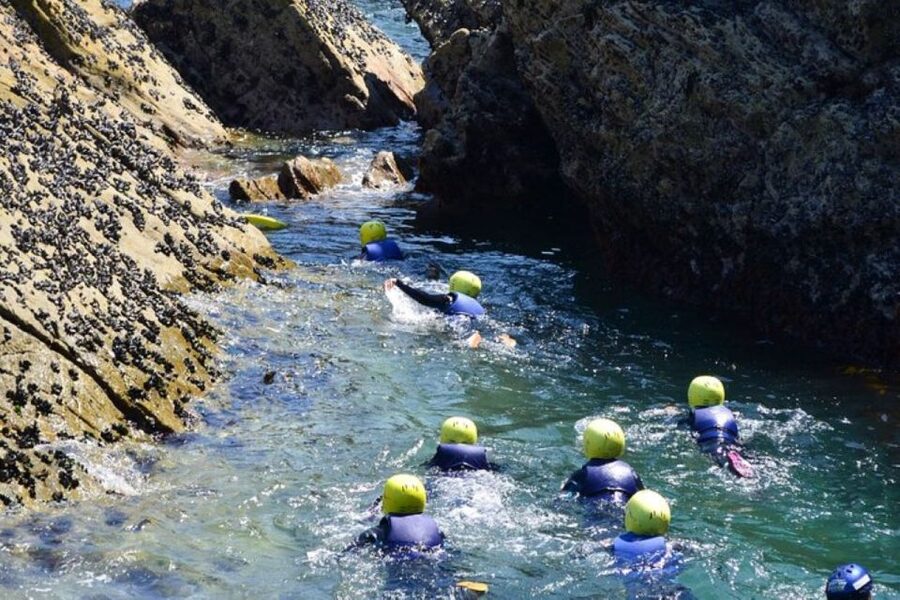
There is more to this outing than jumps. The instructors share information about marine animals and coastal heritage along the way.
Keep your eyes open for wildlife in quieter stretches. One recent session encountered seals, a memorable bonus that shows how the activity can connect you with the living coast as well as its rock formations.
Wildlife sightings are never guaranteed, so do not book this as a seal-spotting tour. The value is in having an instructor point out what you might otherwise miss and explain the coast while you move through it.
The coastal heritage information also gives the route a stronger sense of place. You are not just completing a set of physical tasks. You are learning how natural water channels, caves, gullies, and sea-facing rock fit into Newquay’s wider coastal setting.
How demanding is the two-hour session?
The activity is best suited to people who are comfortable with sustained movement in cold sea water. You will swim, climb, scramble, jump, and repeatedly get in and out of the water.
The route is not described as suitable for people with mobility impairments, and children under eight cannot take part. Those restrictions reflect the physical nature of the activity rather than a lack of welcome.
You should also think about your own comfort with heights, enclosed spaces, and open water. The no-pressure policy helps, but it does not change the fact that the group must move through a coastal route involving jumps and rock crossings.
A two-hour duration keeps the activity manageable for many people. Still, do not schedule it immediately before something that requires you to be dry, rested, or perfectly tidy. You will need time afterward for a shower, changing, and perhaps a hot drink.
Small groups and the guide-led experience
With only eight participants, the group is small enough for the instructors to watch technique and offer help. That matters most during jumps, traverses, and water exits, where a short explanation at the right moment can make a major difference.
A larger group could mean more waiting at each feature and less personal attention. The eight-person limit should make the session feel more active and less like moving through a crowd.
The instructors also bring energy to the route. The strongest praise has focused on friendly, capable guiding and the excitement of the activity itself. Rosie and Harrison were specifically named after one session, and their approach combined clear instruction with a pleasant manner.
The guide is not there only to keep time. You can ask about the coast, marine life, and the safest way to handle a feature. Take advantage of that. The more you understand the techniques, the more enjoyable the physical parts become.
Changing rooms, discounts, and practical extras
The centre provides heated changing rooms, hot showers, toilets, and a secure lock box. These are strong practical benefits, particularly after a session in the sea.
There is also a discount card for food and drinks at local bars and cafes after coasteering. Food and drinks themselves are not included, so plan to pay separately. A 15 percent discount is available at Newquay’s Rip Curl store, and you receive 10 percent off further activities with the Newquay Activity Centre.
A dog sitter may be available if you need one, but you must contact the centre for details. That is a useful extra for some visitors, though it should be arranged before you arrive.
One point to keep in mind is the changing-room space. A recent participant found the facilities crowded and felt the showers could be better. The heated rooms and hot showers are helpful, but do not expect a luxurious spa experience.
Is $74 good value for Newquay coasteering?
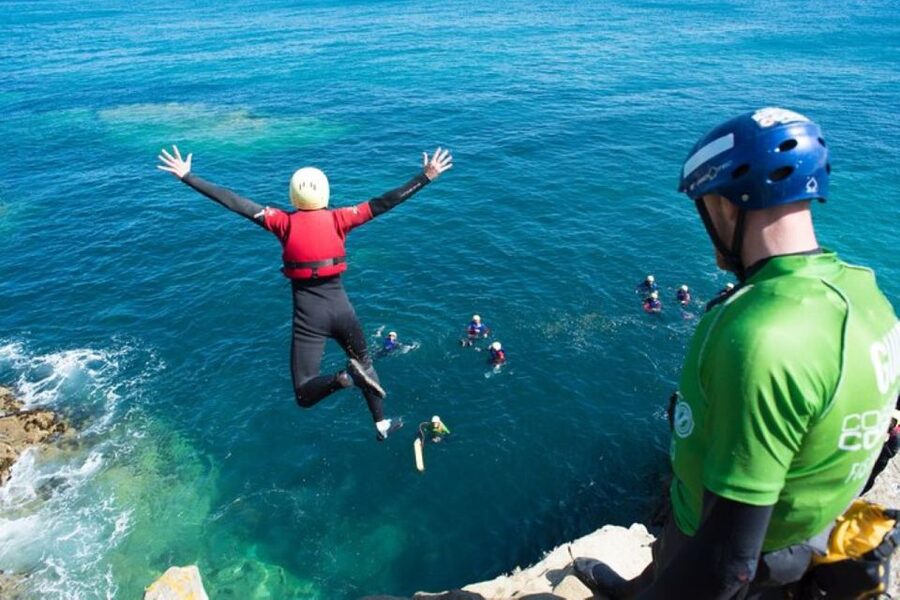
At $74, the cost is fair if you want an active, instructor-led coastal experience with equipment supplied. You are paying for two hours of organized activity, wetsuit hire, buoyancy aid, helmet, insurance, instruction, changing facilities, and safety support.
The value is also in the variety. A short swim alone would not justify the price for many people. Here, you get caves, a deep-water gully, jumps, traverses, tunnels, rapids, wildlife information, and coastal heritage.
The price feels less attractive if you are unsure about the physical demands and expect to skip much of the route. The no-pressure policy is excellent, but you should still choose this because you want an active challenge, not because you are looking for a gentle coastal excursion.
The extra discounts can improve the overall deal if you plan to book another centre activity, eat at a participating local venue, or shop at Rip Curl. They should be treated as bonuses, not as the main reason to book.
Who should book this Newquay experience?
I would recommend it to active adults, older children aged eight and above who are comfortable in the water, and anyone who wants to see the Cornish coast from a more physical angle.
It suits you especially well if you enjoy learning practical skills. You will not just be told where to go. You will be shown how to jump, climb, scramble, swim, and leave the water safely.
It is less suitable if you have limited mobility, strongly dislike open water, or want a relaxed sightseeing trip. It may also feel too strenuous if you are not prepared for repeated movement over two hours.
Wear the provided equipment properly, listen during the briefing, and tell the instructor if you want to skip a feature. That is the best way to make the no-pressure format work for you.
FAQ
How long does the Newquay coasteering experience last?
The activity lasts two hours. Starting times vary, so you need to check availability when booking.
What equipment is included?
A wetsuit, buoyancy aid, and helmet are included. Insurance, a lock box for valuables, and clothing storage are also provided.
Is instruction included?
Yes. You receive a full safety briefing and instruction in jumping, traversing, water entry, and water exits.
How many people are in each group?
The experience is limited to eight participants, making it a small-group activity.
Can I skip a jump or section?
Yes. The activity uses a no-pressure approach, so you can miss a section or jump if you do not feel comfortable.
Is the activity suitable for children?
Children under eight are not permitted. The provided information does not state a maximum age.
What happens if I need to cancel?
You can cancel up to 24 hours in advance for a full refund. You can also reserve now and pay later.
Should you book Newquay coasteering?
Book this if you want real physical contact with the Cornish coast, not simply a view of it. The combination of sea caves, jumps, clear water, traverses, wildlife, and skilled instruction gives the two hours plenty of variety.
I would be cautious only if you dislike cold water, uneven rock, or strenuous activity. For everyone else, the small group, supplied equipment, flexible approach, and warm facilities make this a well-organized way to add some controlled adventure to a Newquay stay.
Just added around the UK
- North Wales: Extreme Coasteering with Cliff Climbing & Jumps★ 5.0 · 2 reviews
- Neath: Canyoning, Gorge Walking & Waterfall Trekking Tour★ 4.8 · 20 reviews
- Liverpool: The Anfield Abseil & Liverpool FC Museum★ 4.8 · 117 reviews
- London: 40-Minute Thames Beast Jetboat Tour★ 4.8 · 13 reviews
- Keswick: Canyoning Adventure★ 5.0 · 4 reviews
- Join Splash White Water Rafting Canyoning Tour★ 4.4 · 3 reviews
- Galloway: Canyoning Adventure Experience★ 5.0 · 6 reviews
- Cornwall: Coasteering & Cliff Jumping Adventure★ 5.0 · 5 reviews
Coasteering Tours, compared.
Award Winner Premium Kayak and Coasteering Adventure with Lunch
Read our review →
Sesimbra/Arrábida Natural Park Coasteering Adventure
Read our review →
Newquay Coasteering x Cornish Wave | Original Since 2012
Read our review →
Private Tour explore Vulcano Island by Kayak & Coasteering
Read our review →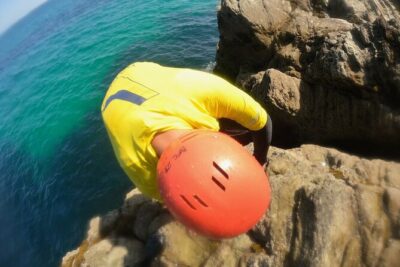
Coasteering – Swimming, Cliff Jump & Rock Climbing
Read our review →Browse the lists this tour appears in