
REVIEW · UK
Cornwall: Coasteering & Cliff Jumping Adventure
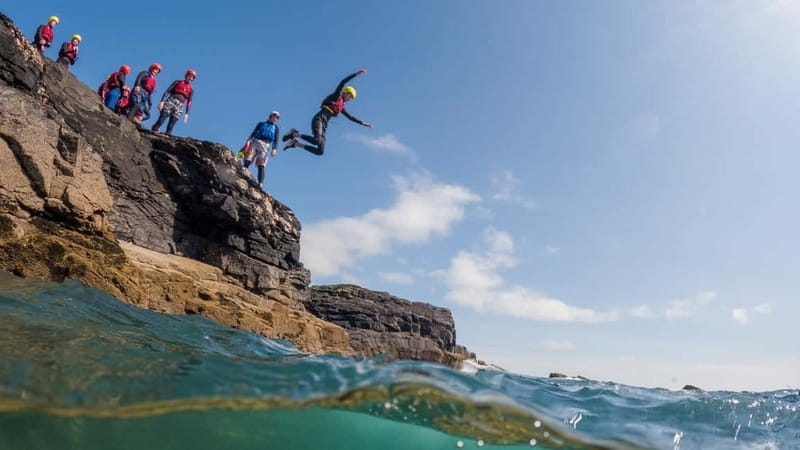
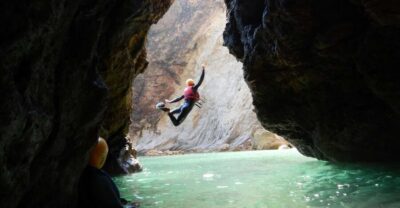
Cornwall’s coast looks different from the water. This coasteering adventure takes you through sea caves, narrow gullies, arches, and wave-cut rocks that walkers cannot reach. The best part is the freedom to choose your level, from easy scrambling and short swims to bigger Atlantic jumps later in the route. I like the calm instruction and the way the session builds slowly. My one caution: this is a physical activity in cold, moving water, so non-swimmers and anyone uneasy on rough rocks should sit it out.
I also like that the guide does not treat cliff jumping as a test you must pass. Every jump is optional, with an alternative offered at each spot. You get proper safety equipment, a full briefing, and a route adjusted to the group and the sea, though you must bring sturdy lace-up trainers and accept that the weather can affect the exact plan.
- Sea caves and arches: Reach coastal features accessible only from the water.
- Optional jumps: Start with low ledges, then choose bigger leaps if conditions and confidence allow.
- 2 to 2.5 hours in the water: Allow up to 3.5 hours for changing, briefing, and the activity.
- Flexible route: Your guide adjusts the pace and route for group ability and sea conditions.
- Proper cold-water kit: A winter wetsuit, helmet, and buoyancy aid are supplied.
- Simple meeting point: Find the white coasteering van in Sydney Cove car park.
What Coasteering in Cornwall Really Involves
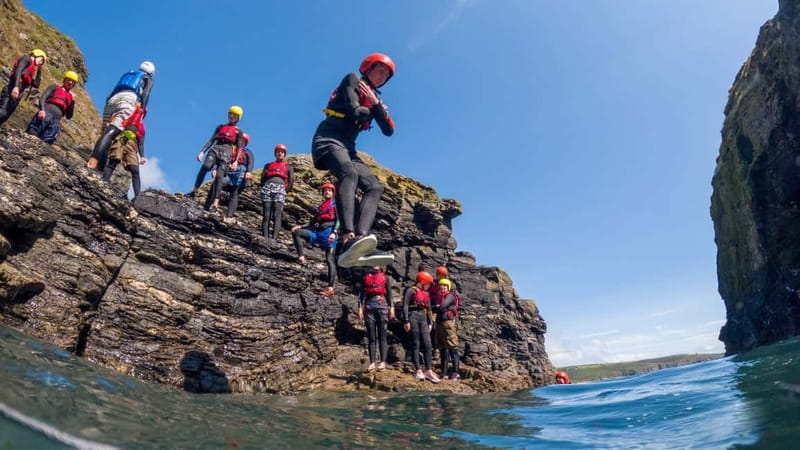
Coasteering is part swim, part rock scramble, and part controlled adrenaline rush. You move along the shore from the water rather than following a marked path, using your hands and feet on rough rock and swimming short stretches between features.
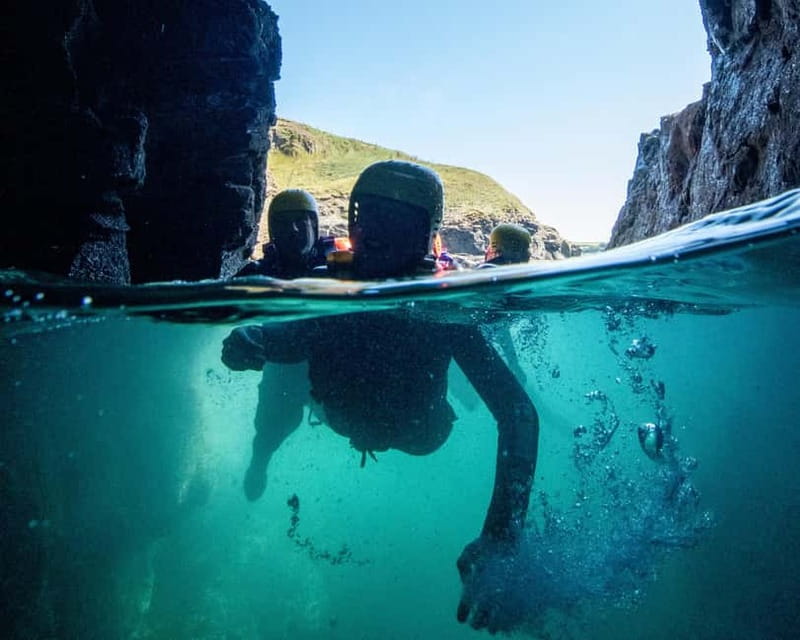
That mix is what makes the activity interesting. You are not simply being taken to a cliff for one jump. The route itself becomes the attraction. You may pass through a narrow gully, move under a natural arch, enter a cave, or pause beside rock shaped by years of Atlantic swell.
The first section is deliberately gentle. Your guide helps you get used to the wetsuit, helmet, and buoyancy aid while showing you how to move over the rocks. You learn to time your entry and exit with the waves, rather than fighting the water at the wrong moment.
This early practice matters. Wet rocks can feel awkward underfoot, and a wetsuit can restrict movement until you adjust to it. The guide’s job is not only to point out the next challenge, but to show you how to approach it with balance and patience.
You should expect to get wet from the start. The supplied winter wetsuit helps with the cold, but you are still entering Atlantic water and moving through exposed coastal conditions. Bring a towel for the end and accept that this is not a dry sightseeing trip with a quick splash added on.
From the Sydney Cove Car Park to the Water
Your session begins at the Sydney Cove car park. Look for the white van with coasteering signs, then meet the English-speaking guide and complete the participation form.
Allow up to 3.5 hours in total. Only 2 to 2.5 hours count as active coasteering, so the remaining time covers introductions, paperwork, changing, equipment fitting, and the safety briefing. This is useful to know if you are arranging transport or another activity later in the day.
The equipment provided includes a helmet, buoyancy aid, and winter wetsuit. You wear your swimwear underneath. You should also bring a pair of shorts to wear over the wetsuit. The shorts add a little padding against barnacles and rough rock, which is a small but worthwhile comfort measure.
Footwear is the detail most likely to affect your experience. Bring lace-up trainers or similar sturdy sports shoes. Slip-on beach shoes, reef shoes, and loose sea shoes are not suitable because waves or a jump can pull them off. Your shoes will get wet and may scrape against the rock, so choose a pair you are prepared to use in the sea.
Transport to Sydney Cove is not included, and neither are food or drinks. There is no guide-provided meal break in the activity, so plan to eat before or after rather than expecting refreshments during the session.
More Coasteering Tours in the UK
- Coasteering Experience in Newquay
★ 5.0 · 465 reviews - Newquay Coasteering x Cornish Wave | Original Since 2012
★ 5.0 · 342 reviews - Half-Day Coasteering in Newquay Cornwall
★ 5.0 · 239 reviews
The Safety Briefing Sets the Tone
Before entering the water, you receive a detailed safety briefing and a basic skills introduction. This covers the way the activity works, how to move over rocks, and how to approach the water safely.
The guide assesses the group and explains that the route may change with sea conditions. That is an important point. Coasteering is not like a museum visit, where every group follows the same fixed indoor path. Swell, wind, and the condition of the water affect which sections are sensible on the day.
The briefing also makes clear that you have choices. You can attempt a jump, take a lower entry, or use another route. That flexibility is one of the strongest features of the session, especially for mixed groups where one person wants an adrenaline rush and another is still finding their confidence.
Children younger than 14 must be accompanied by an adult. The activity is not suitable for children under 9 or for non-swimmers. If someone under 18 is taking part without a parent or guardian present, a participation form must be arranged and signed in advance. This requirement is tied to the Adventure Activities Licensing Regulations, so do not leave it until the meeting point.
Learning the Rocks, Swell, and Short Swims
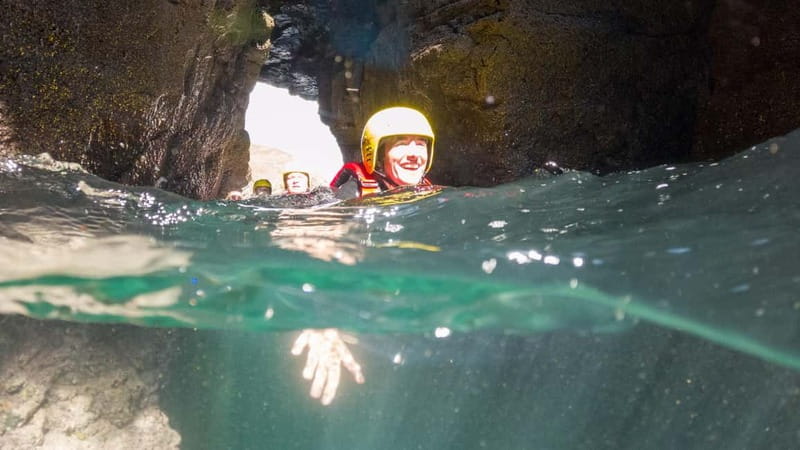
Once you reach the shore, the guide starts with basic movement. You scramble across rocks, enter the water for short swims, and climb out again while paying attention to the swell.
This is where the activity becomes more physical than the photographs may suggest. You need to use your legs, keep your footing, and watch where you place your hands. Barnacles and rough surfaces are part of the Cornish coast, which is why the extra shorts and sturdy footwear are practical rather than optional extras.
The guide keeps the pace relaxed and gives instructions at each stage. If you are nervous, the gradual opening gives you time to get used to the conditions before the larger challenges appear. If you already feel comfortable in the sea, the first section may seem slow, but it gives everyone a common base and helps the guide judge what the group can manage.
You will not spend the whole time swimming. Most of the route combines short swims with scrambling, climbing, and waiting for the right moment to move. That variety keeps the activity interesting, but it also means you should be comfortable using your body in several different ways.
Small Jumps Come Before the Bigger Leaps
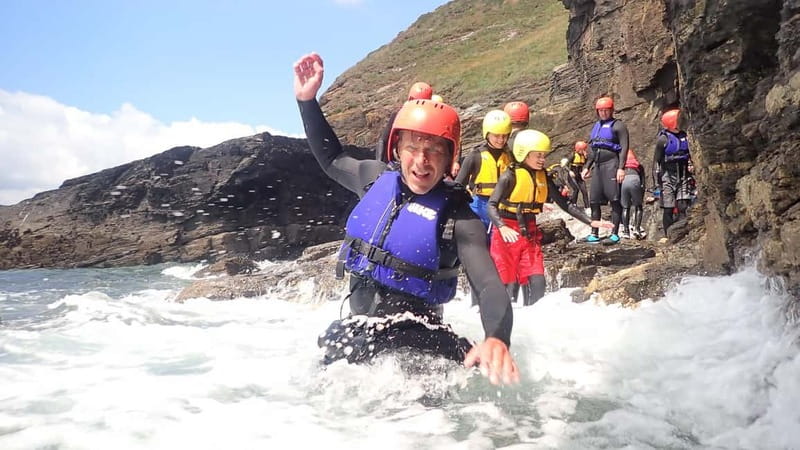
The first jumps are intentionally low. They let you practise the right body position and learn how to enter the water without rushing.
I like this order. A large jump at the start would make the session feel like a dare, while smaller entries give you a clear choice after you have seen the water and understood the instructions. You can decide how much challenge you want instead of making that decision while standing cold and uncertain above the sea.
As the session continues, the route includes jumps of different sizes. The larger ones come later, after you have had time to settle into the equipment and the movement. The guide checks conditions at each point and explains what to expect.
Nothing is compulsory. If you would rather not jump, the guide offers an alternative. This is especially helpful if you are part of a group with different comfort levels. One person can choose the bigger leap while another takes a lower route without turning the whole outing into a negotiation.
Do not confuse optional with risk-free. You are still jumping into the Atlantic from rock, and the activity depends on suitable conditions and careful instruction. Follow the guide’s directions and do not try to turn a modest challenge into a personal stunt show.
Same rush, a different way to get it:
- Extreme Paranormal Underground Ghost Tour in Edinburgh
★ 4.5 · 1,587 reviews - Edinburgh: Extreme Paranormal Underground Ghost Tour
★ 4.2 · 850 reviews - Bungee jump from 40 meters in the stunning valley of Killiecrankie, Scotland
★ 5.0 · 500 reviews - Discover Canyoning at Bruar Falls
★ 5.0 · 409 reviews
Caves, Gullies, and Cornish Rock Formations
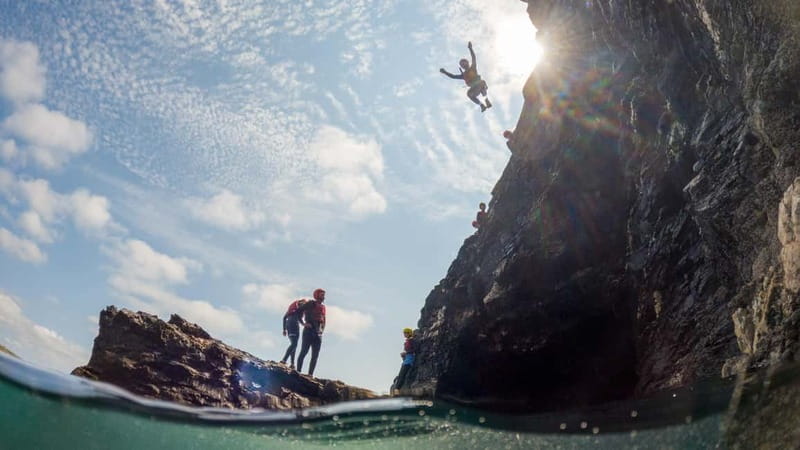
The most memorable parts of the route may not be the jumps. Coasteering gives you access to coastal features that are difficult or impossible to see from land.
You might swim through a narrow gully, pass beneath a sea arch, or enter a cave where the sound of the water changes around you. Blowholes, small coves, and wave-shaped rock formations can appear along the route, depending on the exact location and sea conditions.
These features give the activity a strong sense of discovery without requiring a long hike. You see the coast from close range, at water level, with the rock rising around you. The Atlantic is not just a backdrop. It controls the timing of each move and gives the route its rough, shifting character.
The trade-off is that you cannot predict every detail in advance. The exact route is flexible, and the guide may avoid a section if conditions are not right. That is sensible from a safety point of view, but it means you should book this for the overall experience rather than one promised cave, arch, or jump.
Photos may be taken by the guide when conditions allow. This is a nice extra, but it should not be your main reason for booking. During the most active sections, your attention belongs on the rocks, the water, and the next instruction.
How Much Value Do You Get for $84?
At $84 per person, this is not a cheap add-on like a short beach activity. It is a guided half-day experience with specialist safety equipment, a winter wetsuit, instruction, and roughly two hours of active time.
The value makes sense if you would otherwise struggle to reach these coastal features safely. You are paying for more than the jumps. The guide handles the route decisions, teaches you the basic skills, supplies the main equipment, and adjusts the session to the group and conditions.
It also offers more variety than a single cliff-jumping stop. You get scrambling, swimming, caves, arches, rock formations, and optional leaps in one outing. If you want a physical way to see Cornwall’s coast, that range helps justify the price.
The cost feels less worthwhile if you are mainly looking for a quick thrill or a relaxed scenic outing. You still need to arrange your own transport, bring suitable shoes, swimwear, towel, and shorts, and spend time getting changed. The activity is also weather and sea dependent, so a flexible schedule helps.
Free cancellation up to 24 hours before the start gives you some protection if your plans change. You can also reserve now and pay later, which is useful when you are building a Cornwall itinerary around uncertain weather.
Who Will Enjoy This Most?
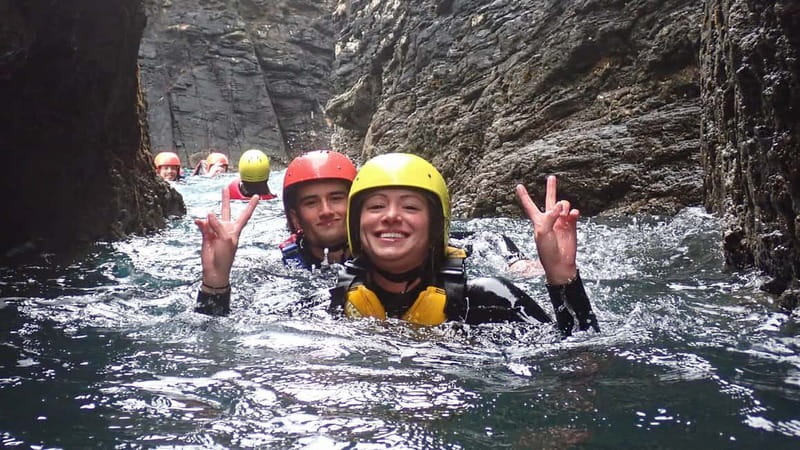
This suits confident swimmers who enjoy outdoor challenges and do not mind getting scraped, wet, and cold before warming up again. You do not need to be an expert climber or a professional jumper. The instruction starts at a basic level, and the route is adjusted to the group.
It is also a good choice for a mixed-ability group because the jumps are optional. You can take part in the swimming and rock sections without committing to the biggest leaps. The one firm limit is that you must be able to swim, and children under 9 cannot participate.
I would be cautious about booking if you dislike cold water, have poor balance on uneven rock, or want a fixed itinerary with no physical effort. This is not a polished attraction with barriers and viewing platforms. The appeal comes from moving through a wild shore under your own power.
The age rules deserve attention for family bookings. Children under 14 need an accompanying adult, and anyone under 18 without a parent or guardian present needs advance paperwork. Check this before booking so the form is ready before the activity begins.
Practical Preparation for a Better Session
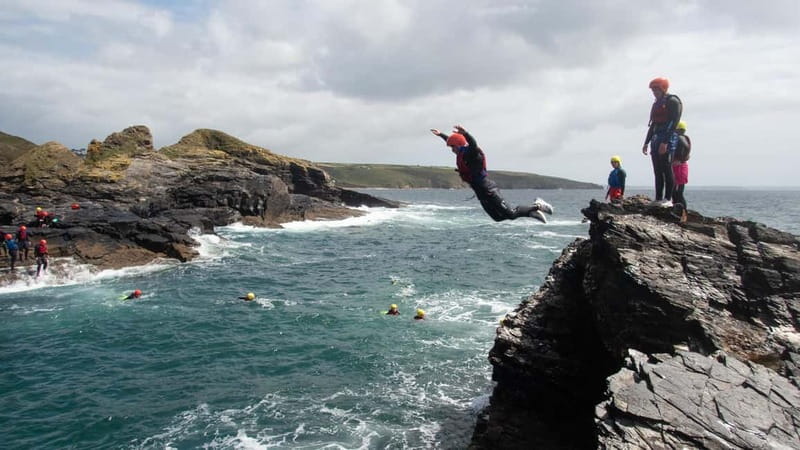
Wear your swimwear under the wetsuit and bring a towel for changing afterward. Pack sturdy lace-up trainers, not loose water shoes, and bring shorts to wear over the wetsuit for extra protection.
Eat and drink before you arrive, since food and drinks are not included. Leave enough time to reach Sydney Cove car park without rushing. Once there, look for the white van with coasteering signage.
Keep your plans after the session flexible. The activity itself lasts 2 to 2.5 hours, but you should allow up to 3.5 hours from meeting to finish. You may also feel ready for a warm drink and a quiet spell afterward, especially if the sea is cold or the route is demanding.
Listen carefully during the briefing, even if you have tried a similar activity before. The right way to move depends on the particular rocks and water on the day. The guide’s calm, clear instruction is a key part of making the outing fun rather than simply hard work.
Should You Book Cornwall Coasteering?
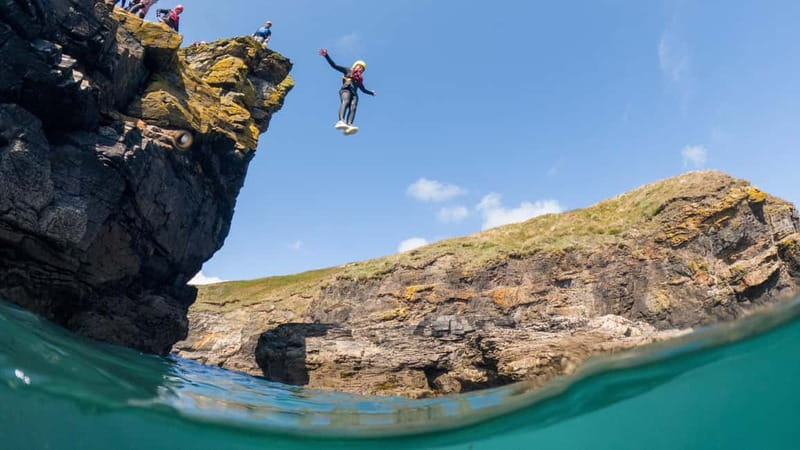
Book it if you want to experience Cornwall from the water, enjoy a guided physical challenge, and like having a choice about how far you push yourself. The caves, arches, gullies, and rock formations give the session substance beyond the cliff jumps, while the gradual start helps you settle in.
The activity also suits groups with different levels of nerve. You can choose a bigger jump, take a smaller entry, or skip it altogether. That freedom, combined with qualified instruction and supplied safety kit, is the main reason I would recommend it.
Skip it if you are a non-swimmer, want a dry sightseeing trip, or need a fully fixed route. For prepared swimmers who bring the right shoes and respect the sea, $84 buys a genuine look at the wild side of Cornwall that you cannot get from the clifftop path.
FAQ
Where do I meet the coasteering guide?
Meet at Sydney Cove car park. Look for the white van with coasteering signage.
How long does the activity last?
Allow up to 3.5 hours in total. The active coasteering portion lasts about 2 to 2.5 hours, not counting meeting, changing, and the safety briefing.
What equipment is provided?
The activity provides a winter wetsuit, helmet, buoyancy aid, safety instruction, and guided support from a qualified coasteering guide.
What should I bring?
Bring swimwear, a towel, sturdy lace-up sports shoes, and shorts to wear over the wetsuit. Slip-on beach shoes, reef shoes, and loose sea shoes are not suitable.
Are the cliff jumps compulsory?
No. All jumps are optional, and the guide provides alternatives. Jumps range from low ledges to larger leaps, depending on conditions and your confidence.
Can children take part?
Children under 9 cannot take part. Anyone younger than 14 must be accompanied by an adult, and participants under 18 without a parent or guardian present need advance participation paperwork.
More Cliff Jumping in the UK
- ThrillSeekers: Aruba UTV Tour & Cliff Jump at Natural Pool
★ 5.0 · 5,733 reviews - Aruba UTV Tour with Natural Cave Pool and Cliff Jumping
★ 5.0 · 4,492 reviews - Barcelona Costa Brava Kayak, Snorkel & Cliff Jump Day Tour
★ 5.0 · 3,872 reviews - Barcelona: Costa Brava Kayak, Snorkel & Cliff Jump & Lunch
★ 4.9 · 2,391 reviews
Just added around the UK
- Roybridge, Lochaber: CANYONING – Laggan Canyon★ 5.0 · 3 reviews
- Dollar Falls Canyoning Trip★ 5.0 · 69 reviews
- Canyoning Day Trip from Edinburgh★ 5.0 · 75 reviews
- Canyoning in Snowdonia★ 5.0 · 96 reviews
- Coasteering Geopark Adventure In Torquay★ 5.0 · 150 reviews
- Anfield Abseil with Free Entry to the LFC Museum★ 5.0 · 171 reviews
- Coasteering★ 5.0 · 191 reviews
- Half-Day Coasteering in Newquay Cornwall★ 5.0 · 239 reviews
Coasteering Tours, compared.
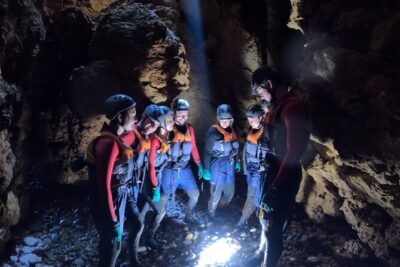
Award Winner Premium Kayak and Coasteering Adventure with Lunch
Read our review →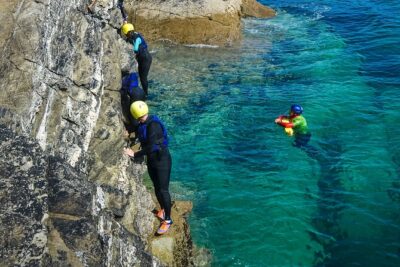
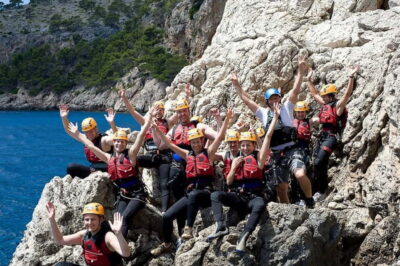
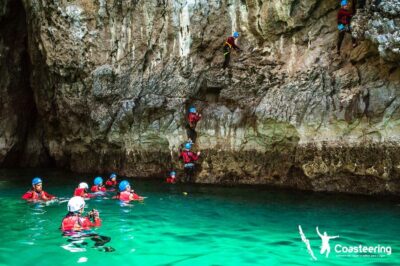
Sesimbra/Arrábida Natural Park Coasteering Adventure
Read our review →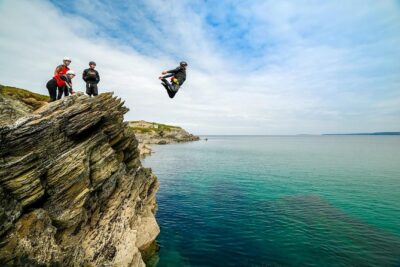
Newquay Coasteering x Cornish Wave | Original Since 2012
Read our review →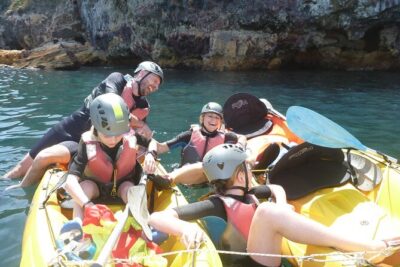
Private Tour explore Vulcano Island by Kayak & Coasteering
Read our review →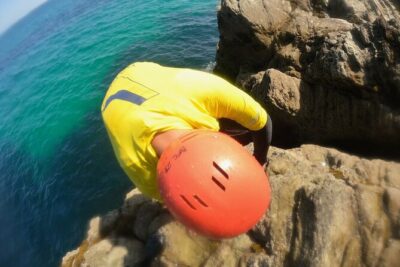
Coasteering – Swimming, Cliff Jump & Rock Climbing
Read our review →Browse the lists this tour appears in