
REVIEW · UK
Pembrokeshire: Coasteering Adventure at Stackpole Quay
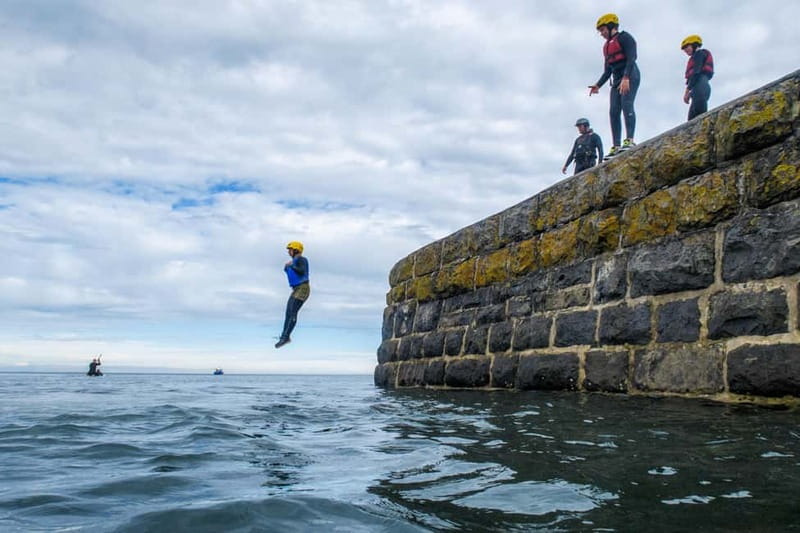
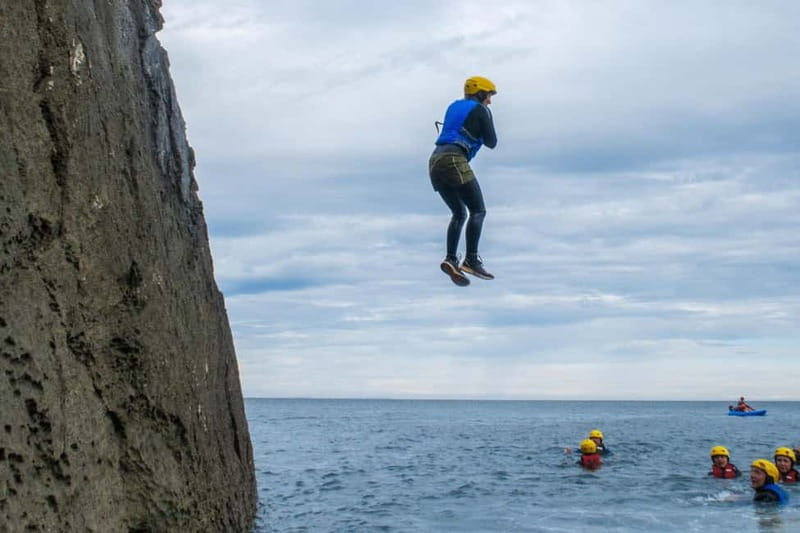
The big attraction here is simple: you get to experience Pembrokeshire from the water, not from a clifftop path. Over 2.5 hours, you swim, scramble, climb, pass through caves and gullies, and face sea jumps that can reach 30 feet at Lydstep.
I like the mix of activities, especially the chance to choose between calmer rock work and bigger jumps. I also like that the session builds up gradually, with a clear introduction before the harder parts. The main catch is that this is not a gentle sightseeing trip. You need to be a confident swimmer with good general strength, and the sea can make every short climb feel like work.
Key points
- Jumps up to 30 feet: The Lydstep section brings the boldest jumps, with challenges suited to different comfort levels.
- A true water-level route: Swim along the coast toward Barafundle while passing caves, whirlpools, gullies, and rocky ledges.
- Equipment included: Outer Reef supplies a wetsuit, buoyancy aid, helmet, and safety gear.
- Step-by-step coaching: Guides introduce the activity and build the session gradually, rather than sending you straight to the biggest challenge.
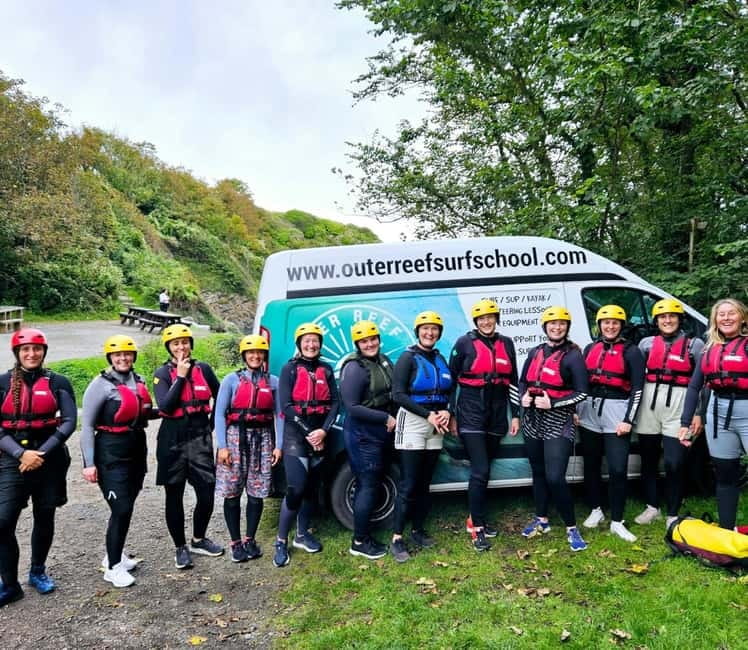
- Practical meeting point: Meet the Outer Reef van and instructors at the National Trust car park at Stackpole Quay.
- Best for active swimmers: Children under 8, non-swimmers, pregnant women, and people with heart problems should not book.
Why Stackpole Quay Makes a Strong Starting Point
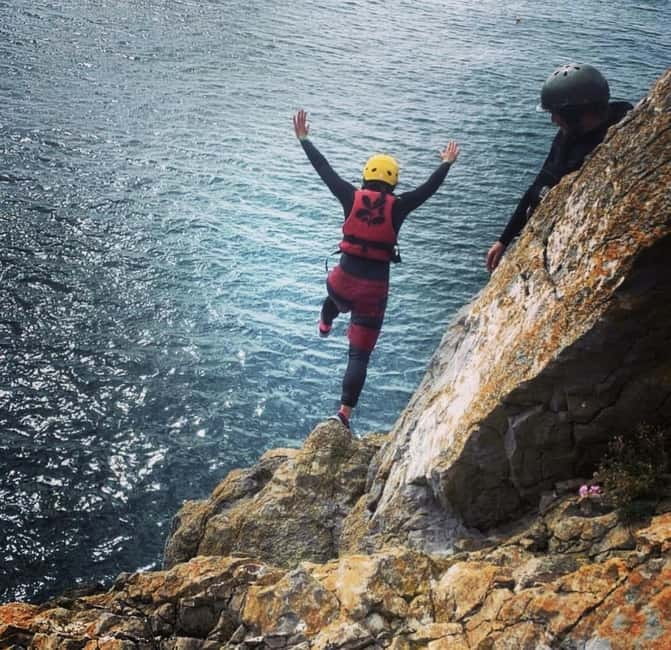
Stackpole Quay is a useful base because the session begins right beside the coast rather than requiring a separate transfer. You park at the National Trust car park, find the Outer Reef van and instructors, and get ready close to the water.
You need to plan this arrival carefully. Parking is not included, and you need coins unless you have National Trust membership. Mobile phone signal is very poor at Stackpole Quay, so save the meeting details before you arrive and do not count on calling the operator from the car park.
The activity lasts 2.5 hours, with sessions starting between 9:00 in the morning and 4:00 in the afternoon. That spread gives you some choice when planning your day, although exact start times depend on availability. You can leave a preferred time with your booking, and the team will try to fit it in.
There is no transport to the meeting point. You make your own way to Stackpole Quay, pay any parking charge yourself, and bring food and water. That may sound obvious, but it matters here because the session uses up plenty of energy and the car park is your practical base before and after the outing.
More Coasteering Tours in the UK
- Coasteering Experience in Newquay
★ 5.0 · 465 reviews - Newquay Coasteering x Cornish Wave | Original Since 2012
★ 5.0 · 342 reviews - Half-Day Coasteering in Newquay Cornwall
★ 5.0 · 239 reviews
Getting Ready in a Wetsuit and Buoyancy Aid
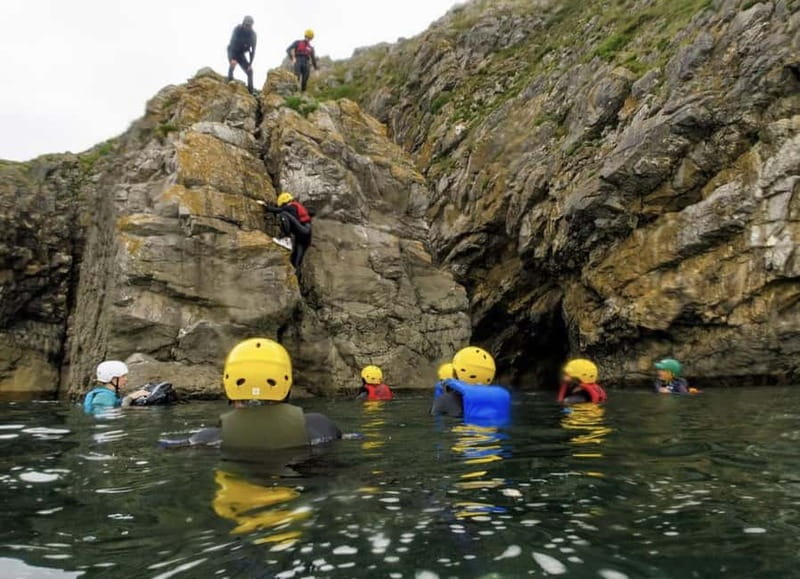
Outer Reef provides the main safety equipment: wetsuit, buoyancy aid, helmet, and other safety gear. You bring your own swimwear, towel, snacks, water, and water shoes.
Wear swimwear under the wetsuit. Water shoes are worth taking because this activity includes walking, climbing, and scrambling over wet rock. Trainers are not included, and ordinary footwear may be uncomfortable in the water, so follow the instruction to bring suitable water shoes rather than arriving with nothing for your feet.
A towel and dry clothes for afterward are essential practical items. Food and water are also your responsibility. You may not need a full meal during the 2.5-hour session, but a snack and a drink make sense, especially if you are booking a morning or afternoon slot with no meal break.
The gear changes the feel of the outing. You are not simply swimming along the shore in ordinary beach clothes. The wetsuit gives you insulation, the buoyancy aid helps you stay supported in the water, and the helmet protects your head around rock. Still, the equipment does not remove the physical demands. You will be moving through the sea and over stone, not floating passively from one stop to the next.
The First Swim and Coast-Level Route
The session introduces you to coasteering at the water’s edge. You move along the coast by swimming, climbing, scrambling, and walking where the rock allows it. That combination is what makes this different from a standard sea swim or a boat trip.
The guide begins with an introduction and stepped training. This is important because the activity has several skills to learn at once: how to move near rock, how to approach a jump, how to use the buoyancy aid, and how to judge your own confidence.
I like the gradual structure. You can get used to the cold water, the equipment, and the movement before facing the more demanding sections. One of the instructors, George, was specifically praised for being friendly and well informed about the activity, and the wider guide team is described as engaging and clear in its introduction.
You should expect the pace to vary. Some stretches involve swimming through open water. Others bring you close to the rock, where you may climb around ledges or pass through narrow coastal features. It is this change of rhythm that keeps the session interesting, but it also means you should be ready to use your arms and legs throughout.
Caves, Gullies, and Whirlpools Near Barafundle
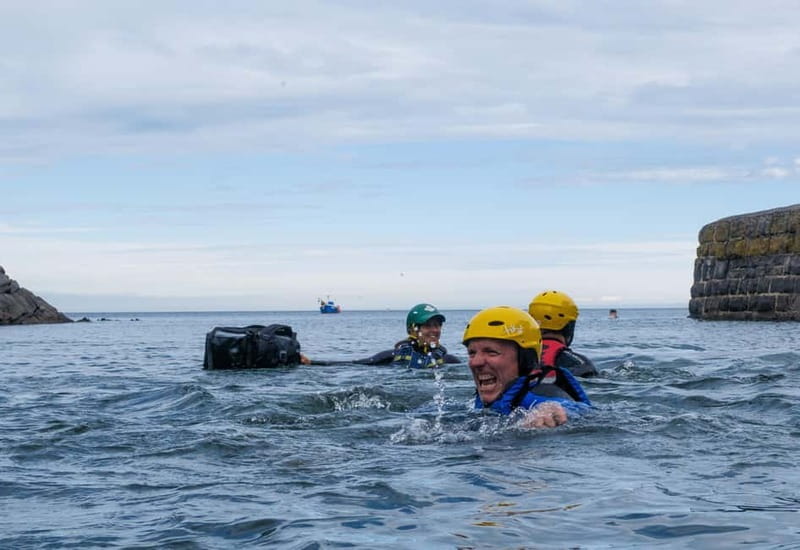
The route is designed to show you the coast from an angle most walkers never see. Instead of looking down at the shore from a path, you move through caves, gullies, and water-worn sections of rock.
Swimming toward Barafundle is one of the strongest parts of the outing. Barafundle is known as a beautiful coastal destination, but this session gives you a different way to reach and view it. You are not simply arriving on the beach for a photo. You are getting there by wild swimming and following the edge of the sea.
The caves provide shelter from the open water and add variety to the route. Gullies and whirlpools make the water feel more active and changeable. I would not book this expecting a calm, predictable swim in a marked lane. The appeal is precisely that the coast shapes the route, with the guide choosing how to use its features safely.
The wording for the outing also includes Lydstep, where the bigger deep-water jumps take place. The route description connects Stackpole Quay, Barafundle, and Lydstep, but the exact order and use of each feature can depend on the session. You should treat the named areas as the main coastal setting rather than assume every person will take an identical line through the water.
Same rush, a different way to get it:
- Extreme Paranormal Underground Ghost Tour in Edinburgh
★ 4.5 · 1,587 reviews - Edinburgh: Extreme Paranormal Underground Ghost Tour
★ 4.2 · 850 reviews - Bungee jump from 40 meters in the stunning valley of Killiecrankie, Scotland
★ 5.0 · 500 reviews - Discover Canyoning at Bruar Falls
★ 5.0 · 409 reviews
Taking on the Lydstep Jumps
The headline challenge is the deep-water jumping at Lydstep. Jumps can reach heights of up to 30 feet, which is high enough to make this a serious personal test even for a strong swimmer.
You do not need to begin with the highest jump. The stepped approach lets you build confidence, and the guide can help you understand how the activity works before you decide how far to push yourself. That choice is a major benefit. Coasteering is more enjoyable when you take a challenge because you are ready, not because someone else has gone first.
The jumps are only one part of the day, too. If you prefer the swimming, cave, and rock sections, you still get a full coasteering session without needing to make the biggest leap. The supplied details describe an adventure that can suit a range of abilities, but that does not mean it suits every level of fitness. You should be comfortable in the sea and able to swim with your group.
A jump also has an emotional side that a list of features cannot show. Standing on a rock above the water gives you a clear moment to decide. The height, the sea below, and the guide’s instructions all matter. If you already know that heights or open-water jumps make you freeze, this may not be the right activity for you.
Rock Climbing and Wild Swimming in One Session
The best value comes from the variety. You are not paying $61 per person for a single jump, and you are not spending the whole 2.5 hours on one long swim. The session combines wild swimming, rock climbing, cave exploration, gullies, whirlpools, and optional-feeling challenges such as the higher jumps.
That mix suits people who like active days with several small tests. You may find the climbing more tiring than expected because wet rock asks for steady movement and balance. The swimming adds another layer of effort, while the buoyancy aid and wetsuit can make you feel less nimble than you would on land.
I would think of the physical demand as moderate to high rather than casual. One recent participant specifically advised having a good level of swimming fitness and overall physical strength. That is useful guidance. You do not need to be an athlete, but you should be honest about how you handle sustained swimming and repeated movement in the water.
The activity can work well for families with older children and teenagers. One group used it to keep two teenage grandsons entertained, and the minimum age is 8. The age rule is not a promise that every 8-year-old will be ready. Children need to meet the swimming and physical demands, and adults should consider how comfortably they handle open water and heights.
What $61 Includes, and What It Does Not
At $61 per person, the price is reasonable if you want a guided coastal activity with equipment supplied. A wetsuit, buoyancy aid, helmet, and safety gear are included, so you do not need to own specialist coasteering kit.
The value also comes from the guide. You are paying for route knowledge, an introduction, safety instruction, and help with the activity’s progression. That matters more here than it would on a simple beach walk because the coast involves water, rock, caves, and jumps.
The price does not include transport, parking, food, water, trainers, shorts, swimwear, or a towel. Bring your own swimwear and towel, pay for parking at the National Trust car park, and arrange your route to Stackpole Quay. Water shoes are on the recommended packing list, so add those to your costs if you do not already have them.
For a couple or family, the total rises quickly. I would compare it with the price of other guided outdoor activities in Pembrokeshire, but the more useful question is whether you want a full active session rather than a short attraction. If you do, the equipment and instruction make the fee easier to justify.
Who Will Enjoy This Most
I would choose this for an active visitor who wants to do something tied closely to the Pembrokeshire coast. It is a good match if you enjoy swimming, are curious about caves and rock formations, and like the idea of testing yourself without having to arrange safety equipment or a route.
It also suits a small family outing with children aged 8 and older, provided everyone is comfortable in the water. Teenagers may especially enjoy the mixture of jumps, climbing, and caves because the session gives them several ways to take part.
I would be cautious about booking if you are a non-swimmer, pregnant, or have heart problems. Those groups are specifically excluded. You should also think twice if you have limited physical strength or do not feel comfortable in open water.
The instructors speak English. A booking note can include your preferred start time, though the team can only do its best to arrange that. Free cancellation is available up to 24 hours before the session, and you can reserve now and pay later, which helps if your Pembrokeshire plans are still taking shape.
Small Details That Make the Day Easier
Save your meeting instructions before leaving for Stackpole Quay. Poor phone signal at the car park means you should not rely on an online map or a last-minute phone call.
Arrive with enough time to park and find the Outer Reef van. The meeting point is the National Trust car park, not an unspecified spot somewhere along the coast. Look for the van and instructors there.
Pack lightly but sensibly:
- Swimwear to wear under the wetsuit
- A towel and dry clothes
- Water and snacks
- Water shoes
- Coins for parking, unless you have National Trust membership
Keep valuables secure and do not expect the activity to provide food or drinks. The session runs for 2.5 hours, so a small snack and drink for afterward are especially useful.
The guides receive the strongest praise for being friendly, engaging, and good at building people up to the harder sections. That is exactly what I want from this kind of outing. A good coasteering guide should make the adventure feel demanding but controlled, not like a race to the tallest jump.
Should You Book the Stackpole Quay Coasteering Session?
I would book it if you are a capable swimmer looking for a hands-on way to see Pembrokeshire. The combination of Barafundle swimming, Lydstep jumps, caves, rock climbing, gullies, and whirlpools gives you far more than a standard coastal walk.
I would skip it if you want a quiet beach day, dislike heights, or are unsure about your strength in the sea. The 30-foot option gets the attention, but the full session still asks you to swim, climb, and scramble even if you choose not to take the biggest jump.
For the right person, $61 covers an active half-day experience with safety gear and instruction, plus access to parts of the coast you cannot appreciate from land. Pack water shoes, bring coins for parking, save the meeting details before arriving, and book with realistic expectations about the physical effort.
FAQ
How long does the coasteering session last?
The session lasts 2.5 hours.
Where does the activity meet?
Meet at the National Trust car park at Stackpole Quay. Look for the Outer Reef van and the instructors in the car park.
What equipment is included?
A wetsuit, buoyancy aid, helmet, and safety equipment are included.
What should I bring?
Bring swimwear, a towel, snacks, water, and water shoes. Trainers, shorts, swimwear, a towel, food, and water are not supplied, so you need to bring the personal items yourself.
Can children take part?
Children under 8 cannot take part. The activity is described as suitable for older children, but every participant must also be able to swim and handle the physical demands.
Can non-swimmers join?
No. The activity is not suitable for non-swimmers.
Can I cancel or pay later?
You can cancel up to 24 hours in advance for a full refund. You can also reserve your place and pay later.
Just added around the UK
- Portsmouth: Spinnaker Tower Abseiling Experience★ 5.0 · 3 reviews
- Perthshire: Discover Bruar Canyoning Experience★ 5.0 · 6 reviews
- Pitlochry: Lower Falls of Bruar Guided Canyoning Experience★ 4.7 · 3 reviews
- North Wales: Extreme Coasteering with Cliff Climbing & Jumps★ 5.0 · 2 reviews
- Newquay: Coasteering★ 4.9 · 21 reviews
- Neath: Canyoning, Gorge Walking & Waterfall Trekking Tour★ 4.8 · 20 reviews
- Liverpool: The Anfield Abseil & Liverpool FC Museum★ 4.8 · 117 reviews
- London: 40-Minute Thames Beast Jetboat Tour★ 4.8 · 13 reviews
Coasteering Tours, compared.
Award Winner Premium Kayak and Coasteering Adventure with Lunch
Read our review →
Sesimbra/Arrábida Natural Park Coasteering Adventure
Read our review →
Newquay Coasteering x Cornish Wave | Original Since 2012
Read our review →
Private Tour explore Vulcano Island by Kayak & Coasteering
Read our review →
Coasteering – Swimming, Cliff Jump & Rock Climbing
Read our review →Browse the lists this tour appears in