
REVIEW · ITALY
Alghero: Coasteering at Cala Dragunara in Porto Conte Park
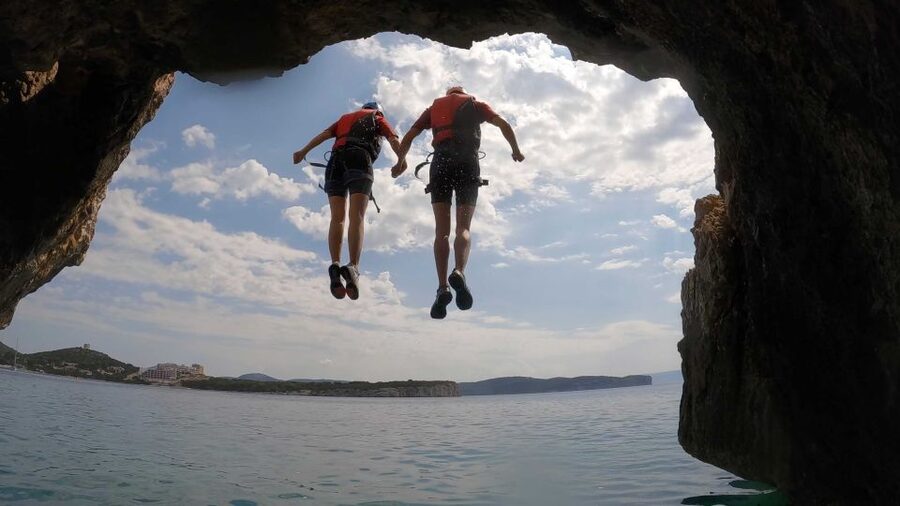
Three hours at Cala Dragunara puts you right into Capo Caccia’s rocky coast, with optional jumps, sea caves, and rope descents above the emerald water. The route covers about 500 meters, but it feels active from start to finish, with roughly two and a half hours spent on the water.
I like the calm, careful guiding, especially if Corrado is leading your group. I also like that you can choose your own level: jumps range from 1 to 6 meters, and the 12 to 15-meter rope descents are optional. The main drawback is simple: wet rocks, climbing, and a harness are not for everyone, and the meeting point requires you to find the dirt parking areas near Cala Dragunara.
Key points at a glance
- Cala Dragunara start: Begin at a sandy cove on the eastern side of Capo Caccia.
- 500-meter coastal route: Move along rocks, coves, and caves inside Porto Conte Regional Park.
- Optional thrills: Choose jumps from 1 to 6 meters and rope descents from 12 to 15 meters.
- Beginner-friendly guidance: You do not need previous coasteering experience, but you do need confidence on wet rocks.
- Small-group setting: The group is limited to 10 people, with guides speaking Italian, English, or Spanish.
- Useful equipment included: Helmet, neoprene wetsuit, life jacket, harness, and liability insurance are provided.
Why Cala Dragunara makes a good coasteering base
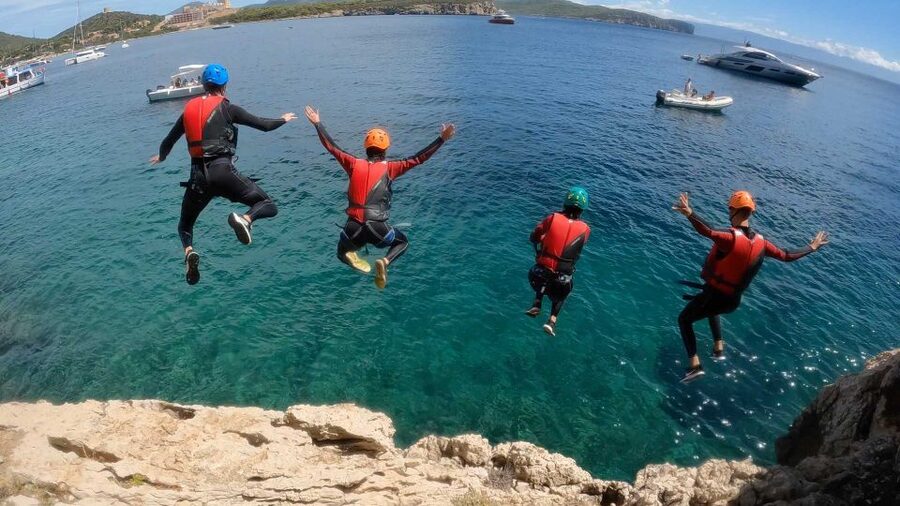
Coasteering is part swimming, part scrambling, and part controlled adventure. At Cala Dragunara, you start from a pretty sandy cove, then follow the coast around Capo Caccia through the waters of a Marine Protected Area.
That setting gives the activity more variety than a simple boat outing. You are not just looking at the cliffs from offshore. You are moving beside them, entering narrow coves, visiting sea caves, and using the rock as your route.
The coastal section covers about 500 meters. That may sound short on a map, but it takes time because the route includes jumps, rope work, swims, and stops inside caves. Around two and a half hours are spent on the sea trail, followed by about 20 minutes to return along the path.
You should expect a physical outing rather than a sightseeing cruise. The guide sets the pace, explains each section, and helps you decide how much of the activity you want to attempt.
More Coasteering Tours in Italy
- Private Tour explore Vulcano Island by Kayak & Coasteering
★ 5.0 · 338 reviews - Cagliari: Half-Day Coasteering Experience
★ 4.9 · 16 reviews - Portofino: Coasteering Tour
★ 4.9 · 11 reviews
What happens at the dirt parking area
You meet the guide at one of the dirt parking lots on the way to Cala Dragunara. The activity ends at the same meeting point, so you do not need to arrange a separate pickup at the end.
Bring enough time to locate the parking area. The meeting point is not described as a formal visitor center, so keep your booking information handy and contact the number on your voucher after booking if you need practical directions or equipment advice.
Before the outing, report each participant’s height and weight using the contact number on the booking voucher. This matters because the provider supplies neoprene wetsuits, and a proper fit makes a real difference when you are swimming and moving over rock.
You should arrive ready for the water, with swimwear under your clothes. Pack sports shoes, waterproof shoes, a towel, sunscreen, spare clothes, snacks, and water. Your footwear needs a good grip on wet rock. This is one of the most important practical details of the whole experience.
Getting equipped for the 2.5-hour sea trail
The provider supplies a helmet, neoprene wetsuit, life jacket, and harness, along with liability insurance. The equipment is not decorative. Each piece has a job.
The wetsuit helps with comfort in the water. The life jacket adds support during swims and around the coves. The helmet protects your head around rocky sections, and the harness is used for the rope descents.
You should still bring your own suitable shoes. The instructions allow sports shoes and waterproof shoes, but stress that they must grip wet rock well. Smooth-soled footwear could make the scrambling sections harder and less comfortable.
The small group limit of 10 people is useful here. Coasteering works best when the guide can watch each person through a jump, climb, or rope section. A group of this size also gives you a better chance to hear the instructions and avoid long waits at each obstacle.
Guiding is available in Italian, English, and Spanish. If Corrado is your guide, expect a relaxed manner and steady support. His calm approach is particularly useful for anyone who feels unsure before a jump or rope descent.
Moving through caves and narrow coves
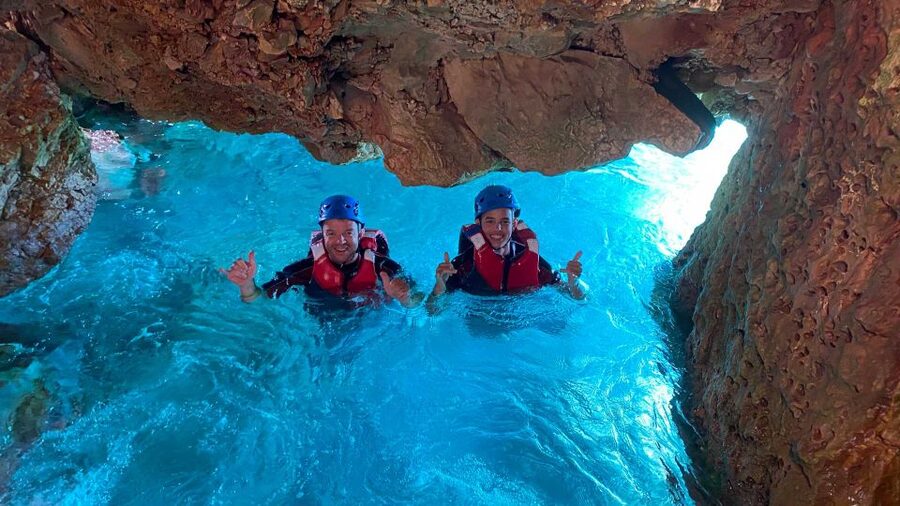
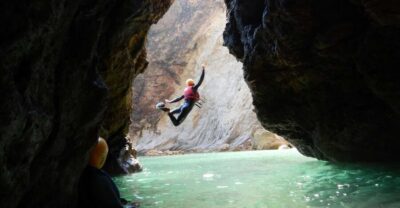
The first part of the route follows the coast from Cala Dragunara into the more rugged sections around Capo Caccia. You may swim into sea caves and narrow coves that are difficult to reach by an ordinary walking route.
The caves are one of the strongest reasons to choose this activity. You get a close view of the rock at water level, rather than seeing it only from a distant lookout. The clear water also matters here, since it lets you see the entrances and shallow sections more easily.
You should not expect a long cave tour with extended time inside each opening. The route is active, and the caves form part of a larger coastal circuit that includes swimming, scrambling, jumps, and rope work.
The rocky shore creates natural pauses. Your guide can explain what comes next, show you where to place your feet, and help you decide if you want to take the optional route. That makes the outing workable for beginners, provided you are comfortable getting wet and moving over uneven ground.
Same rush, a different way to get it:
- Canyoning “Gumpenfever” – beginner Canyoningtour for everyone
★ 5.0 · 391 reviews - From Tignale, Lake Garda: Beginner-Friendly Canyoning Tour
★ 4.9 · 377 reviews - Bagni di Lucca: Canyoning in the Cocciglia’s Gorge
★ 4.9 · 215 reviews - Canyoning “Vione” – advanced Canyoningtour also for sportive beginner
★ 5.0 · 194 reviews
Choosing the 1 to 6-meter jumps
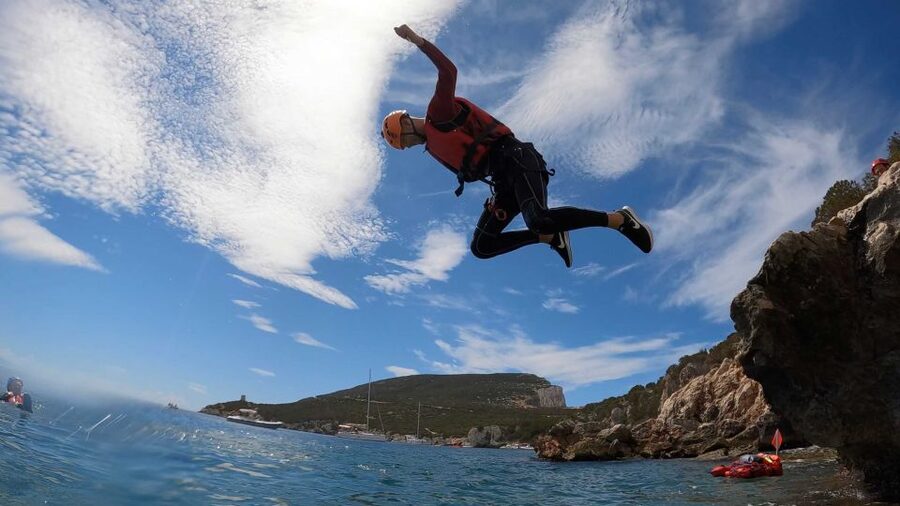
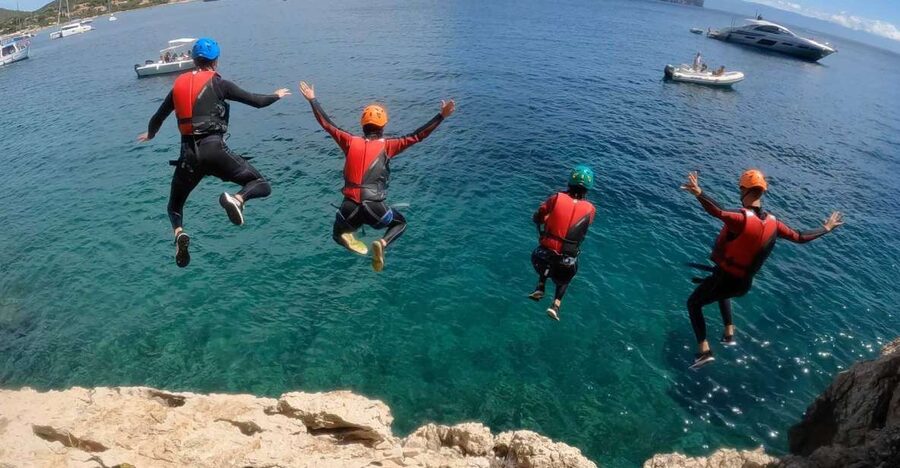
The jumps are optional, which is important. You are not signing up for one fixed stunt that everyone must perform. The listed heights range from 1 to 6 meters, so the guide can offer different levels of challenge.
A lower jump can be a good way to get comfortable with the water and the instructions. A higher jump asks more of you, both mentally and physically. You can choose the level that suits you, or skip the jump if it does not feel right.
This flexibility makes the activity suitable for beginners, but it does not make it effortless. You still need to be able to swim, climb, and manage wet rock. The provider specifically excludes children under 12, pregnant women, and people with mobility impairments.
The jumping sections are also where a calm guide matters most. The guide can help you understand the landing area and timing. The supplied equipment provides support, but it does not remove the need to listen carefully and make your own decision.
If you are traveling with a young teenager, note that the minimum age is 12. A 13-year-old may be able to take part, as one family outing shows, but age alone does not tell you how comfortable your child will be with heights, cold water, or rough footing.
The 12 to 15-meter rope descents
The rope sections add a different kind of challenge. Instead of jumping from a ledge, you descend on a rope toward the emerald water. The listed height is 12 to 15 meters, and these descents are also optional.
For many people, this is the most memorable part of the route. You move down the rock face under instruction, with the sea directly below and the coast around you. It feels more controlled than a jump, but the height can still test your nerves.
You will use the harness supplied by the provider. The guide should explain the system and stay involved as you descend. Listen closely, keep your movements measured, and do not feel pressured to choose this section if you are not ready.
The rope descent also gives the route some variety. Without it, the outing would be mainly swimming and rock hopping. With it, you get a proper vertical element, though the activity remains designed for beginners rather than experienced climbers.
How demanding is the route?
The total activity lasts three hours. About two and a half hours are assigned to the sea trail, and the return takes about 20 minutes. That leaves a little time for preparation, equipment, instructions, and transitions.
You should treat it as a moderate physical outing with short bursts of effort. The route develops over only 500 meters, but the terrain slows you down. You may climb, swim, crouch through rocky areas, wait for others, and repeat the process at several points.
The experience suits you best if you enjoy active outdoor trips and do not mind getting fully wet. It is less suitable if you want a relaxed afternoon at the beach, dislike heights, or need even walking surfaces.
The provider does not list a swimming qualification, but the route involves water movement and sea caves. You should be honest with the guide about your comfort in the water before starting.
The guide and the small-group advantage
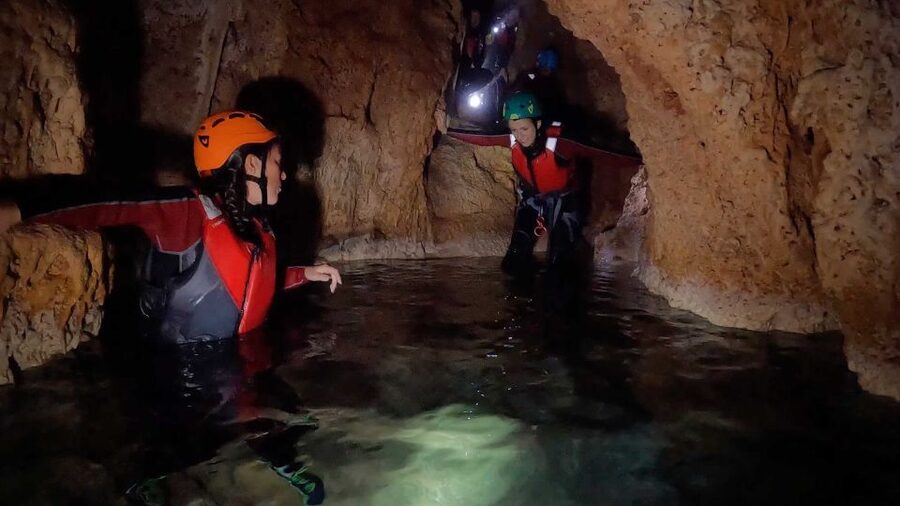
The guide is central to this experience. The coast is only 500 meters long, but every section has different demands. You need someone to explain the rope system, point out safe footing, manage the group, and keep the pace comfortable.
The strongest feedback about the guiding focuses on calmness, patience, friendliness, and professionalism. Those traits are more useful here than a fast pace or a dramatic style. If you are nervous, a guide who takes time to explain each move can change the entire outing.
The group limit is 10 participants. That is small enough for personal attention, though the exact feel depends on how many people attend and how confident they are. A mixed group may move at different speeds, but the optional nature of the jumps and rope work gives the guide room to manage those differences.
Guides speak Italian, English, and Spanish. If you need a clear explanation before using the harness or entering a cave, ask. This is an activity where communication matters more than simply following along.
Is the $114.42 price fair?
The cost is $114.42 per person. That is not a cheap beach activity, but the price includes a guide, technical equipment, and liability insurance.
You are paying for specialized gear and instruction, not just access to the coast. The wetsuit, helmet, life jacket, and harness would be inconvenient to arrange on your own, and the guide gives structure to a route that would be difficult to attempt independently.
The small group also improves the value. Ten people is not a private tour, but it is a manageable number for a technical activity. If your group wants a guided way to experience the cliffs, caves, and coves around Capo Caccia, the package is easier to justify.
The value is weaker if you only want to swim in clear water or sit on a sandy cove. Cala Dragunara can serve that purpose without a harness and rope. This experience makes sense when you want several active elements in one outing and plan to use the equipment and guidance.
You can reserve now and pay later, which helps if your Sardinia plans are still shifting. Free cancellation is available up to 24 hours before the activity for a full refund, according to the booking terms.
What to pack for Cala Dragunara
Your packing list should be practical rather than bulky. Wear swimwear under your clothes and bring:
- Sports shoes or waterproof shoes with strong grip
- A towel
- Sunscreen
- A complete change of clothes
- Water and snacks
Do not rely on casual sandals or smooth-soled shoes. Wet rock is the main surface underfoot, and grip is more important than style.
A spare layer is useful after the sea trail, even in warm weather. You will also appreciate having a dry change of clothes for the drive or the rest of your day in Sardinia.
Pets are not allowed. The activity is also not suitable for children under 12, pregnant women, or people with mobility impairments.
Who should book this Porto Conte adventure?
I would recommend this to active visitors staying in or near Alghero who want more than a standard beach day. It gives you caves, coves, swimming, jumps, and rope work in one compact outing.
Beginners can book it, especially if they are open to taking the easier options first. You do not need prior coasteering experience, and the guide can help you judge each challenge. You should still be comfortable in the water and ready to walk on wet, uneven rock.
It is a good choice for friends, couples, and families with children aged 12 and above who enjoy physical activities. A calm teenager may have a terrific time, but an anxious child could find the heights and slippery footing stressful.
I would skip it if you have limited mobility, are pregnant, dislike harness activities, or want a quiet coastal walk. This is a hands-on experience, not a scenic transfer with a few photo stops.
Final verdict: book it if you want an active coast day
Book this coasteering outing if the idea of entering sea caves, choosing a jump, and lowering yourself by rope into clear water sounds exciting. The small group, optional challenges, and patient guiding make it approachable for first-timers.
Before booking, check two things: your comfort on wet rocks and your ability to spend about two and a half hours on the sea trail. Bring proper footwear, report your height and weight for the wetsuit, and remember that the harder elements are optional.
At $114.42, it is best value for someone who wants a real activity rather than a passive view of Capo Caccia. If that is your style, this is a memorable way to experience Porto Conte Regional Park from the waterline.
FAQ
Where does the coasteering activity begin?
You meet the guide at the dirt parking lots on the way to Cala Dragunara.
Where does the activity end?
The activity ends back at the same meeting point.
How long does the experience last?
The full experience lasts three hours. The sea trail takes about two and a half hours, followed by a return section of about 20 minutes.
How long is the coastal route?
The sea trail covers about 500 meters along the coast.
Are the jumps required?
No. The jumps are optional and range from 1 to 6 meters.
How high are the rope descents?
The optional rope descents are approximately 12 to 15 meters high.
Is previous coasteering experience required?
No. The activity is suitable for beginners, though you should be comfortable in water and on wet rocks.
What equipment is included?
A helmet, neoprene wetsuit, life jacket, harness, and liability insurance are included.
What languages does the guide speak?
Guiding is available in Italian, English, and Spanish.
Who cannot take part?
The activity is not suitable for children under 12, pregnant women, or people with mobility impairments. Pets are not allowed.
Just added around Italy
- Arco: Rio Nero Canyoning★ 4.8 · 30 reviews
- Adrenaline River Trekking in Brembana Valley★ 5.0 · 13 reviews
- Lake Garda: Cima Capi Via Ferrata★ 4.9 · 14 reviews
- Via Ferrata Cima Capi★ 5.0 · 27 reviews
- Via Ferrata Rio Sallagoni★ 5.0 · 22 reviews
- Dolomites Via Ferrata Experience★ 5.0 · 58 reviews
- Cagliari: Half-Day Coasteering Experience★ 4.9 · 16 reviews
- Portofino: Coasteering Tour★ 4.9 · 11 reviews
Coasteering Tours, compared.
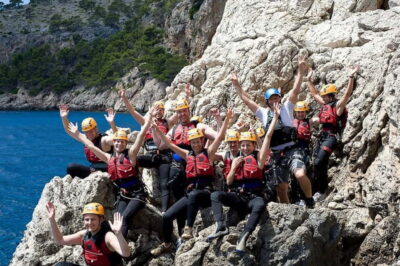
Award Winner Premium Kayak and Coasteering Adventure with Lunch
Read our review →
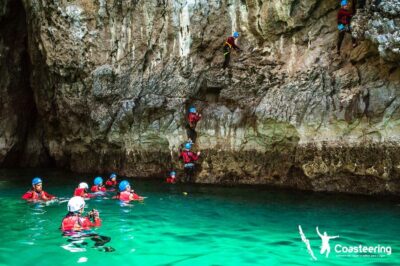
Sesimbra/Arrábida Natural Park Coasteering Adventure
Read our review →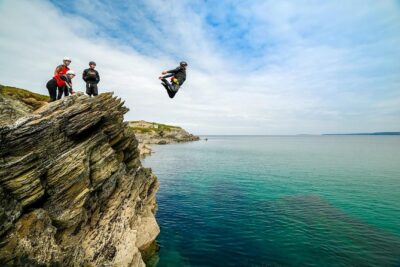
Newquay Coasteering x Cornish Wave | Original Since 2012
Read our review →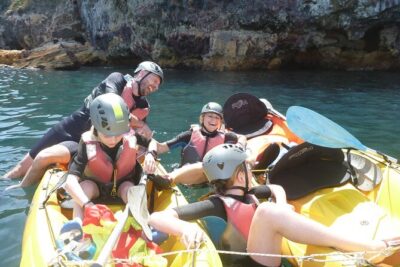
Private Tour explore Vulcano Island by Kayak & Coasteering
Read our review →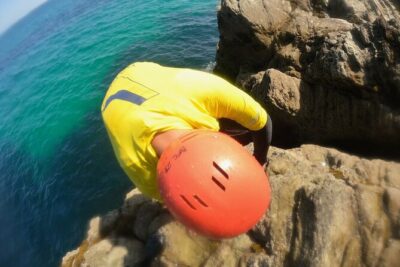
Coasteering – Swimming, Cliff Jump & Rock Climbing
Read our review →Browse the lists this tour appears in