
REVIEW · MALLORCA
Coasteering in South Mallorca with Transfers
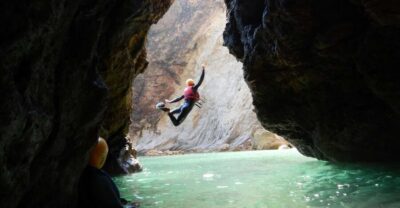
This is Mallorca with the volume turned up: you scramble over sea cliffs, swim through clear coastal water, rappel toward the sea, and work your way from small jumps to heights that can reach 12 meters. The route is active and hands-on, not a boat ride with a quick photo stop.
I like the gradual approach to the jumps, and I like that you can skip anything that feels wrong. I also like the small-group setup, with a maximum of 10 people and guides such as José, Joni, Naco, Mario, Niko, and Rafael known for patient instruction and steady encouragement.
The main caution is that coasteering is a real physical activity. Getting to the coves can mean rough walking, climbing out of the water takes arm strength, and the sea may be choppier than expected. The meeting arrangement can also feel basic, with no clear office or changing room at some pickup points.
Key points to know before you book
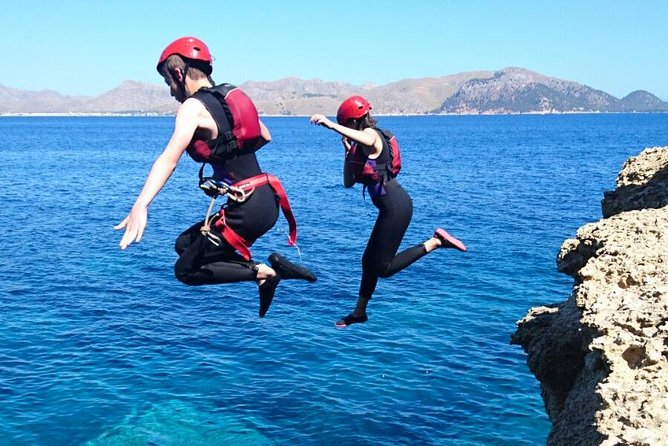
- Jumps build from roughly 2 meters to as high as 12 meters: You can start small and decide how far to go.
- The activity mixes several sports: Expect swimming, scrambling, rock climbing, rappelling, cliff jumping, and sometimes a temporary zip line.
- Hotel pickup is included in southern Mallorca: Pickup runs from the Puig de Ros area along the coast to Andratx, with other zones assigned different routes.
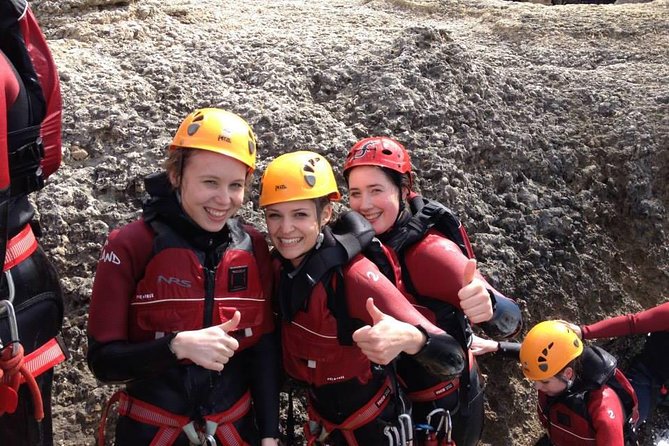
- Equipment is supplied: You receive a wetsuit, helmet, buoyancy aid, footwear, and other safety gear.
- The setting can be spectacular: Caló d’en Monjo is one location used for the session, with sea caves, rock walls, and bright coastal water.
- You need basic fitness and comfort around water: The minimum age is 8, but children and adults still need to handle uneven rock, swimming, and climbing.
What coasteering in Mallorca actually involves
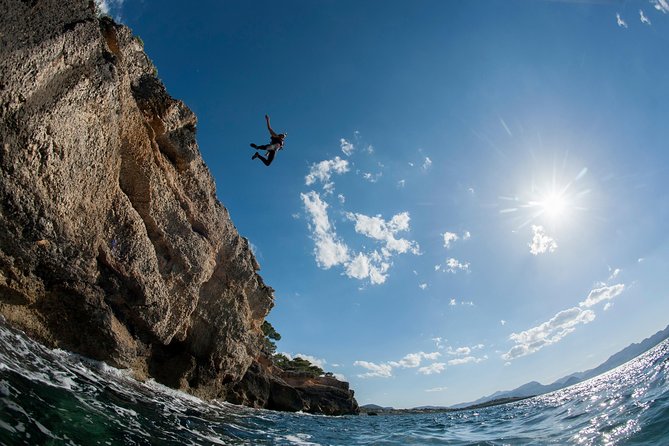
Coasteering is a useful word to understand before booking. You are not simply walking along a coast. You move beside and through the water by whatever method suits the rock: walking, swimming, scrambling, climbing, rappelling, and jumping.
The day usually begins with a minivan pickup or a meeting at a central point in southern Mallorca. The listed meeting point is on Carrer de Cala Fornells in Cala Fornells, but pickup details depend on your hotel and zone. From the south, the group may travel toward the northern part of the island for the activity.
The advertised duration is about four to four and a half hours, including transport and the session. Some descriptions of the active portion suggest closer to three and a half hours. I would keep at least half a day free, and more if your schedule is tight.
The group size is capped at 10. That matters here. A guide needs to explain where to step, watch each person enter the water, and help less confident participants decide what to do next. A huge group would make this kind of activity slow and less personal.
More Coasteering Tours in Mallorca
- Mallorca: Half-Day Coasteering Experience
★ 4.7 · 447 reviews - Coasteering Mallorca
★ 5.0 · 40 reviews - Shore Excursion: Coasteering in Mallorca
★ 5.0 · 40 reviews
The ride from southern Mallorca to the coast
Hotel pickup is one of the strongest practical features. The provider collects people from areas stretching from Puig de Ros along the coast to Andratx, and meeting points can be arranged for apartment or Airbnb stays.
The booking process asks for your height, weight, and shoe size. Give accurate information. These details help the team prepare equipment before you arrive, and direct contact by WhatsApp may be used to confirm the details and weather plan.
The route is not identical for everyone. The information specifies a northern route for people staying around Alcúdia, and an eastern route for those in Cala d’Or and Cala Ratjada. Choose the correct zone when booking. This is an easy detail to overlook and one worth checking before you pay.
The meeting point itself is not presented as a full visitor center. One account describes waiting for a van, with no office, restroom, or proper changing room at the pickup spot. Wear your swimsuit under easy-to-remove clothing, and do not count on a comfortable place to change before the activity.
Getting ready: wetsuit, helmet, and water shoes
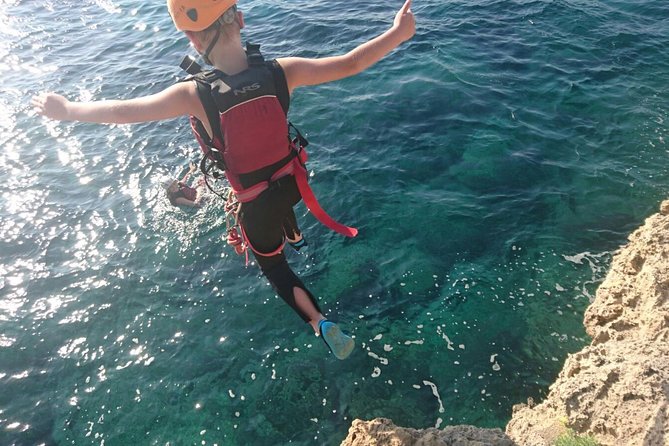
The provider supplies the core equipment, including a wetsuit, helmet, buoyancy aid, shoes, and climbing equipment. Insurance and transport are also included.
The wetsuit serves two purposes. It offers some insulation, but it also helps protect your skin from rough rock. The coast is not a polished swimming pool, and you will repeatedly pull yourself out of the water or press against stone.
Footwear deserves special attention. Water shoes are provided, but one piece of feedback raised concern about grip and the condition of some equipment. The provider states that you may choose to use your own suitable shoes instead. If you have sturdy footwear designed for wet rock, ask about using it at the start, rather than accepting equipment that feels loose, worn, or slippery.
Do not wear flip-flops for the activity. They are poor protection on uneven stone, even if one account says they were allowed during preparation before the supplied shoes were put on. Your practical goal is secure footing, not saving space in your luggage.
Bring sunscreen, bottled water, a towel, swimwear, and comfortable clothing. Bring a small lunch or snack as well, although some people found they did not use the lunch they carried. Food and drinks are not included.
Starting low, then working toward the bigger jumps
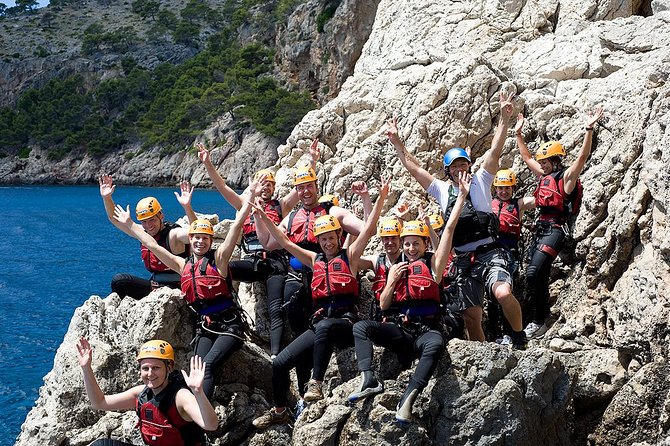
The jump sequence is designed to help you find your nerve. Lower points may begin around 2 meters, with options rising through several levels and reaching as high as 9 meters in some sessions, or up to 12 meters according to the general description.
That progression is important. A 2-meter jump can feel manageable from the ground and much more serious when you are standing above the water. The guide gives instructions on body position, where to land, and how to approach the edge.
You do not have to take every jump. Guides are described as patient and encouraging, not forceful. If a higher ledge feels wrong, you can take a lower option, remain in the water, or watch the next section. This makes the activity workable for mixed groups, including families with teenagers and adults who are active but new to adventure sports.
The final height is not the only measure of difficulty. Waves, wet rock, and repeated climbs out of the water can make a modest jump feel demanding. One family found the sea rougher than expected, while still considering the activity manageable. Check the weather plan and be honest about your swimming ability.
More Coasteering Tours in Spain
- Agaete: Gran Canaria Coasteering. Marine Ferrata and Zipline
★ 5.0 · 38 reviews
Scrambling, psicobloc, and the cliffside route
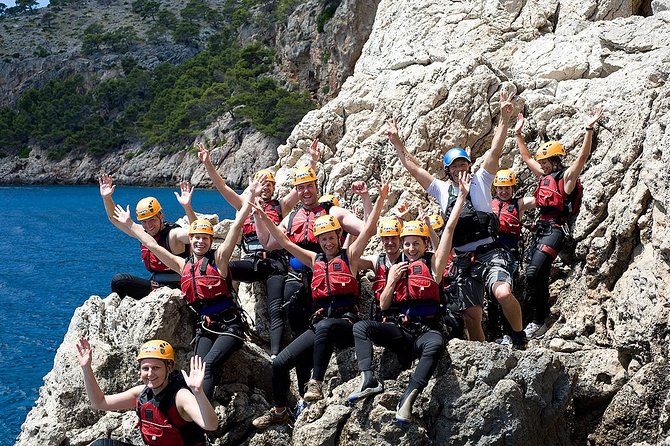
The climbing section is closer to scrambling and low-level bouldering than to a long, roped climbing route. You move along the rock above the water, often only a short distance above the surface, with a clean drop into the sea below.
Psicobloc means climbing without a rope above deep water. Here it is used in a controlled coastal setting, with the water providing the landing zone. It sounds technical, but the actual challenge is often grip, balance, and confidence rather than advanced climbing skill.
You may also rappel from a sea cliff using a rope and rappel device. This gives you a different way down to the water and breaks up the sequence of jumps and scrambling.
The rock can be sharp. Expect your hands to feel tired or scraped the next day, even with a wetsuit protecting much of your body. Gloves are not listed among the included items, so do not assume they will be provided.
Sea caves, swimming, and the coastal setting
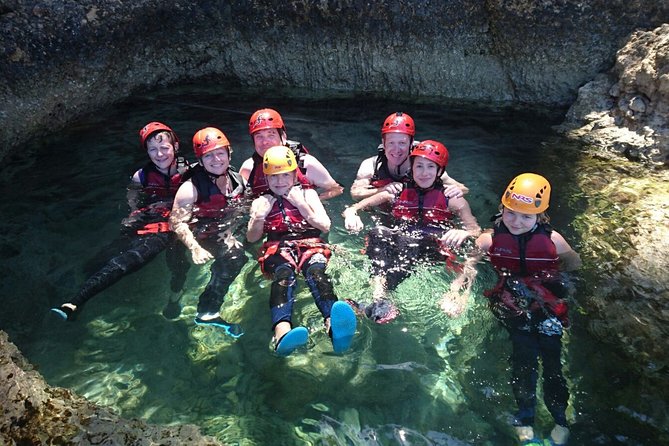
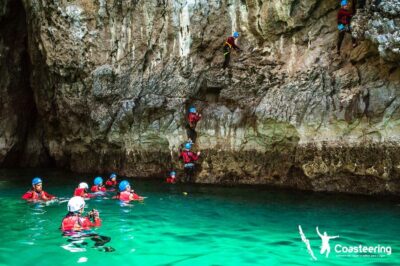
The natural setting is a major part of the value. The route uses rocky coves, sea caves, cliffs, and pools where you can swim between activity points.
Caló d’en Monjo is one site used for the experience. It has a secluded feel, with a short walk of roughly 10 minutes in some sessions before reaching the jumping and climbing area. You may leave your bag in one place and return to it as the group shifts between sections.
That arrangement can make it possible to carry a waterproof phone case or camera. Do not expect a professional photo package to be included. If you want pictures, bring a secure waterproof case or your own action camera, but protect it from drops and make sure it does not interfere with swimming or climbing.
The scenery is best enjoyed when you are not rushing. The trip may keep you in one coastal area rather than covering a long stretch of shoreline. One description expected a continuous coast route and instead found a series of activities centered around one main cliff area. Set your expectations correctly: this is an adventure session at a dramatic cove, not a full coastal trek.
The zip line is a bonus, not a guarantee of a fixed course
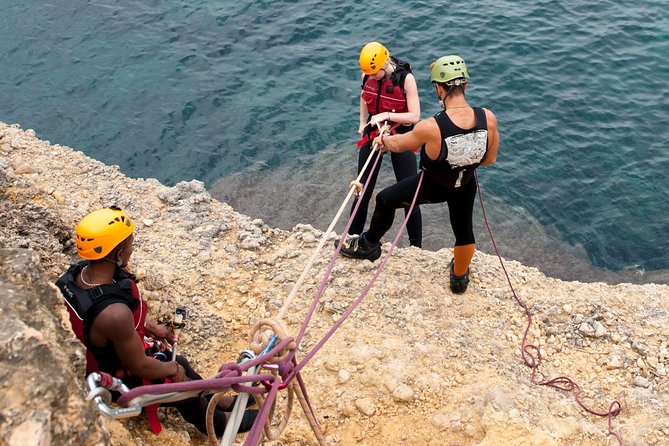
Several sessions have included a short zip line between rocks, ending with a splash in the sea. It may be built or adjusted on site to suit the group and the available rock formations.
That makes it a memorable extra, but also means it may not be a fixed installation with the same shape every day. In one session, reaching the zip line required a difficult swim and climb, while the guides created a safe route for the group.
The zip line is not the whole point of the tour. You should book this for the combined experience of water, rock, and height. If the zip line is your only reason for going, ask for current conditions before departure.
Guides, safety, and choosing your own limits
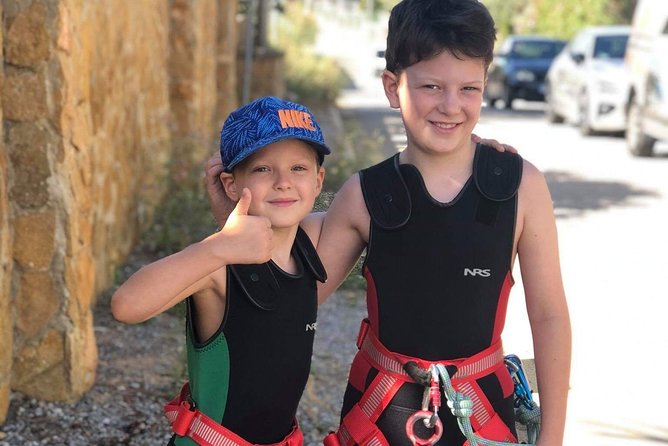
The guide can make or break a coasteering day. The strongest part of this experience is the teaching style described across the sessions. José is noted for patience and encouragement, Joni for professional climbing skill, and guides including Naco, Mario, Niko, Rafael, José, and Gemma are associated with clear instruction and supportive pacing.
Guide assignments can change, so do not book on the assumption that one specific person will lead your session. What you can reasonably expect is a guide who explains the moves, checks the jumps, and helps you choose an option that fits your comfort level.
The included helmet and buoyancy aid are important. The buoyancy aid gives extra support in the water, and the helmet protects against bumps around rock. Inspect the equipment before starting. If a wetsuit is torn or footwear feels unsafe, speak up immediately and ask for another option.
The experience is not risk-free. You are on wet rock, near cliffs, and in open water. A guide can reduce risk, but cannot remove the physical demands. Follow instructions closely, avoid showing off, and do not attempt a higher jump simply because someone else did.
Is $90.51 a fair price?
At $90.51 per person, the price is reasonable if you use the included transport and equipment. A half-day of guided activity also includes insurance, a qualified local guide, wetsuit, helmet, buoyancy aid, shoes, climbing gear, and hotel transfer.
The value is strongest for visitors without a car or without their own adventure equipment. You do not need to arrange transport to a remote cove, rent a wetsuit, or find a qualified person to supervise cliff jumps.
The price is less attractive if you only want a swim and scenic walk. You are paying for an active session, and much of the value depends on your willingness to climb and jump. Food, drinks, photographs, and personal extras are not included.
The 95 percent recommendation rate and 4.8 rating from 55 ratings suggest a consistently strong experience, but the lower-scoring feedback matters. Equipment condition, unclear pickup arrangements, rough access, and a possible mismatch between expected coastal trekking and the actual activity are valid reasons to read the details carefully.
Who should book this experience?
I would recommend it to active families with children aged 8 or older, couples seeking a physical day outdoors, and solo visitors comfortable joining a small group. It also suits first-timers because the jumps can be introduced progressively.
You do not need to be a trained climber. You do need to be able to swim, walk over uneven ground, pull yourself from the water, and handle some exposure to heights.
I would think twice if you dislike open water, have trouble with rough rock, or want a relaxed sightseeing trip. You can skip individual jumps, but you cannot remove the walking, swimming, equipment, or uneven surfaces from the day.
Book at least 24 hours ahead if you need to cancel safely. Cancellations made at least 24 hours before the start receive a full refund. Poor weather or failure to reach the minimum group size can lead to a new date or full refund.
Should you book it?
Book this if you want Mallorca to feel physical and a little wild. The best parts are the clear water, the gradual jump sequence, the mix of climbing and swimming, and guides who can help you take on more than you expected without forcing you past your limit.
Before booking, confirm your pickup zone, give accurate clothing and shoe details, and bring a secure way to carry water and protect your phone. Expect a basic meeting setup and a demanding route, not a polished resort excursion.
For the right person, $90.51 buys a memorable half-day with transport and gear already handled. For anyone seeking an easy coastal outing, choose something gentler.
FAQ
How long does the coasteering experience last?
The experience is advertised as approximately four to four and a half hours. Some descriptions of the active portion suggest about three and a half hours, so you should allow at least half a day.
What time does the activity start?
The listed start time is 10:00 am. A morning or afternoon departure may be available, depending on the selected option.
Is hotel pickup included?
Yes. Pickup and drop-off are included for areas in southern Mallorca from Puig de Ros along the coast to Andratx. Meeting points can be arranged for Airbnb stays.
Where does the activity take place?
The provider may use different coastal areas based on your location. One stated area is Caló d’en Monjo, and the general description says participants may travel from southern Mallorca toward the northern part of the island.
What equipment is provided?
The tour includes a wetsuit, helmet, buoyancy aid, shoes, climbing equipment, and other required safety gear. Insurance and minivan transport are also included.
Can I skip a cliff jump?
Yes. The activity is designed with different jump heights, and you can choose lower options or skip individual jumps. The guide can help you select activities suited to your comfort level.
What should I bring?
Bring swimwear, sunscreen, bottled water, a towel, comfortable clothing, hiking shoes, and your own lunch or snack. A waterproof phone case or action camera may be useful if you want photos.
Is the activity suitable for children?
The minimum age is 8. Most participants can take part, but children still need to manage swimming, uneven rock, climbing, and the physical demands of the route.
Just added around Spain
- Agaete: Gran Canaria Coasteering. Marine Ferrata and Zipline★ 5.0 · 38 reviews
- Caminito del Rey – Via Ferrata & Zip Line Adventure★ 5.0 · 26 reviews
- Gran Canaria: Guided Via Ferrata and Zipline Adventure★ 4.1 · 36 reviews
- Tenerife: Los Carrizales Water Canyoning Tour★ 5.0 · 55 reviews
- Small-Group Half-Day Canyoning in La Orotava★ 5.0 · 58 reviews
- Granada: Via Ferrata Moclín with Transfers★ 5.0 · 15 reviews
- Climbing the John Hogbin Via Ferrata with Lunch★ 5.0 · 94 reviews
- From Granada: Rio Verde Canyoning Tour with Lunch★ 5.0 · 77 reviews
Coasteering Tours, compared.
Award Winner Premium Kayak and Coasteering Adventure with Lunch
Read our review →
Sesimbra/Arrábida Natural Park Coasteering Adventure
Read our review →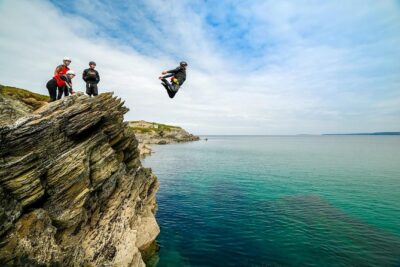
Newquay Coasteering x Cornish Wave | Original Since 2012
Read our review →
Private Tour explore Vulcano Island by Kayak & Coasteering
Read our review →
Coasteering – Swimming, Cliff Jump & Rock Climbing
Read our review →Browse the lists this tour appears in